
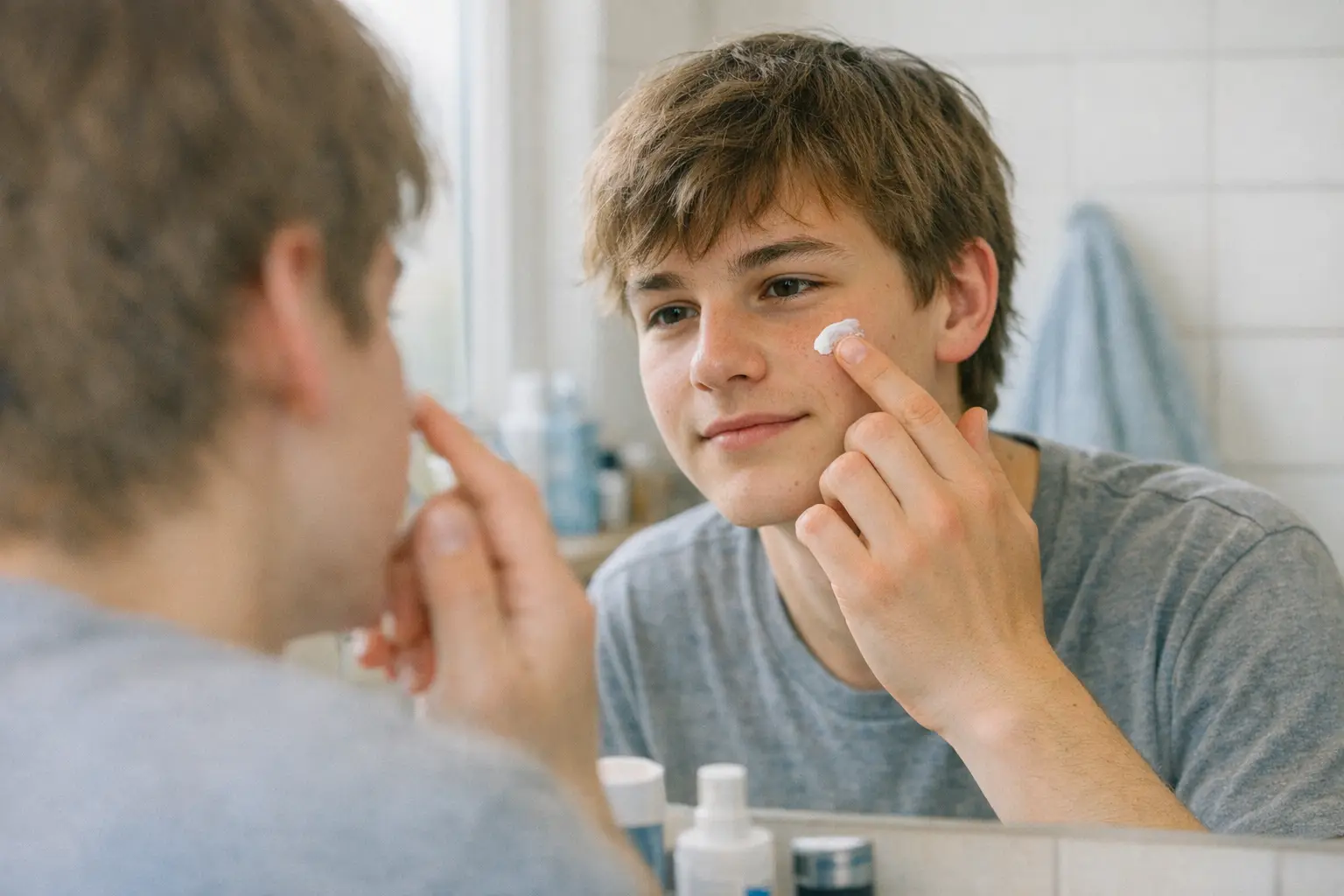
Acne develops when pores become blocked and appears as blackheads, pimples, and inflamed nodules, especially on the face, back, and décolletage. It occurs particularly during puberty but can also affect adults. With the right care and patience, the appearance of the skin can usually be significantly improved.
Possible causes
Increased sebum production
Hormonal changes stimulate the sebaceous glands. The excess sebum, together with skin cells, blocks the pores.
Bacteria and inflammation
Skin bacteria multiply in blocked pores, leading to redness and inflammation.
Hormonal influences
Puberty, menstrual cycle, or hormonal changes can trigger or intensify breakouts.
External factors
Greasy cosmetics, friction, or certain medications can put additional strain on the pores.
Typical steps at the doctor's office
- 1The doctor assesses the severity, type of skin changes, and the affected areas.
- 2In cases of severe or hormonally influenced acne, a more extensive investigation of possible causes may be appropriate.
- 3Treatment is adapted to the severity and combines suitable skin care with targeted measures against blockage and inflammation.
What you can do yourself
- Cleanse the skin gently morning and evening, without irritating it through frequent washing or scrubbing.
- Do not squeeze pimples or blackheads to avoid inflammation and scarring.
- Use non-greasy care and sun protection products labeled as 'non-comedogenic.'
- Be patient: visible improvements usually only appear after several weeks of consistent care.
A dermatological evaluation is recommended if the acne is severe, leaves painful nodules or scars, or does not improve despite careful care. The emotional burden caused by the skin's appearance is also a good reason to seek professional advice.

Frequently asked questions
- Is acne caused by an unhealthy diet?
- Diet is rarely the sole cause. For some people, certain foods seem to promote breakouts, but this varies individually.
- Does washing more frequently help against acne?
- No, washing too frequently or aggressively tends to irritate the skin. Gentle cleansing twice daily is usually sufficient.
- Will acne go away on its own?
- It often improves after puberty. However, it can also persist into adulthood and can then be treated effectively.
Not sure whether you should go or whom to see? Describe your symptoms — we'll find the right practice in your area.