
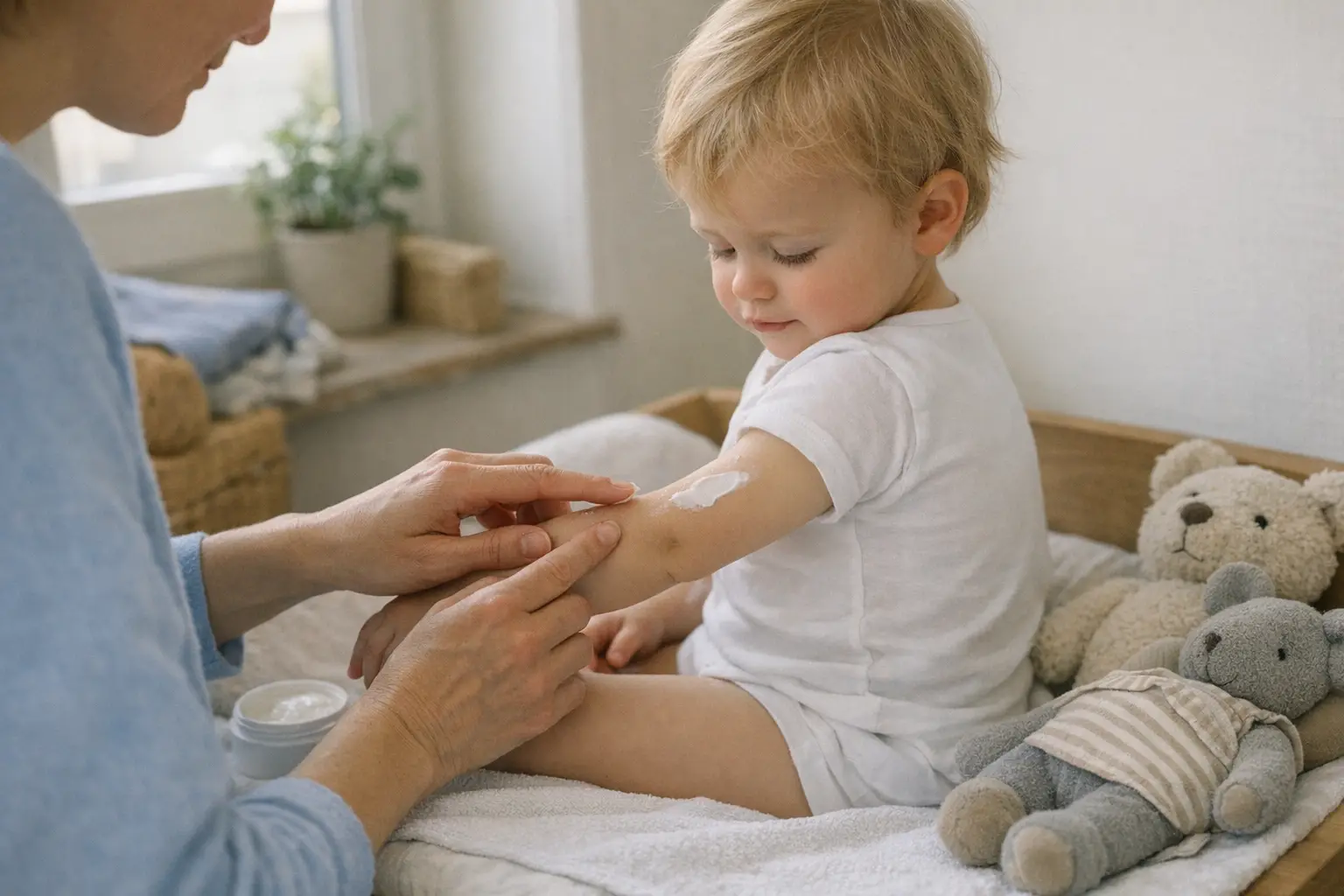
Skin rashes are part of childhood and often look more dramatic than they actually are. Many rashes occur as part of harmless viral infections and disappear on their own. It is helpful to pay attention to the appearance, distribution, and general condition of your child. If you are unsure or if your child is visibly unwell, it is worth having a doctor take a look.
Possible causes
Viral childhood illnesses
Many typical childhood infections are accompanied by rashes, often together with fever. They usually heal on their own.
Eczema or dry skin
Sensitive children's skin tends toward redness and itchy patches, especially in the skin folds. Dryness and friction worsen the symptoms.
Allergic or contact reactions
Certain foods, care products, or plants can trigger hives or redness. They usually resolve after removing the trigger.

Typical steps at the doctor's office
- 1The pediatrician examines the rash in good light, checks with the glass test whether it fades under pressure, and asks about fever, contact with people who are ill, new foods, or care products.
- 2The cause can usually be identified from the appearance, distribution, and course without further tests; if needed, a swab or blood test may be added.
- 3Many rashes only require skin care and patience; itchy forms are soothed, and infections are treated specifically if needed.
What you can do yourself
- Do the glass test: press a clear drinking glass against the spots. If they fade under the glass, that is reassuring; if they remain visible, call 144 immediately. Dress your child in soft, breathable cotton and avoid scratchy fabrics.
- Care for dry skin with a mild, unscented cream and keep fingernails short to reduce scratching.
- Temporarily avoid new care products or potential triggers.
- Ensure a cool room temperature, as heat often intensifies itching.
A rash that does not fade under pressure, together with fever and a severe feeling of being unwell, requires immediate emergency care (144). Have a rash assessed on the same day if it is accompanied by high fever or a marked feeling of being unwell. For infants and small children, as well as whenever there is uncertainty about the cause, an early consultation with the paediatric practice is always the safe course of action.

Frequently asked questions
- Is the rash contagious?
- That depends on the cause. Many virus-related rashes are contagious, while eczema or allergic reactions are not. Your pediatrician can assess this.
- May my child go to daycare with a rash?
- As long as the cause is unclear or fever is present, it makes sense to keep your child at home. Your pediatrician's office can tell you when it is safe to return.
- Should I apply cream to the rash?
- A mild, unscented moisturizer for dry skin is usually helpful. It is better to avoid special ointments without medical consultation as long as the cause has not been determined.
Not sure whether you should go or whom to see? Describe your symptoms — we'll find the right practice in your area.