
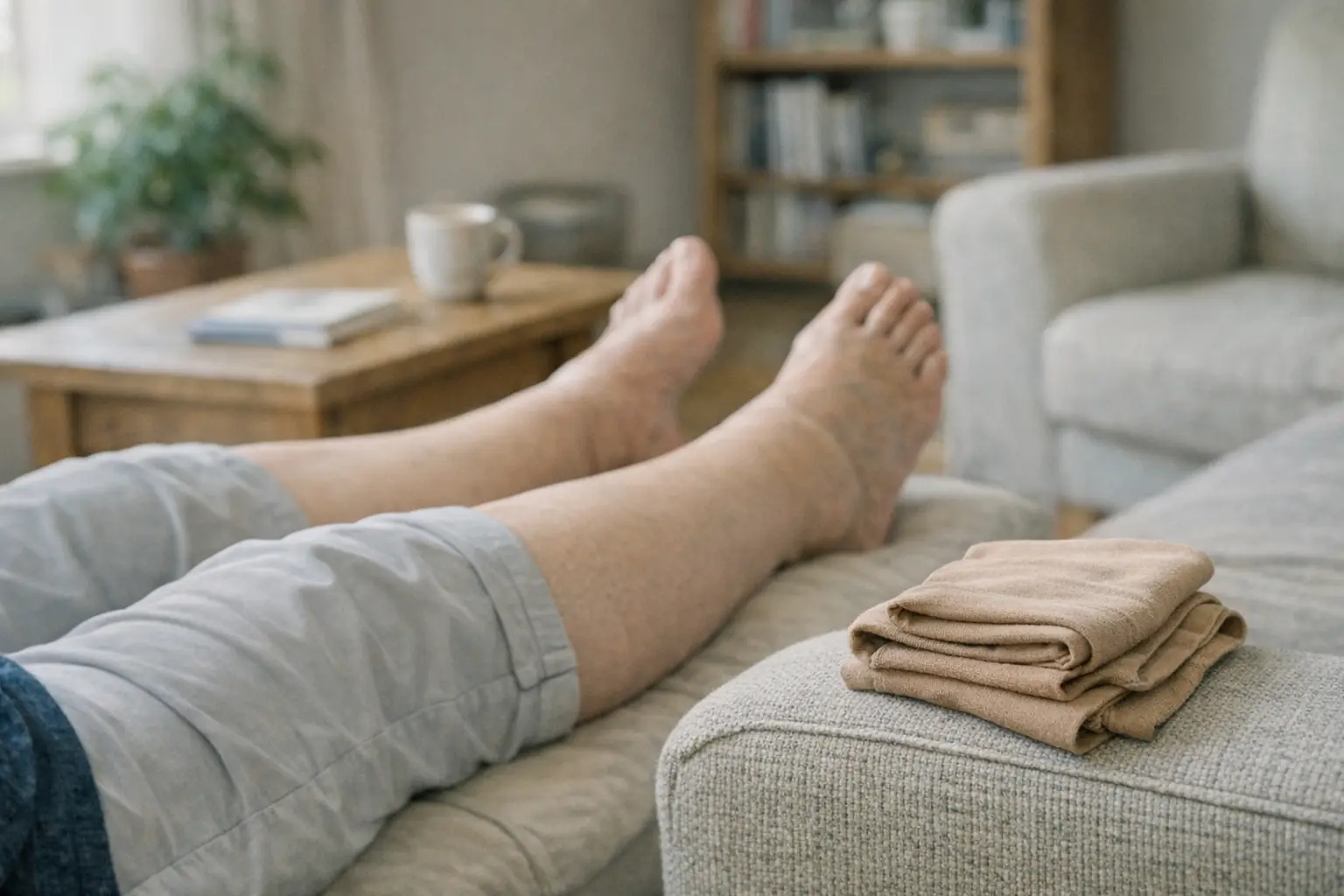
Swollen legs, ankles, or feet — known as water retention — are common and often harmless, for example after prolonged sitting or standing on warm days. However, they can also be a sign that the veins, heart, kidneys, or lymphatic vessels are not working optimally. Whether one or both sides are affected, how quickly the swelling develops, and what accompanying symptoms are present helps with the assessment.
Possible causes
Venous insufficiency
Declining function of the leg veins is a very common cause. The swelling usually occurs on both sides, increases during the course of the day, and improves when the legs are elevated.
Cardiac, renal, or hepatic causes
When the heart, kidneys, or liver are not working optimally, fluid can accumulate in the tissues. Such edema is often bilateral and is evaluated by a doctor with blood tests and ultrasound examinations.
Lymphatic drainage disorder
If lymphatic drainage is impaired, tissue fluid accumulates, often in one leg or arm. This form is specifically investigated and managed with decongestive measures.
Other triggers
Prolonged sitting or standing, heat, pregnancy, or certain medications can also temporarily lead to water retention. Such causes are taken into account during the consultation.
Venous thrombosis
A thrombosis in a deep leg vein leads to a usually one-sided, often painful swelling, sometimes with warmth, a feeling of tension, and bluish discoloration. It should be assessed by a doctor on the same day, because the clot can become dislodged and trigger a pulmonary embolism.

Typical steps at the doctor's office
- 1The doctor will ask when and how the swelling occurs, whether one or both sides are affected, and what accompanying symptoms are present. The legs, skin, and pulse are examined, and pressure is applied to the skin to check whether an indentation forms.
- 2Depending on the suspected cause, a blood pressure measurement, an ECG, blood tests (including kidney and heart values), and an ultrasound of the veins or heart may follow.
- 3Further management depends on the underlying cause and is coordinated through your general practitioner or cardiology; in cases of venous or lymphatic problems, decongestive measures are employed.
What you can do yourself
- Elevate your legs several times a day to help fluid drain more effectively.
- Stay active: regular walking and light foot exercises activate the calf muscle pump.
- Break up long periods of uninterrupted sitting or standing and move your legs in between.
- Pay attention to a balanced, low-salt diet and aim for a healthy weight — this relieves pressure on the veins and circulation.
A sudden, one-sided swelling with pain or a feeling of tightness in the calf should be seen by a doctor the same day (suspected thrombosis); if there is simultaneous shortness of breath or chest pain, call 144 immediately. Also have fluid retention medically assessed if it occurs for the first time, persists for a longer period, increases, or restricts you in everyday life. Recurrent or unclear swelling belongs with the family doctor or in cardiology, so that the heart, kidneys, and veins can be assessed.

Frequently asked questions
- Are swollen legs always a warning sign?
- No. Often harmless reasons such as prolonged sitting, standing, or heat are behind it. If the swelling persists, increases, or is accompanied by other symptoms, a medical assessment is advisable.
- What helps against swelling in daily life?
- Movement, elevating the legs, and alternating between sitting and walking support drainage. In cases of venous or lymphatic insufficiency, decongestive measures recommended by a doctor can be helpful.
- What examinations can be expected?
- Commonly, a physical examination, blood pressure measurement, an ECG, blood tests, and an ultrasound of the veins or heart are included — depending on the suspected cause.
Not sure whether you should go or whom to see? Describe your symptoms — we'll find the right practice in your area.