
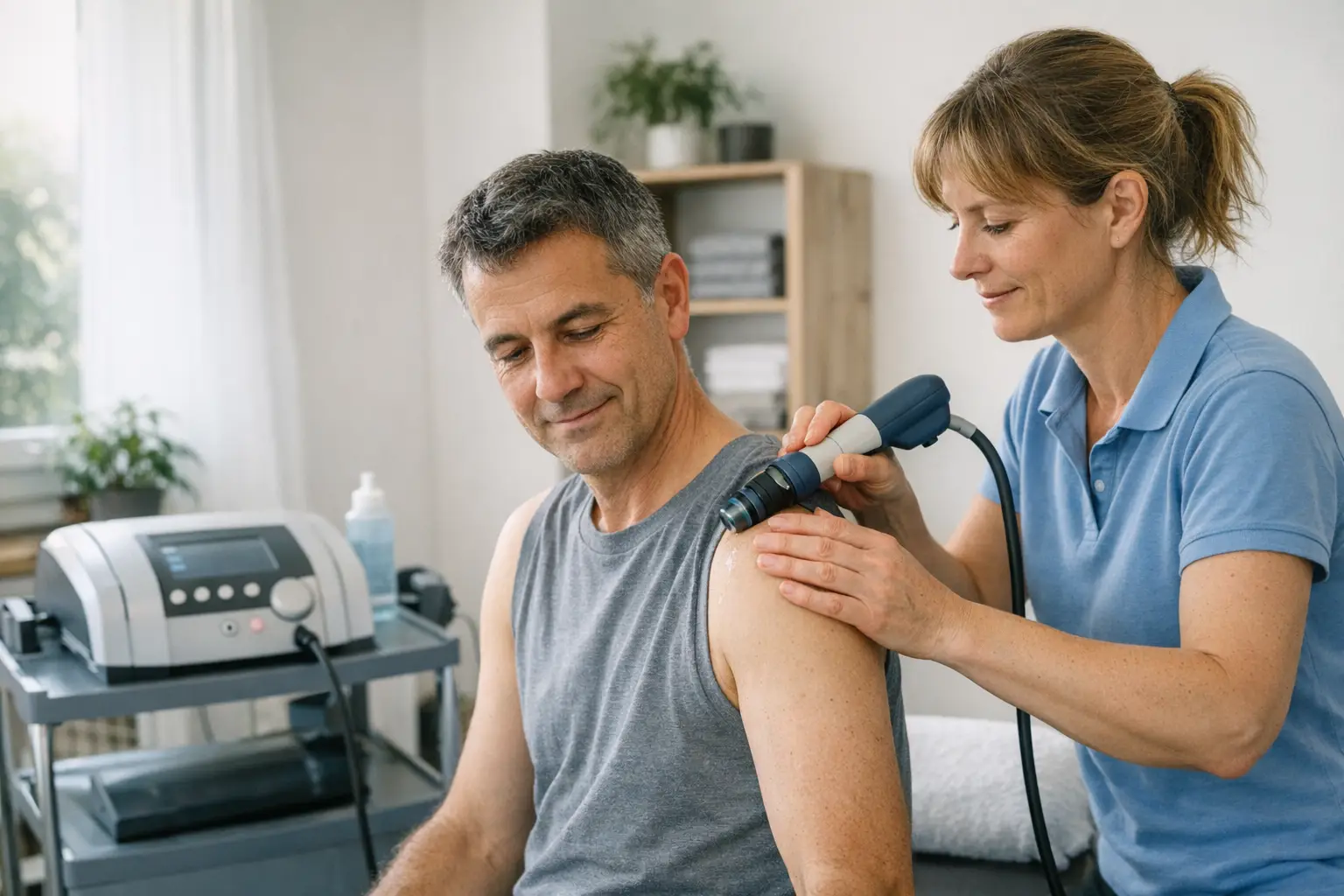
In shockwave therapy, focused pressure waves are directed from outside onto painful tendon or muscle areas. The impulses stimulate blood flow and the body's own repair processes in the tissue. The procedure is used primarily for stubborn tendon complaints that do not respond sufficiently to rest and exercises alone.
Typical Areas of Use
- Heel spur and plantar fasciitis
- Tennis and golfer's elbow
- Calcific shoulder and shoulder tendon irritation
- Achilles tendon complaints
- Stubborn muscle tension
How It Works
- 1The treating specialist locates the painful area by palpation, sometimes assisted by ultrasound.
- 2A contact gel is applied to the skin, then the handpiece is placed and the shockwaves are delivered in short pulses — this feels like vigorous tapping and can be somewhat uncomfortable.
- 3The intensity is adjusted according to your feedback; one application lasts only a few minutes per area.
- 4Usually the treatment is repeated several times at intervals of about one week and combined with exercises.
How to Prepare
- No special preparation needed; comfortable clothing facilitates access to the treated area.
- Inform the specialist about blood thinners, coagulation disorders, or pregnancy.
- It is advisable to avoid anti-inflammatory painkillers directly before treatment after consultation, as the stimulus response is part of the therapeutic principle.
Side Effects & Risks
- Pain during the application, which however can be controlled and subsides quickly after the session.
- Redness, swelling, or small bruises at the treated site.
- Temporary intensification of symptoms in the first days after treatment.
- In certain situations (e.g. coagulation disorders, pregnancy, open growth plates), treatment is not performed.
After treatment, the symptoms may be somewhat more pronounced for one to two days — this is part of the intended stimulus response and not a cause for concern. Keep the stress on the area moderate during this time and avoid intensive peak athletic performance. Contact the treating practice if severe pain persists for a longer period, pronounced swelling develops, or the skin at the treated site changes noticeably.

Cost & Insurance
Shockwave therapy is a benefit covered by mandatory basic insurance if it is carried out by a physician and one of the indications listed in the benefits ordinance is present — for example calcific shoulder, heel spur, or tennis elbow following unsuccessful conservative treatment. When performed by physiotherapists or outside these indications, it is usually a self-pay service or covered through supplementary insurance. It is best to clarify the cost question directly with the practice and your insurer before starting treatment — as guidance only, without guarantee.
Frequently Asked Questions
- Does shockwave therapy hurt?
- The impulses on the irritated tendon can be uncomfortable to painful, but are well tolerable — the intensity is continuously adjusted according to your feedback. After the session, the pain subsides quickly.
- How quickly does the treatment work?
- Rarely immediately: the shockwaves trigger repair processes in the tissue that take time. Noticeable improvement often becomes apparent only several weeks after completion of the series.
- What does shockwave therapy cost?
- Prices vary depending on the practice and device, often ranging from a few tens of francs to just over a hundred francs per session. Since insurance coverage is inconsistent, it is worthwhile to clarify costs before starting.
- How many sessions are needed?
- Typically three to five sessions at weekly intervals. If no improvement is seen after that, the doctor will discuss further options with you.
- Can I work normally and drive after treatment?
- Yes, as a rule you are able to resume daily activities and drive immediately after the session. Only intensive stress on the treated area should be reduced in the first few days.