
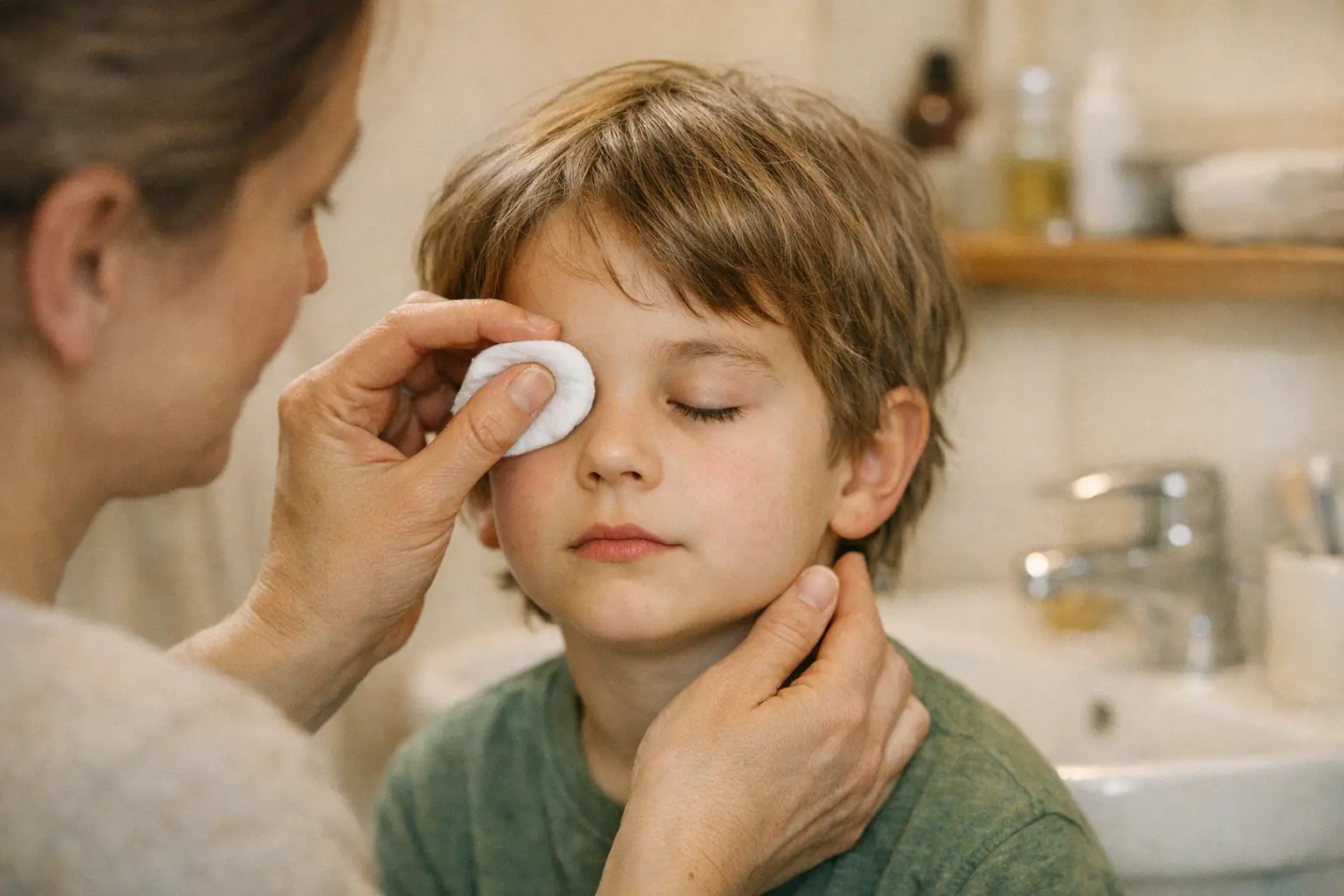
In conjunctivitis, the thin mucous membrane that covers the eye and the inside of the eyelids is irritated and inflamed. Typical symptoms include a red, watery or sticky eye, burning sensation and a feeling of having something in your eye. The causes range from viruses and bacteria to allergies and irritants; many forms are unpleasant but heal well.
Possible causes
Viral infection
Viruses often cause watery discharge, often affecting both eyes, which is contagious and usually clears up on its own.
Bacterial infection
Bacteria typically lead to a purulent, sticky eye and should be assessed by an ophthalmologist.
Allergy
Pollen, animal hair or house dust irritate the conjunctiva and cause itchy, watery and red eyes, often affecting both eyes.
Irritants
Smoke, chlorinated water, dust or dry air can irritate the conjunctiva and trigger a non-contagious inflammation.

Typical steps at the doctor's office
- 1The doctor asks about onset, type of secretion, itching, contact with people who are ill, and possible triggers such as pollen or contact lenses.
- 2Using the slit lamp, she assesses the conjunctiva and cornea, distinguishing conjunctivitis from corneal or eyelid inflammations; a swab is only rarely necessary.
- 3Viral forms heal with hygiene and artificial tears, bacterial ones are treated with antibiotic drops if needed, allergic ones with antiallergic drops.
What you can do yourself
- Wash your hands frequently and avoid rubbing your eyes.
- Use your own towels and pillowcases and do not share them.
- Gently clean sticky eyelids with a clean, damp compress from the outside inward.
- Temporarily avoid wearing contact lenses and eye makeup.
If your symptoms do not improve within a few days, if they worsen, or if pain, pronounced sensitivity to light or changes in vision occur, you should seek advice from an ophthalmologist. Early assessment is also advisable if the eye is heavily purulent, for contact lens wearers, and for infants. This allows the cause to be identified and the appropriate treatment to be found.

Frequently asked questions
- How long is conjunctivitis contagious?
- In viral or bacterial forms, there is a risk of infection as long as the eye is red and watery or sticky. Good hand hygiene and your own towels help protect others. Allergic and irritant-related forms are not contagious.
- Can I go to work or school with conjunctivitis?
- In contagious forms, it is considerate to avoid close contact and pay attention to hygiene. For children and in communal facilities, consulting a doctor about how to proceed can be sensible.
- Can conjunctivitis heal on its own?
- Many forms, particularly viral and irritant-related ones, clear up on their own with a little patience and good hygiene. If symptoms persist or if pain and visual disturbances occur, assessment by an ophthalmologist is indicated.
Not sure whether you should go or whom to see? Describe your symptoms — we'll find the right practice in your area.