
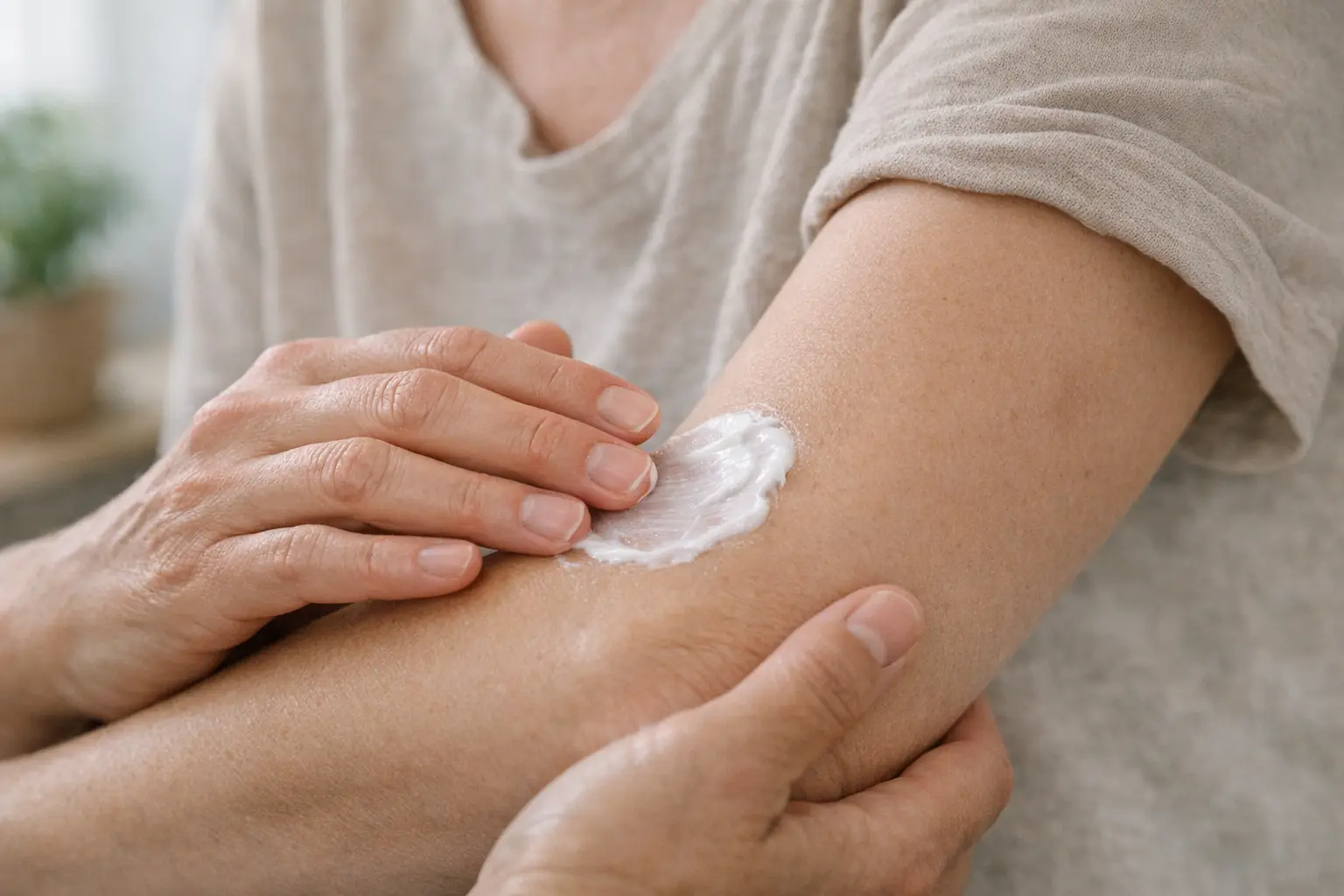
Atopic dermatitis (atopic eczema) is the most common form of eczema and presents as dry, reddened and severely itchy skin, which often occurs in flares. Frequently affected areas include the crooks of the elbows, backs of the knees, hands and the face. The course is usually chronic, but can be significantly calmed with good care and by avoiding triggers.
Possible causes
Impaired skin barrier
The skin loses more moisture and becomes more permeable to irritants. As a result, it dries out more easily and becomes itchy.
Genetic predisposition and allergies
There is often a family tendency towards eczema, hay fever or asthma. Certain allergens can trigger flare-ups.
External triggers
Cold, dry indoor heating air, woollen clothing, sweating or harsh cleaning products can irritate the skin.
Stress and climate
Emotional stress and climate changes often have a noticeable effect on the frequency of flare-ups.
Other Eczema Forms
Contact eczema (caused by allergy or irritants) and seborrhoeic eczema (greasy scaling on the scalp and face) resemble atopic dermatitis but are treated differently. Differentiation is usually possible based on distribution, course, and triggers.
Typical steps at the doctor's office
- 1The doctor will assess the appearance of the skin, affected areas and previous course through discussion.
- 2If triggering allergies are suspected, an allergy test or targeted investigation may be useful.
- 3Treatment is based on severity and cause, combining consistent skin care with avoidance of identified triggers.
What you can do yourself
- Moisturise your skin regularly and generously with emollient, unscented care products, especially after washing.
- Take short, lukewarm showers rather than long, hot baths to avoid further drying out the skin.
- Avoid known triggers such as scratchy wool, heavy sweating or irritating soaps.
- Keep your fingernails short to reduce skin damage from scratching.
A dermatological or general practitioner assessment is advisable if the eczema is widespread, keeps recurring or severely affects daily life and sleep. Professional evaluation is also helpful if you are unsure about the right care approach.

Frequently asked questions
- Is atopic dermatitis contagious?
- No. Eczema is a reaction of your own skin and is not transmitted from person to person.
- Does eczema go away?
- In children it often improves over the years. In adults it frequently occurs in flare-ups, but can be well controlled with care.
- Can I bathe with eczema?
- Yes, briefly and in lukewarm water. Afterwards, moisturising quickly helps to prevent the skin from drying out.
Not sure whether you should go or whom to see? Describe your symptoms — we'll find the right practice in your area.