
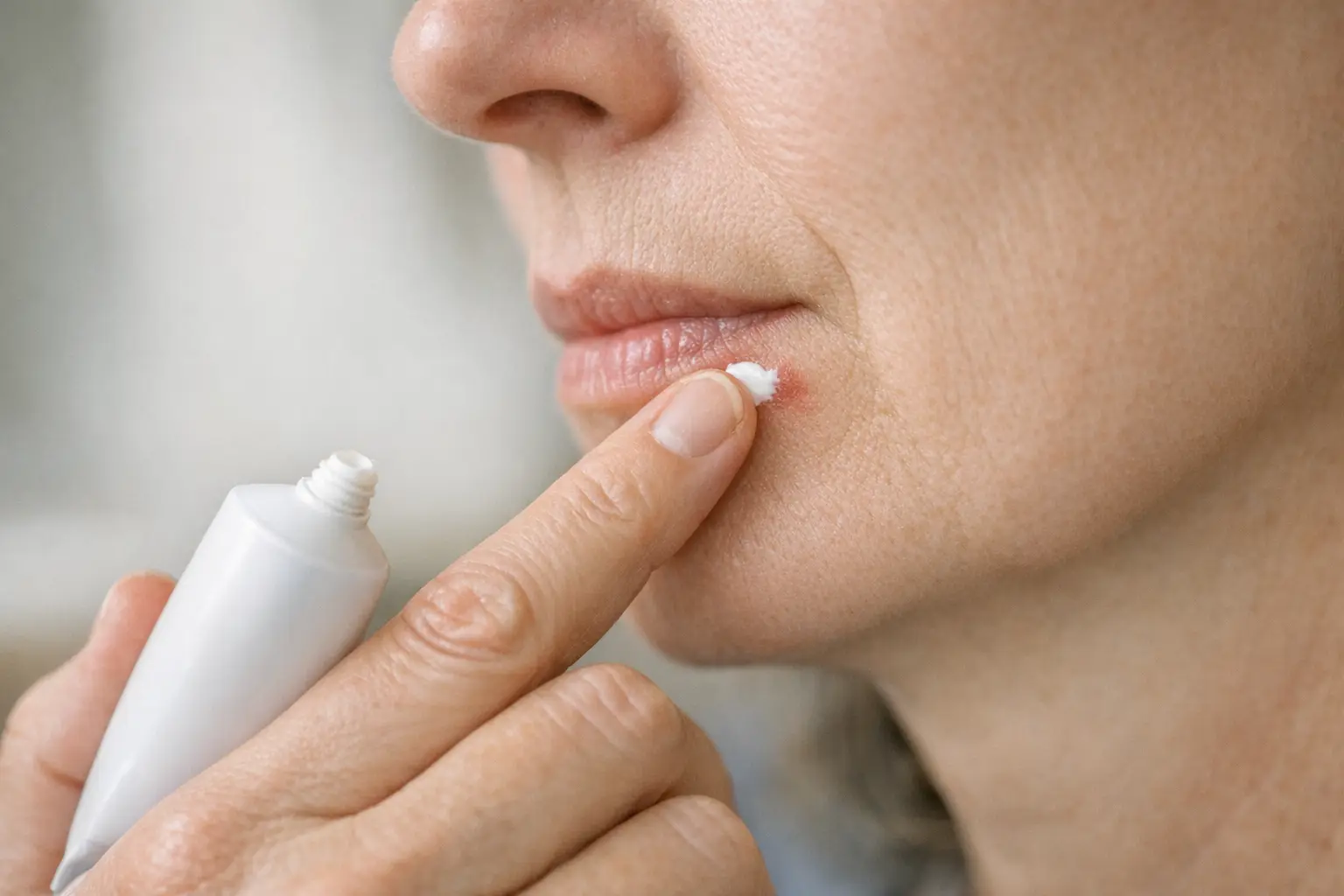
Cold sores appear as painful, clustered blisters on or around the lip, often preceded by tingling or tightness. The cause is a virus that remains in the body after initial infection and becomes active again when triggered by certain factors. The blisters usually heal within one to two weeks.
Possible causes
Herpes virus
The herpes simplex virus remains permanently in the body after initial infection and can become active repeatedly.
Weakened immune system
Infections, fever, or exhaustion can reactivate the virus and trigger an outbreak.
External irritants
Intense sun exposure, cold, or injury to the lip can trigger an episode.
Stress and hormones
Emotional stress and hormonal fluctuations promote recurrent outbreaks in some people.

Typical steps at the doctor's office
- 1Your doctor can usually identify cold sores by their typical appearance and the course you describe.
- 2In unclear cases or when the course is unusual, a targeted examination may be advisable.
- 3Treatment aims to relieve symptoms and support healing; taking action early at the first signs helps with this.
What you can do yourself
- Do not scratch or squeeze the blisters to avoid spreading and additional irritation.
- Wash your hands after touching the area and avoid touching your eyes.
- Pay attention to using your own towels and glasses, and avoid close lip contact during the acute phase. With active blisters, avoid contact with newborns and infants in the first weeks of life — for them, the virus can become dangerous: do not kiss, wash your hands, wear a mask when providing care.
- Protect your lips from sun and cold, as both can trigger outbreaks.
An assessment is advisable if the herpes recurs very frequently, spreads extensively, or is accompanied by fever. If blisters appear near the eye, ophthalmological advice should be sought on the same day.

Frequently asked questions
- Are cold sores contagious?
- Yes, especially during the blister phase. The virus is transmitted through direct contact or shared objects.
- Why do cold sores keep coming back?
- The virus remains permanently in the body and can become active again due to triggers such as stress, sun exposure, or infections.
- What can I do at the first signs?
- Tingling or tightness are early warning signs. Early, gentle action and avoiding irritants can reduce the severity of the outbreak.
Not sure whether you should go or whom to see? Describe your symptoms — we'll find the right practice in your area.