
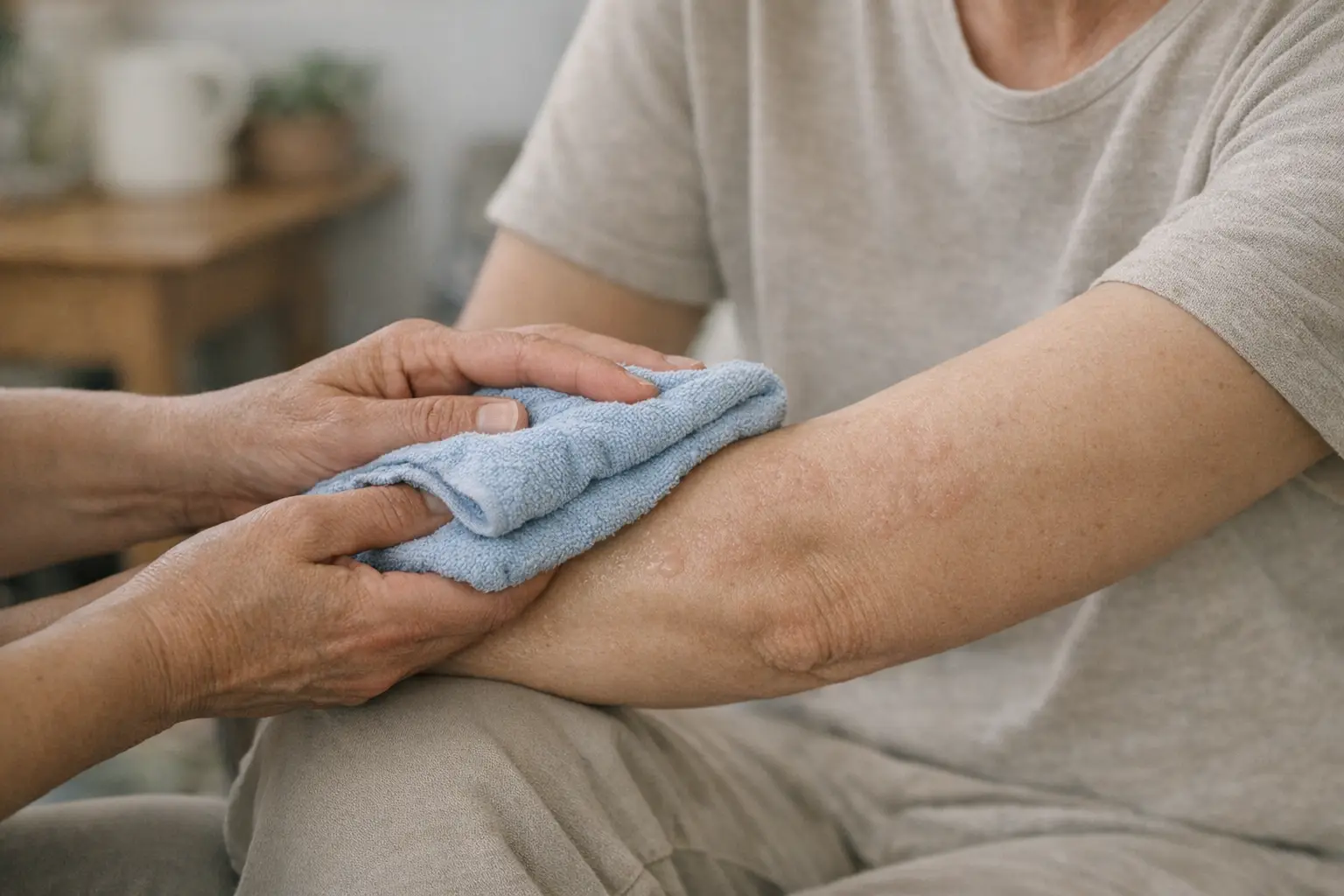
Hives (urticaria) cause itchy, raised welts that often appear suddenly and disappear within hours. They resemble the reaction after contact with stinging nettles. Triggers can include allergens, infections, heat, cold, or pressure, but the cause often remains unclear.
Possible causes
Allergic reactions
Certain foods, medications, or insect stings can trigger hives. The reaction usually sets in quickly.
Infections
Viral or bacterial infections are sometimes accompanied by temporary hives.
Physical triggers
Pressure, friction, cold, heat, or sunlight can cause welts in sensitive individuals.
Unknown cause
Especially with prolonged hives, a single trigger often cannot be identified.

Typical steps at the doctor's office
- 1Your doctor will discuss the course, possible triggers, and circumstances surrounding the welts.
- 2Depending on the situation, a targeted search for triggers, such as through allergy tests or a symptom diary, may be helpful.
- 3Treatment depends on the suspected cause and aims to avoid triggers and relieve itching.
What you can do yourself
- Avoid identified triggers such as certain foods, heat, or tight clothing as much as possible.
- Cool the skin, for example with a damp cloth, to soothe the itching.
- Keep a simple diary to identify possible connections with triggers.
- Avoid scratching and wear loose, breathable clothing.
If swelling of the lips, tongue, or throat, difficulty breathing, hoarseness, dizziness, or circulatory problems occur together with the wheals, call 144 immediately — these can be signs of a severe allergic reaction. A medical evaluation is also advisable if the wheals keep recurring over several weeks or significantly affect daily life. Even if no trigger can be identified, a professional assessment helps clarify the further course of action.

Frequently asked questions
- Are hives contagious?
- No. The welts are a reaction of your own skin and are not transmitted.
- How long do hives last?
- Acute hives often subside within days. If the welts persist for more than six weeks, it is referred to as a chronic form.
- Do I always need to find the trigger?
- Not necessarily. Especially with chronic hives, the cause often remains unknown without this being dangerous.
Not sure whether you should go or whom to see? Describe your symptoms — we'll find the right practice in your area.