
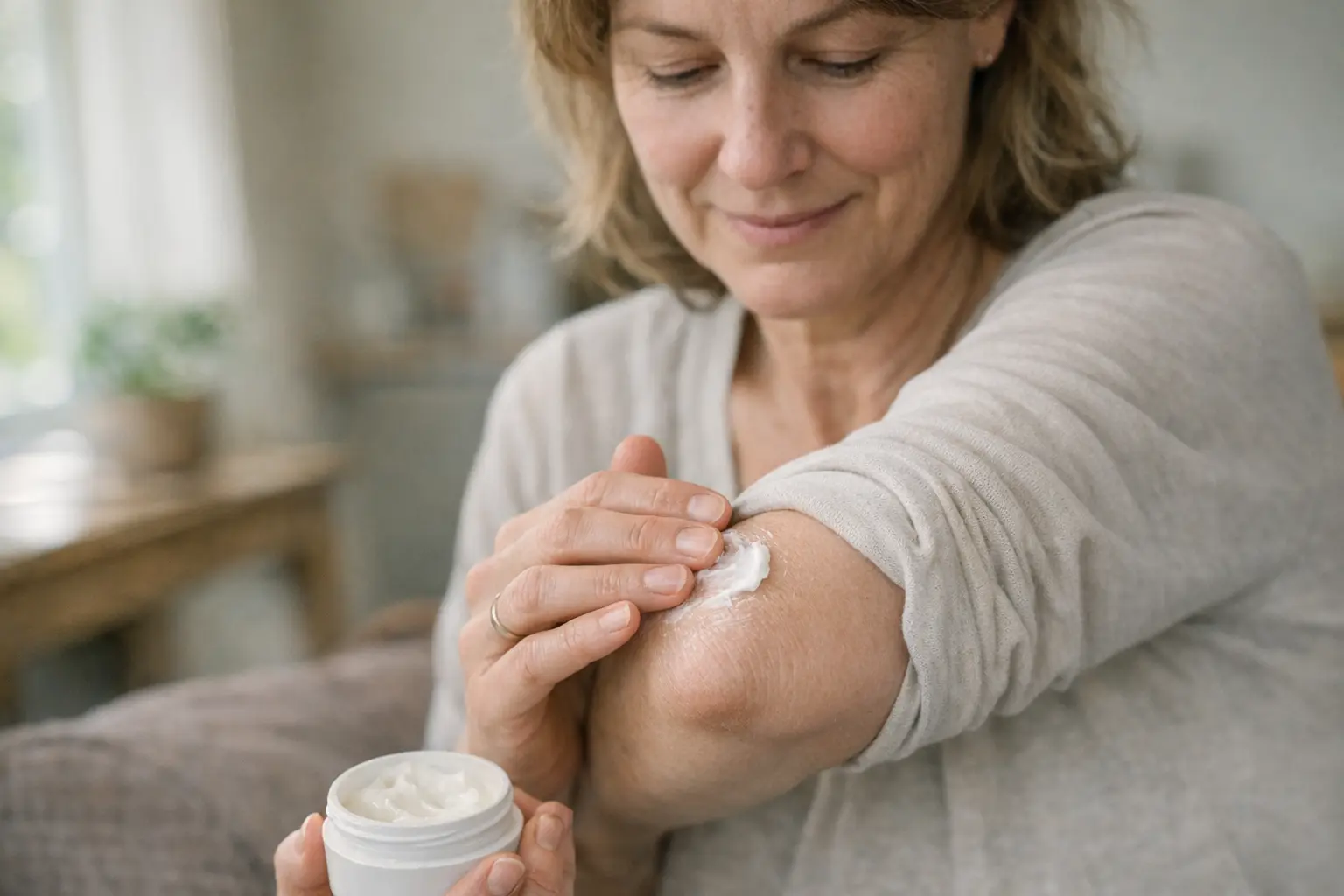
Psoriasis presents as sharply demarcated, reddened skin patches with silvery scaling, commonly affecting the elbows, knees, and scalp. It follows a chronic course with flare-ups and is not contagious. With appropriate care and avoidance of triggers, it can often be well controlled.
Possible causes
Overactive skin renewal
In psoriasis, the skin renews itself much faster than normal. This creates the characteristic thick scales.
Genetic predisposition
A family tendency plays an important role. The condition often first appears in young or middle adulthood.
Flare triggers
Infections, skin injuries, stress, certain medications, or alcohol can trigger a flare-up.
Contributing factors
Overweight and smoking can adversely affect the course of the condition.
Typical steps at the doctor's office
- 1The dermatologist assesses the skin appearance, affected areas, and progression through consultation.
- 2In unclear cases or when additional joint symptoms are present, further investigation may be appropriate.
- 3Treatment is tailored to the severity and affected areas, combining consistent skin care with avoidance of identified triggers.
What you can do yourself
- Moisturize the skin regularly with emollient care products to relieve scaling and tightness.
- Avoid known triggers such as stress, alcohol, or skin injuries as much as possible.
- Moderate, measured sun exposure can be beneficial, but sunburn must be strictly avoided.
- Maintain a healthy body weight and avoid smoking, as both influence the course of the condition.
A dermatological assessment is advisable if the psoriasis affects larger areas, keeps recurring, or impacts daily life. If joint pain also occurs, this should likewise be evaluated by a specialist.

Frequently asked questions
- Is psoriasis contagious?
- No. It is a reaction of your own skin that is not transmitted from person to person.
- Is psoriasis curable?
- It is chronic and follows a course with flare-ups. However, with appropriate care and treatment, the skin can often be largely calmed.
- Why does the scalp itch so intensely?
- The scalp is frequently affected, and the scaling can cause itching. Gentle care and avoidance of irritation help to relieve this.
Not sure whether you should go or whom to see? Describe your symptoms — we'll find the right practice in your area.