
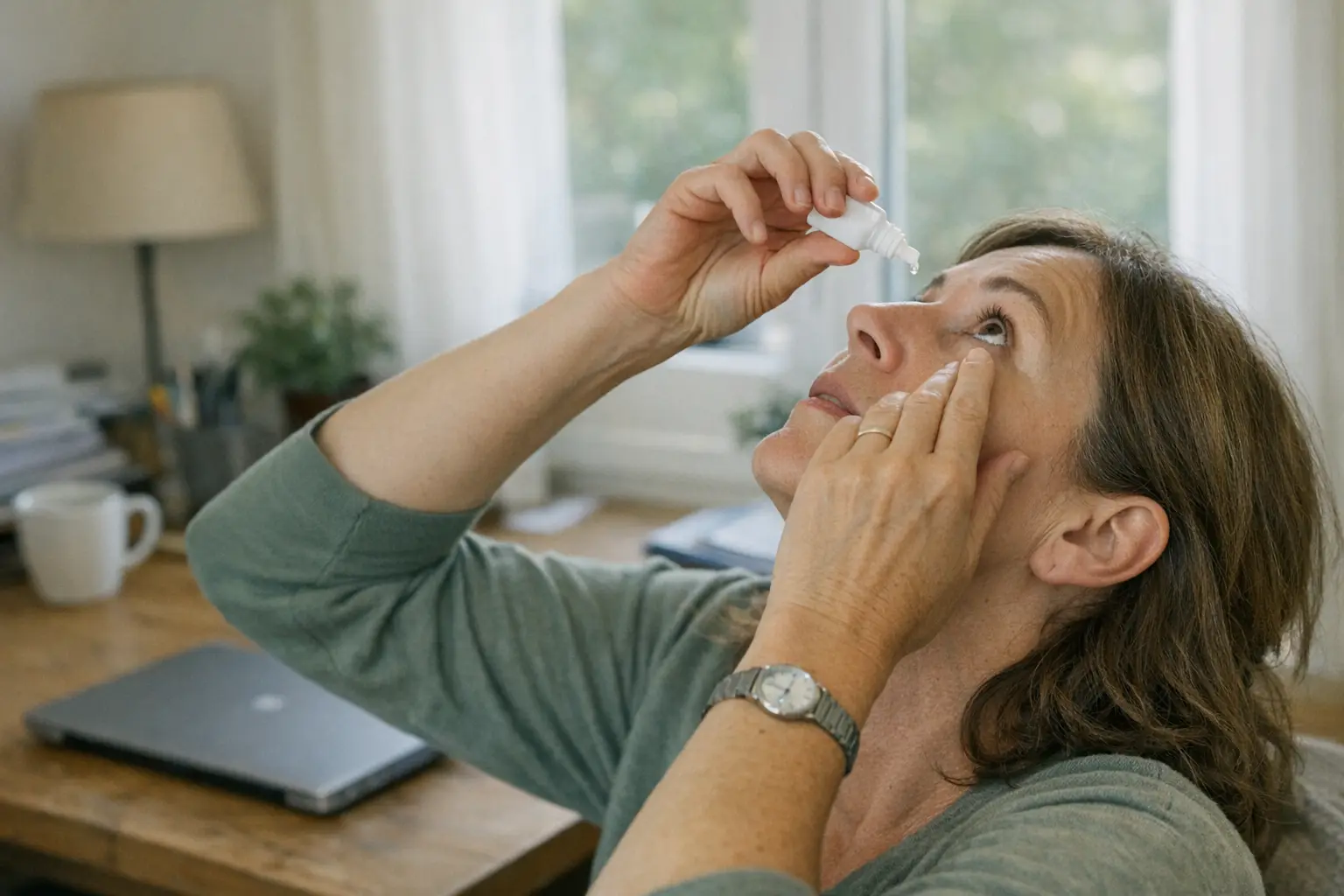
Dry, burning eyes occur when the tear film is insufficient or evaporates too quickly. Typical symptoms include a gritty or foreign body sensation, burning, redness, and sometimes even watery eyes. The symptoms are particularly common during prolonged screen work, in air-conditioned or heated rooms, and with increasing age.
Possible causes
Screen work
When concentrating on a screen, we blink less frequently, causing the tear film to evaporate and the eyes to dry out.
Dry ambient air
Heating, air conditioning, and drafts remove moisture from the eye surface and intensify the burning sensation.
Hormonal and age-related changes
With age and due to hormonal changes, tear production decreases, making the eyes more sensitive.
Contact lenses
Wearing contact lenses can disrupt the tear film and promote dry, irritated eyes.

Typical steps at the doctor's office
- 1The ophthalmologist asks in which situations the symptoms occur, which medications you take, and whether you wear contact lenses.
- 2With the slit lamp, she assesses the tear film, eyelid margins, and corneal surface; simple tests measure how much tear fluid is produced and how stable the film is.
- 3Treatment ranges from artificial tears and eyelid margin care to workplace adjustments to treatment of an underlying eyelid margin or skin condition.
What you can do yourself
- Take regular breaks during screen work and consciously blink more frequently.
- Ensure sufficiently humid indoor air and avoid direct drafts to your face.
- Drink enough fluids throughout the day.
- Give your eyes occasional rest and avoid smoky environments.
If the dryness persists despite simple measures, recurs repeatedly, or interferes with your daily life, an ophthalmological examination is worthwhile. There, the tear film can be assessed and appropriate care discussed. If you experience additional symptoms such as severe pain or changes in vision, you should not delay seeking care.

Frequently asked questions
- Why do my eyes water even though they are dry?
- An irritated dry eye can reflexively produce more tears. However, these tears are often of inferior quality and only briefly moisten the surface, which is why the eye continues to feel dry.
- Are dry eyes dangerous?
- Usually they are uncomfortable but harmless. If they remain untreated for an extended period, the eye surface can become more severely irritated, which is why an ophthalmological assessment is advisable.
- Does drinking more help?
- Adequate fluid intake supports the body in general, but does not replace targeted eye care. In combination with breaks and good indoor air, it can promote eye comfort.
Not sure whether you should go or whom to see? Describe your symptoms — we'll find the right practice in your area.