
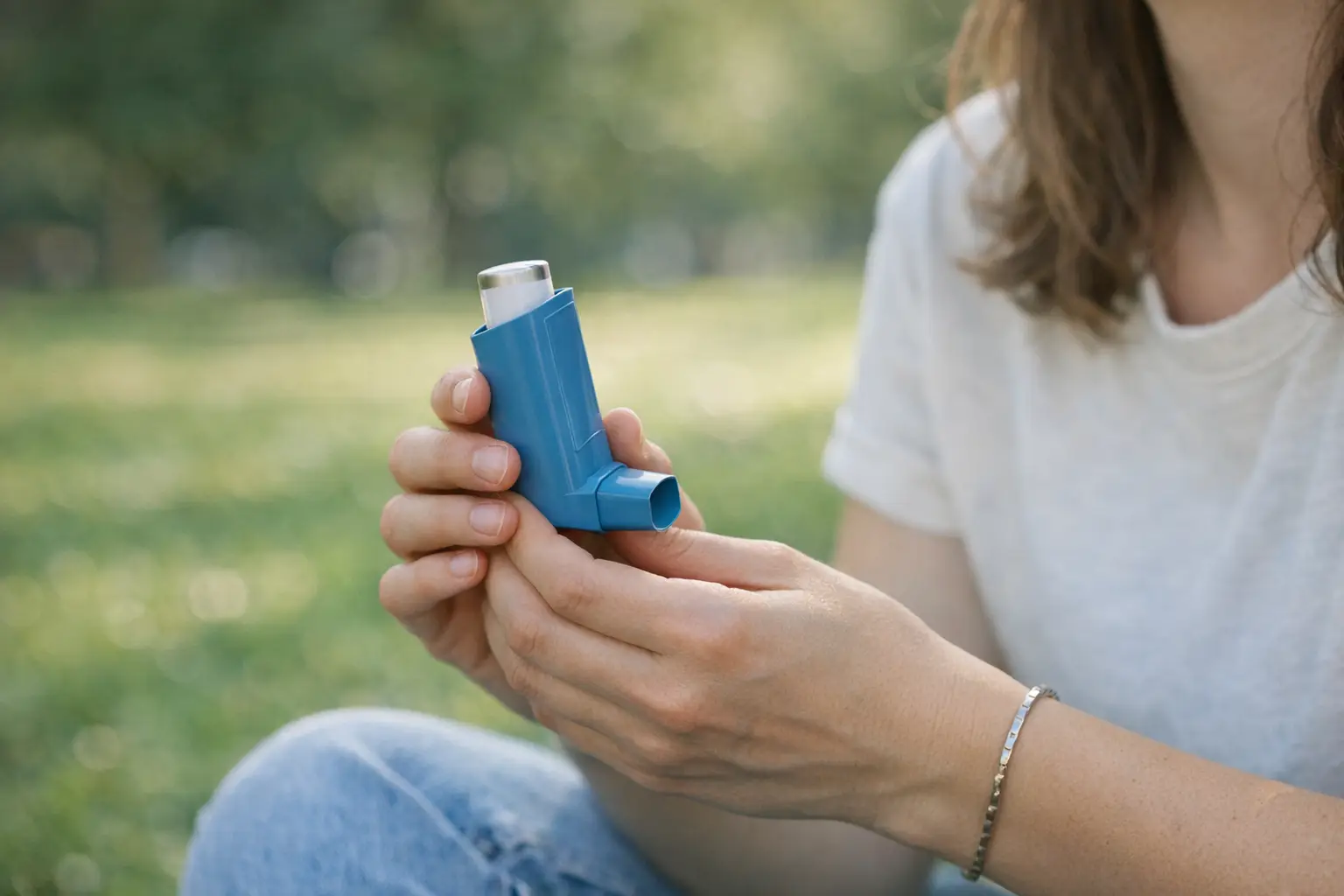
Asthma symptoms occur when the airways become hypersensitive and temporarily narrow — typical signs include episodic shortness of breath, wheezing, chest tightness, and coughing, especially at night or during exertion. Specific triggers such as allergens, cold air, physical activity, or infections often set off the symptoms. Asthma can be well identified and, with medical guidance, can usually be managed in such a way that a largely normal daily life is possible. The key is to know your own triggers.
Possible causes
Allergic Asthma
The airways often react hypersensitively to allergens such as pollen, house dust mites, or animal dander. Symptoms then occur upon contact with the trigger or seasonally.
Irritants and Infections
Cold air, smoke, strong odors, or respiratory infections can irritate sensitive bronchi and trigger an attack. Dry indoor heating air in winter also often plays a role.
Exercise-Induced Symptoms
In some people, shortness of breath and coughing occur primarily during physical exertion. This does not mean that sports must be avoided — with good management, it can usually be well accommodated.
Typical steps at the doctor's office
- 1Your doctor will ask about patterns, triggers, and frequency of symptoms and will listen to your lungs, though the wheezing sound often only appears during airway narrowing.
- 2To confirm the diagnosis, a pulmonary function test is usually performed, which makes the narrowing of the airways measurable; if allergic triggers are suspected, allergy testing may be added.
- 3Treatment aims to keep the airways calm and prevent attacks. An individual plan is established together with your doctor and reviewed regularly — avoiding triggers and monitoring symptoms are essential parts of this.
What you can do yourself
- Learn to identify your personal triggers and avoid them as much as possible, such as smoke, dust, or known allergens.
- Maintain a low-irritant environment: well-ventilated rooms, minimal dust, and avoiding tobacco smoke help relieve the airways.
- Stay physically active in consultation with your doctor — appropriate exercise strengthens breathing rather than harming it.
- Monitor your symptoms and notice early on if they become more frequent or severe, so you can discuss this with your doctor.
Seek medical advice if you experience recurring shortness of breath, chest tightness, or wheezing cough, if the symptoms become more frequent, or if they interfere with your daily life and sleep. It also makes sense to review your treatment plan together with your doctor if previously controlled symptoms increase again.

Frequently asked questions
- Can I exercise with asthma?
- In most cases, yes. With good medical management, regular physical activity is not only possible but beneficial. A gentle warm-up and avoiding known triggers help reduce exercise-induced symptoms.
- Does asthma go away?
- It varies. In some people, symptoms improve over time, while in others they persist. With appropriate care, asthma can usually be well managed and daily life hardly restricted.
- How do I recognize that my asthma is getting worse?
- Warning signs include more frequent or severe shortness of breath, nighttime coughing, increasing chest tightness, or finding familiar activities more difficult. If you notice such changes, you should have your treatment plan reviewed by your doctor.
Not sure whether you should go or whom to see? Describe your symptoms — we'll find the right practice in your area.