
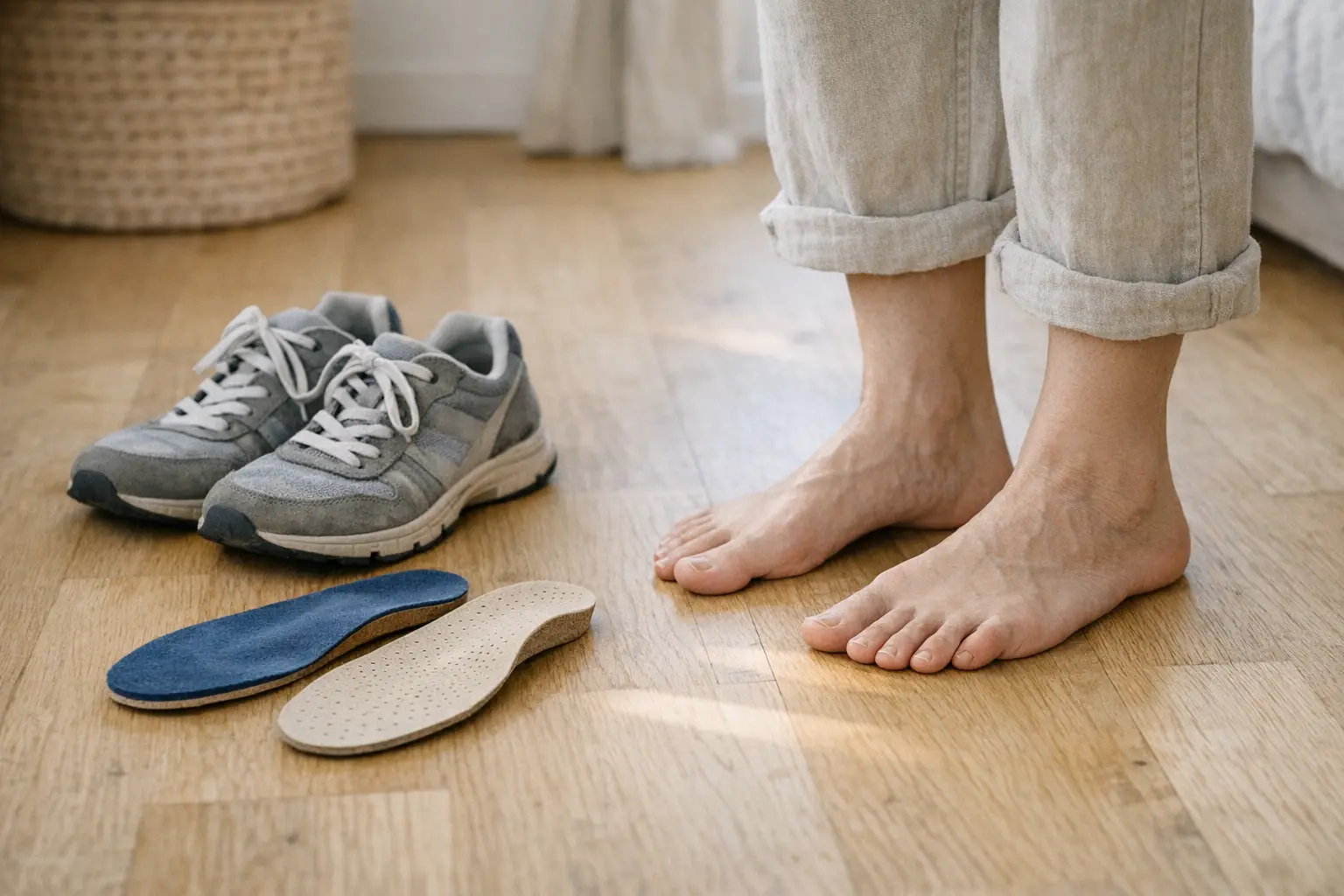
The foot carries us with every step and absorbs the entire body weight — no wonder foot pain is so common. Often the cause is incorrect loading, irritated tendons, or a heel spur. Where exactly it hurts — heel, forefoot, arch, or a toe — and when, often provides a good indication of the cause. Most foot complaints are harmless and improve with rest and the right shoes.
Possible causes
Irritation of the sole of the foot and heel spur
Pain in the heel or arch that is particularly severe when first standing in the morning often indicates irritation of the tendon plate under the foot. This is unpleasant but can be treated well.
Incorrect loading and misalignment
Flat feet, splay feet, or pronated feet distribute the load unfavorably and overload individual areas. Appropriate shoes and insoles if needed provide noticeable relief.
Tendon and ligament irritation
Overuse from sports, prolonged walking, or unaccustomed stress irritates the tendons and ligaments of the foot. Such complaints usually subside with rest.
Joint irritation
A single foot joint can also cause pain due to wear and tear or a metabolic inflammatory condition, often at the base of the big toe. This should be medically evaluated.

Typical steps at the doctor's office
- 1The doctor will ask where exactly and when it hurts, and will examine the foot shape, gait, and pressure points. Often the cause can be determined from the pain pattern and examination alone.
- 2Depending on the suspected diagnosis, imaging may follow: X-rays show bones and joints, ultrasound shows the tendons. If an inflammatory cause is suspected, blood tests may be added.
- 3Treatment begins conservatively: rest, appropriate footwear, insoles if needed, and targeted stretching and strengthening exercises. Anti-inflammatory measures are used as medically indicated.
What you can do yourself
- Wear well-fitting, cushioned shoes and avoid prolonged walking on hard surfaces without appropriate footwear.
- For heel or sole pain, gentle stretching exercises for the calf and sole of the foot help many people, especially in the morning.
- Rest the foot during the acute phase without immobilizing it completely, and gradually build up the load again.
- Reduce excess weight where possible, as it places additional stress on the feet with every step.
A doctor's visit makes sense if the pain persists for longer than one to two weeks, recurs, or significantly limits walking. Swelling, redness, or pain that occurs without an apparent cause is also a good reason to seek medical evaluation.

Frequently asked questions
- Why does the heel hurt especially in the morning?
- Severe pain when first standing in the morning is typical of irritation of the tendon plate under the foot. Overnight the tissue shortens, and the first steps stretch it painfully. Stretching exercises help many people.
- Do I need insoles?
- In cases of misalignment or unfavorable loading, insoles can provide noticeable relief to the foot. Whether they make sense depends on the cause and is best assessed by a doctor or in physiotherapy.
- Which doctor should I see?
- For loading and misalignment pain, orthopedics is responsible. Your general practitioner can properly assess the complaints and initiate further evaluations if an inflammatory cause is suspected.
Not sure whether you should go or whom to see? Describe your symptoms — we'll find the right practice in your area.