
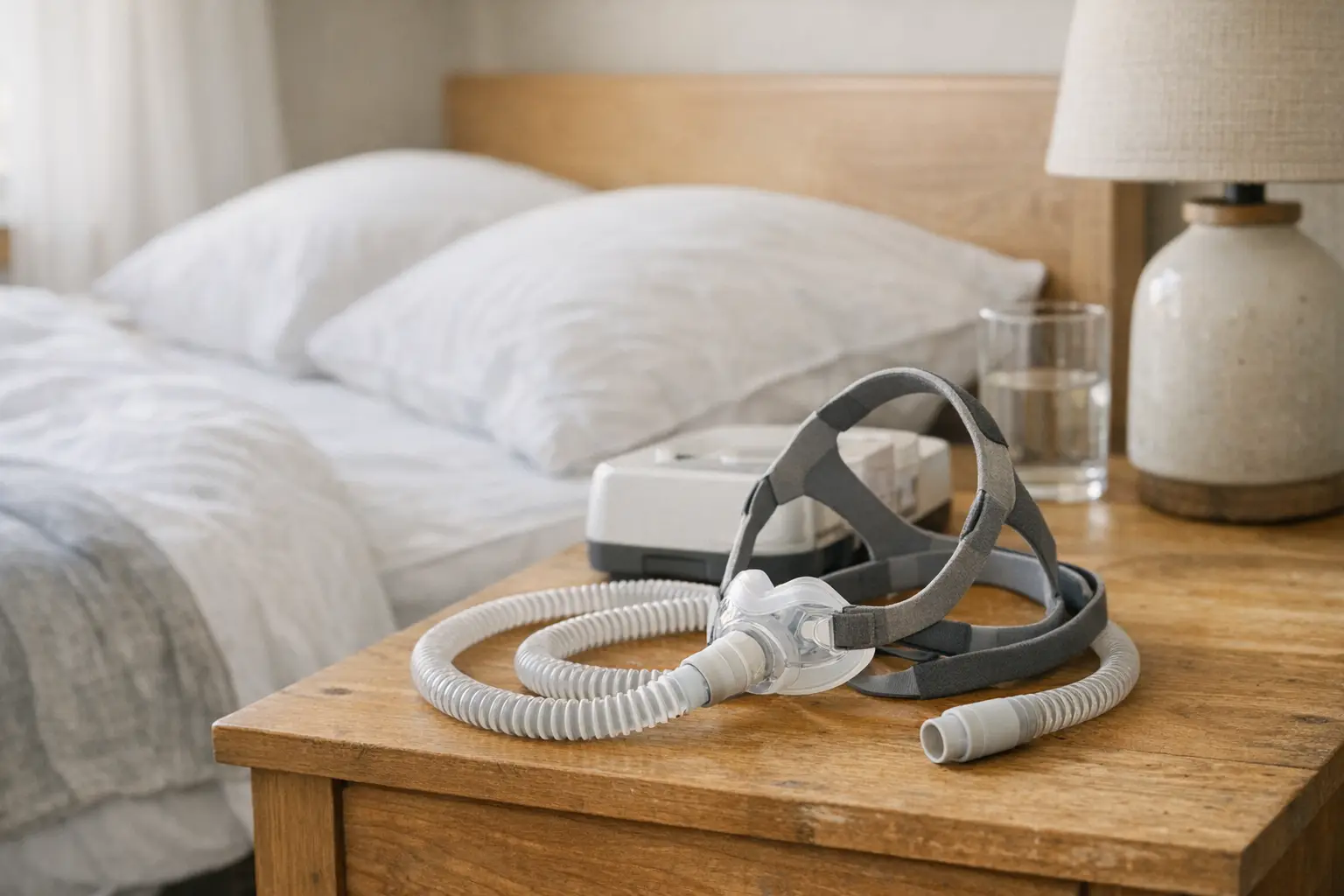
Snoring is widespread and bothersome for many people, especially for their partner. However, if breathing pauses and pronounced daytime sleepiness occur as well, this should be examined more closely. Sleep apnea may be the underlying cause, a condition in which breathing repeatedly pauses briefly during sleep. An evaluation helps improve sleep quality and overall well-being.
Possible causes
Relaxation in the throat
During sleep, the tissue in the throat relaxes and can narrow the airways, which produces the typical snoring sound.
Narrowed nasal breathing
A blocked nose, a deviated nasal septum, or polyps make breathing through the nose more difficult.
Excess weight
Additional tissue in the neck and throat area can constrict the airways when lying down.
Relaxing factors in the evening
Alcohol and certain sedatives in the evening relax the muscles additionally and promote snoring.

Typical steps at the doctor's office
- 1During the consultation, your sleep habits, daytime sleepiness, and observed breathing pauses are discussed, and your upper airways are examined.
- 2If breathing pauses are suspected, a sleep study may be added, often using a measuring device for use at home.
- 3Further treatment depends on the results and ranges from behavioral adjustments to aids and specialized therapies.
What you can do yourself
- Sleep on your side instead of on your back to keep the airways more open.
- Avoid alcohol and heavy meals in the late evening.
- Maintain a healthy body weight.
- Ensure regular sleep times and a well-humidified, quiet sleep environment.
If breathing pauses are observed or if severe daytime sleepiness persists despite adequate sleep duration, an evaluation is advisable. An ENT practice is responsible for this, with sleep medicine expertise added if needed.

Frequently asked questions
- Is snoring always a sign of sleep apnea?
- No, many people snore without breathing pauses. An evaluation only becomes important when combined with pauses and daytime sleepiness.
- Does sleep position help against snoring?
- For some people, sleeping on their side reduces snoring. If symptoms persist, an evaluation is advisable.
Not sure whether you should go or whom to see? Describe your symptoms — we'll find the right practice in your area.