
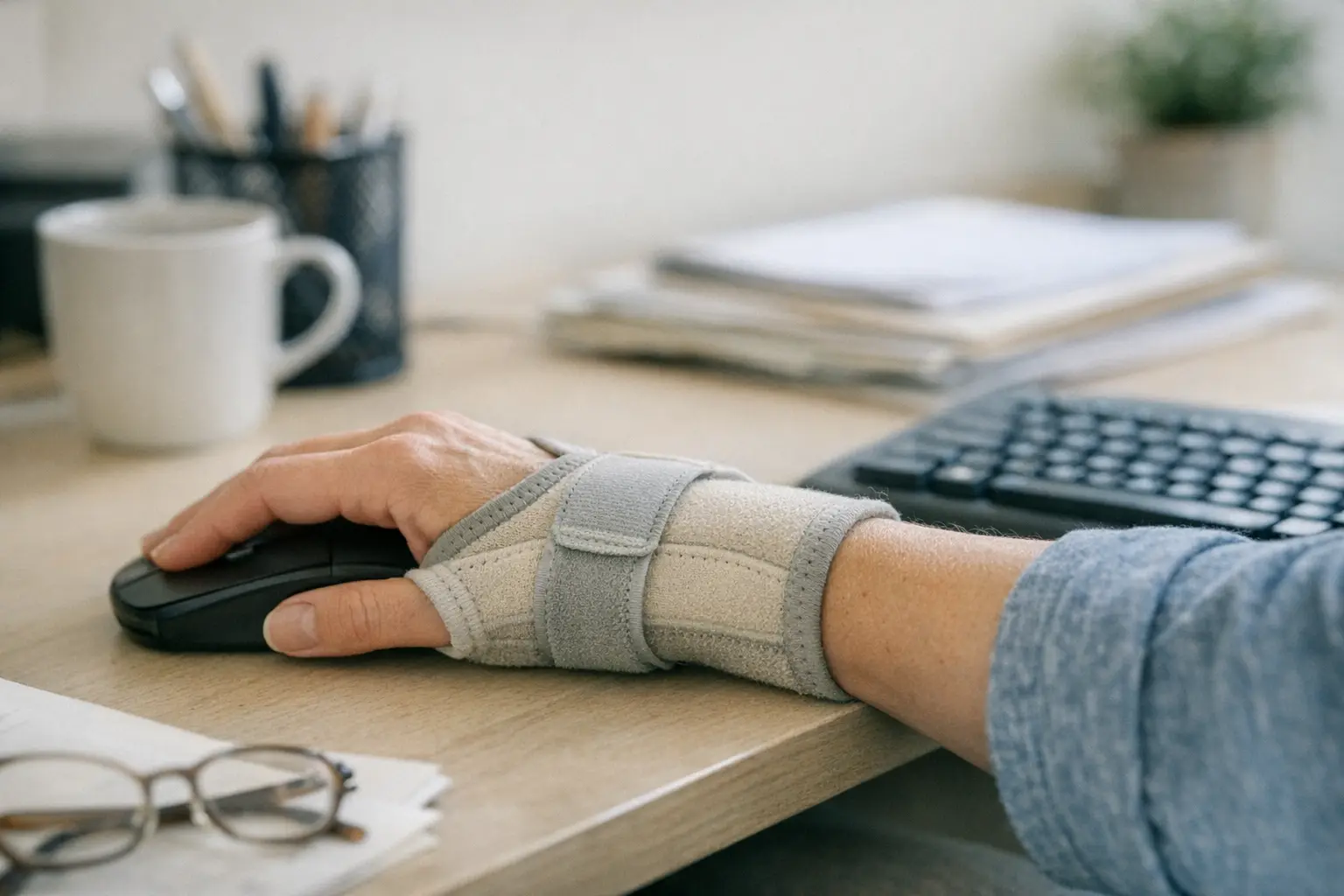
What is colloquially called "tendon inflammation" is, in medical terms, usually a tendinopathy: a strain-related change in the tendon accompanied by pain and loss of strength. Inflammatory processes may be involved, but they are not necessarily the main feature. The trigger is almost always overuse — when a tendon is repeatedly subjected to more strain than it is accustomed to. Typical examples are tennis elbow or golfer's elbow, the Achilles tendon, or tendons at the wrist and shoulder. The pain occurs during activity and usually subsides at rest. With rest from strain and a bit of patience, these complaints generally heal on their own.
Possible causes
Overuse from repetition
The most common cause: repetitive movements during sports, work, or household tasks irritate the tendon. Typically, the pain occurs with the triggering movement and subsides with rest.
Unaccustomed strain
After a sudden increase in training or physical work, the tendon becomes overwhelmed. A slow, gradual increase in load prevents such irritation.
Improper loading and technique
Unfavorable movement technique or muscular imbalance places one-sided stress on individual tendons. In this case, it helps to specifically improve the triggering movement.

Typical steps at the doctor's office
- 1Your doctor will ask which movements trigger the pain and will examine the affected tendon with targeted stress tests and palpation. This usually allows clear identification of the irritated tendon.
- 2If needed, an ultrasound can show the tendon and any irritation in detail. Further imaging is only necessary in unclear or persistent cases.
- 3The focus is on reducing the triggering movement, targeted physical therapy with stretching and strengthening exercises, and anti-inflammatory measures as prescribed by your doctor when needed. Healing often requires some patience.
What you can do yourself
- Temporarily reduce the movement that triggers the pain — but avoid complete immobilization.
- In the acute phase, cooling can relieve the irritation; later, heat is beneficial for the muscles.
- After the acute phase, gradually and incrementally rebuild the load rather than immediately returning to full activity.
- Pay attention to proper technique and adequate warming up during sports and work.
It makes sense to see a doctor if your symptoms don't improve after two to three weeks despite rest, if they keep returning, or if they limit you in your work and daily life. Significant swelling or noticeable loss of strength also warrant evaluation.

Frequently asked questions
- How long does it take for tendonitis to heal?
- This often requires more patience than expected — frequently several weeks. Tendons have poorer blood supply than muscles and therefore heal more slowly. Returning to full activity too soon delays healing.
- Should I completely rest the tendon?
- No. Targeted, measured loading with the right exercises promotes healing better than complete rest. Only the triggering overuse should be temporarily reduced.
- Can I continue doing sports?
- Often yes, in modified form. You should temporarily avoid movements that place heavy stress on the affected tendon, while gentler alternatives usually remain possible. Physical therapy helps you find the right balance.
Not sure whether you should go or whom to see? Describe your symptoms — we'll find the right practice in your area.