
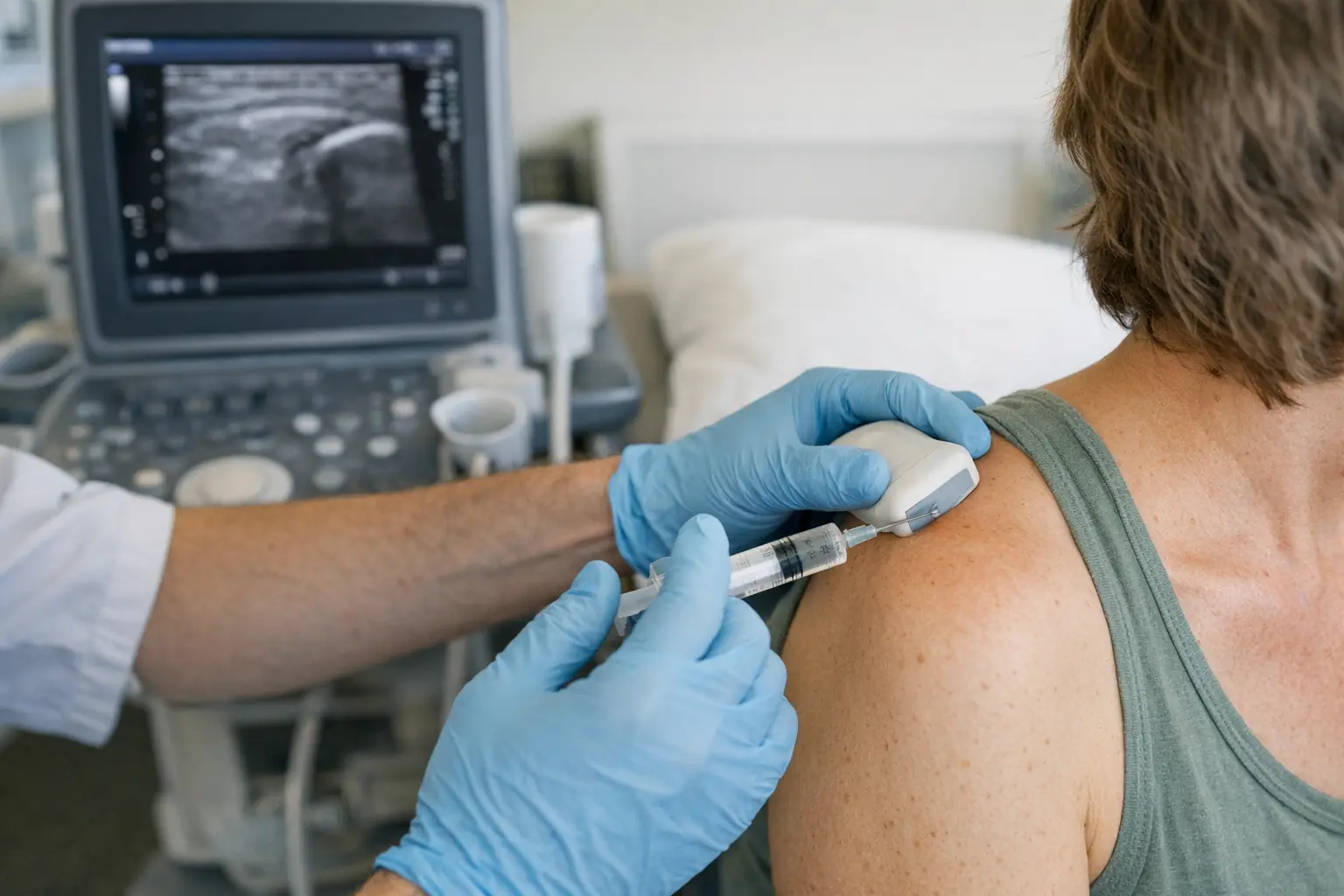
During a cortisone injection, your doctor injects an anti-inflammatory medication directly at the site of your symptoms — for example into a joint, near an irritated tendon, or close to a compressed nerve root. The aim is to calm local inflammation and noticeably relieve pain for weeks to months. This often creates a window of time in which physiotherapy and movement become possible again.
Typical Areas of Use
- Osteoarthritis flare-up in knee, hip or shoulder
- Irritated tendons and bursae
- Back pain with nerve root irritation (sciatica)
- Inflammatory joint diseases
- Entrapment syndromes such as carpal tunnel syndrome
How It Works
- 1Your doctor will discuss with you which site will be treated and will carefully disinfect the skin — you will be sitting or lying comfortably.
- 2Depending on the body site, the injection point is monitored with ultrasound or X-ray to ensure the medication reaches exactly where it needs to work.
- 3The actual injection takes only a few moments; usually the cortisone is combined with a local anaesthetic, which makes the injection milder.
- 4Afterwards, the site is covered with a plaster, and you remain in the practice for a short while for observation.
How to Prepare
- Inform your doctor about blood thinners, allergies and any diabetes — the procedure will then be adjusted.
- Wear clothing that provides easy access to the site being treated.
- Contact the practice beforehand if you feel unwell or have a fever — in case of an infection, the injection is usually postponed.
Side Effects & Risks
- Temporary pain intensification during the first one to two days (so-called cortisone flare)
- Bruising or pressure sensation at the injection site
- Rarely, infection of the joint — hence the strict hygiene rules
- In diabetes, temporarily elevated blood sugar levels
- With very frequent injections, possible weakening of tendon and cartilage tissue
Rest the treated area on the day of the injection and avoid intensive sport for a few days; everyday movements are allowed. A slight pulling sensation or brief increase in pain during the first 48 hours is normal and will resolve on its own — cooling helps. Contact your doctor promptly if the site becomes increasingly painful, swollen, warm or red, or if fever develops: this could indicate an infection and needs to be examined immediately.

Cost & Insurance
Medically indicated cortisone injections performed by your doctor are usually covered by basic health insurance, including any imaging guidance with ultrasound or X-ray. The deductible and co-payment apply as usual. No special prescription is needed, as the treatment is performed directly by the doctor — if in doubt, check with your insurance.
Frequently Asked Questions
- Does a cortisone injection hurt?
- The injection feels similar to having blood drawn, somewhat more noticeable depending on the body site. Usually a local anaesthetic is injected as well, so the moment is quite tolerable. A brief sensation of pressure during injection is normal.
- How quickly does the injection work?
- The anaesthetic works immediately but wears off after a few hours. The actual cortisone effect builds up over two to seven days. Before that, the pain may even temporarily be somewhat stronger — this is known and harmless.
- How long does the effect last?
- This varies greatly from person to person: from a few weeks to several months. The injection treats the inflammation, not the underlying cause — which is why it is often combined with physiotherapy or exercise.
- How often can you have cortisone injections?
- There is no rigid limit, but restraint is the rule: at the same joint, injections are usually repeated only a few times per year and with sufficient intervals. Your doctor weighs the benefits and risks anew each time.
- Am I fit to drive afterwards?
- Usually yes. However, if a leg was treated or a large amount of anaesthetic was used, the site may temporarily be numb or less able to bear weight — discuss this before the appointment, and if in doubt plan to have someone accompany you.