
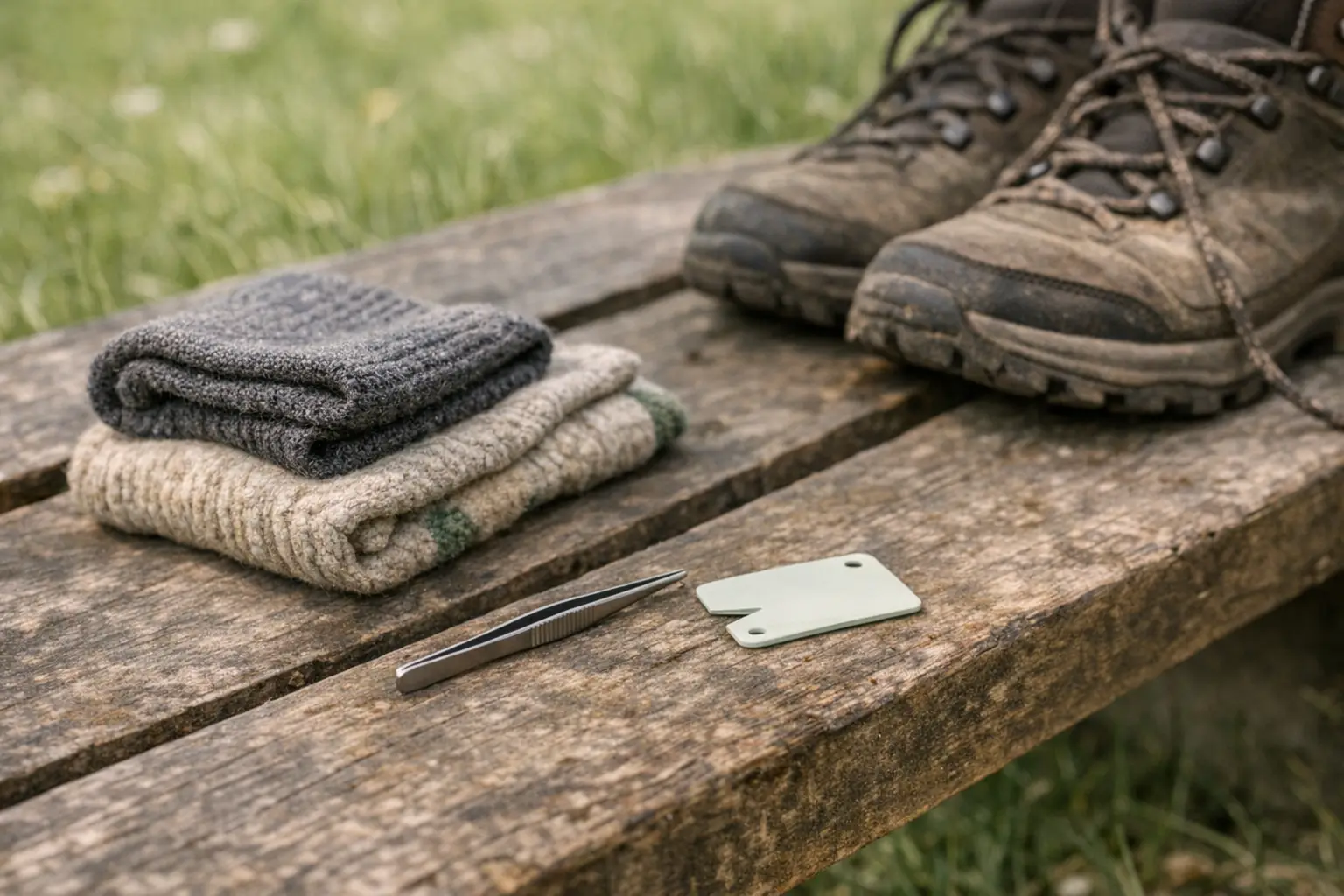
Tick bites are common in Switzerland, especially during the warm season and when spending time in forests, meadows and gardens. The vast majority of bites are completely harmless and heal without any consequences. It is important to remove the tick quickly and correctly and to keep an eye on the bite site in the weeks that follow.
Possible causes
Contact in nature
Ticks live in long grass, undergrowth and bushes and attach themselves to clothing and skin when you brush past. Spending time in such environments is the most common cause of a bite.
Normal reaction at the sting site
The vast majority of tick bites have no consequences. A small redness directly at the bite site immediately afterwards is a normal reaction.
Two diseases: Lyme disease and FSME
Ticks can transmit two diseases in Switzerland: Lyme disease (bacteria; typically a migrating redness 3 to 30 days after the bite; treatable with antibiotics, no vaccination) and FSME (virus, meningitis; a vaccination is recommended for everyone aged 6 and above who lives in or spends time in Switzerland, except in the cantons of Geneva and Ticino).
Protection through prevention
Wearing closed clothing, checking your skin for ticks after spending time outdoors, and the FSME vaccination reduce the risk associated with tick bites.

Typical steps at the doctor's office
- 1Remove the tick as quickly as possible by grasping it close to the skin with fine tweezers or a tick card and pulling it out steadily without squeezing it.
- 2Clean the bite site afterwards and make a note of the date so you can assess how things develop.
- 3Monitor the site over the following weeks; your doctor will determine the next steps if there are skin changes or general symptoms.
What you can do yourself
- After spending time in forests and meadows, thoroughly check your skin and scalp for ticks, including in skin folds.
- In tick-prone areas, wear clothing that covers your skin as much as possible and choose light colours, which make ticks easier to spot.
- Make a note of the date you removed the tick and keep an eye on the bite site for several weeks.
- Get advice about tick protection and vaccination for your region if you have questions.
Contact your GP if a spreading skin redness appears around the bite site in the days to weeks afterwards, or if general symptoms develop. A consultation also makes sense if the tick could not be removed completely or if you are uncertain.

Frequently asked questions
- How do I remove a tick correctly?
- Grasp the tick with fine tweezers or a tick card as close to the skin as possible and pull it out steadily without squeezing its body. Then clean the site and note the date.
- Do I need to see a doctor after every tick bite?
- No. Most stings remain without consequences. A conversation is advisable if a spreading redness appears, general symptoms occur, or you are unsure.
- What should I watch out for in the weeks afterwards?
- Keep an eye on the bite site and watch for a spreading redness of the skin, which typically appears 3 to 30 days after the bite, as well as symptoms such as fever or aching limbs. If such changes occur, a check-up is advisable.
Not sure whether you should go or whom to see? Describe your symptoms — we'll find the right practice in your area.