
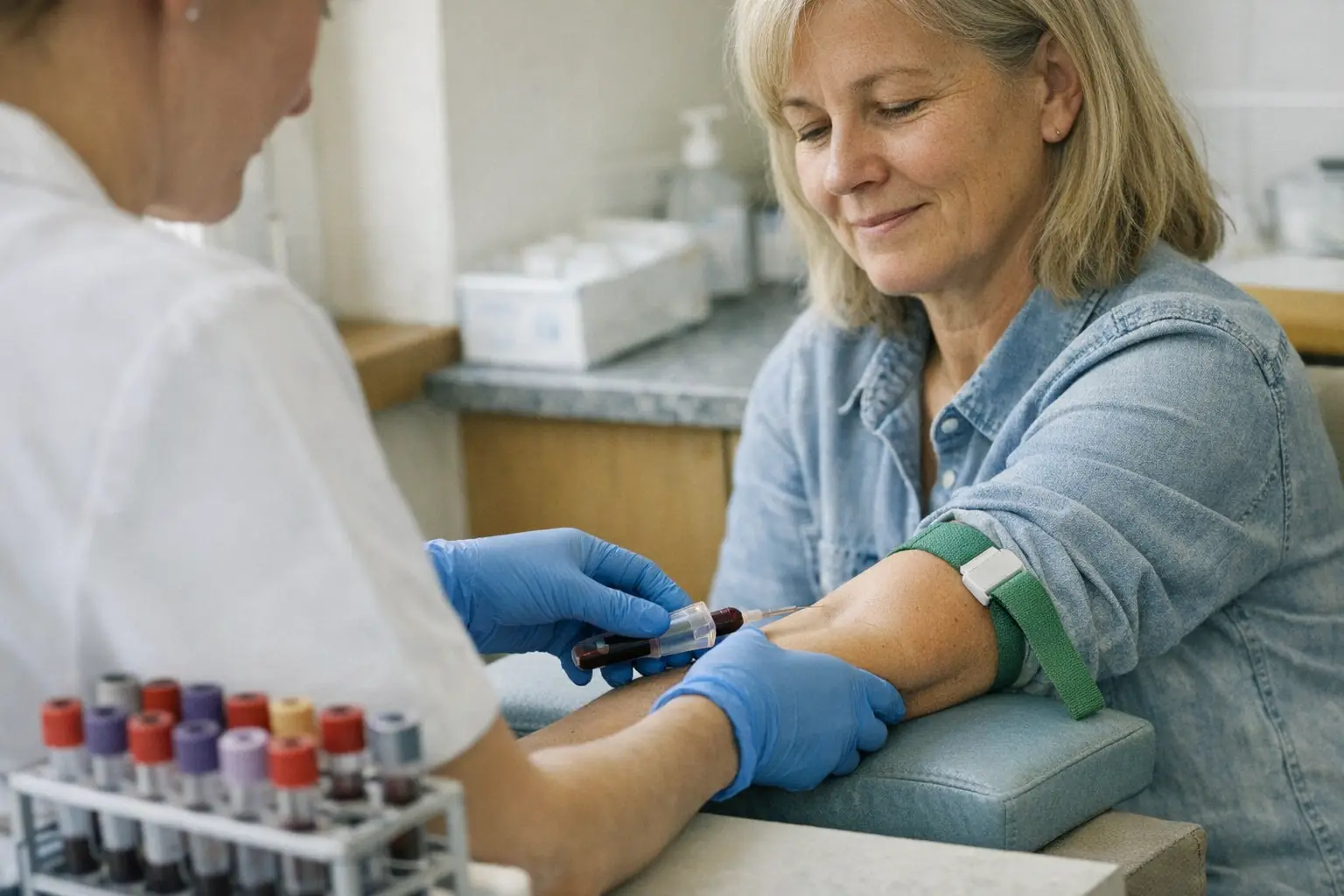
The blood test is one of the most common and informative examinations: from just a few vials of blood, organs, inflammation, metabolism and much more can be assessed. It helps to classify symptoms, confirm diagnoses and monitor treatments.
Typical Areas of Use
- Preventive and check-up examinations
- Investigation of tiredness and exhaustion
- Detection of inflammation and infections
- Monitoring of blood sugar, blood lipids and thyroid values
- Monitoring of ongoing medication treatment
How It Works
- 1The healthcare professional applies a tourniquet to the upper arm, disinfects the puncture site and locates a clearly visible vein, usually in the crook of the elbow.
- 2One or more vials of blood are drawn using a thin needle — this takes less than a minute.
- 3You receive a swab and a plaster; brief pressure helps prevent bruising.
- 4The samples go to the laboratory; simple values are often available the same day, more specialized ones after a few days. Your doctor will discuss the results with you and interpret them.
How to Prepare
- For certain values such as fasting blood sugar or blood lipids, you must come fasting — the practice will tell you whether and for how long; drinking water is permitted.
- Being well hydrated makes the blood draw easier — drink a large glass of water beforehand.
- Take your medications as usual unless your doctor has arranged otherwise.
- If you tend to feel dizzy during blood draws, mention it beforehand — you can then lie down during the procedure.
Side Effects & Risks
- The puncture is briefly noticeable but quite tolerable.
- A small bruise at the puncture site is common and harmless; it disappears after a few days.
- Rarely, a brief circulatory reaction with dizziness may occur — this can be easily managed by lying down.
- Infections at the puncture site are a rarity when proper hygiene is observed.
After the draw, apply pressure to the puncture site for one to two minutes and avoid heavy lifting with that arm for a few hours. A bruise is normal and will heal on its own. Contact your doctor if the site swells significantly, becomes increasingly painful, or develops redness and warmth. Arrange to discuss the results — values only make sense in the context of your symptoms.

Cost & Insurance
Blood tests ordered by a doctor are usually covered by mandatory basic insurance; Franchise and the standard percentage participation apply as usual. Extensive elective analyses without a medical reason, however, may involve costs — if in doubt, ask beforehand at the practice or with your health insurer. This information is for guidance only and without guarantee.
Frequently Asked Questions
- Does a blood draw hurt?
- The puncture is briefly noticeable, comparable to a small prick, and over within seconds. Tell the healthcare professional if you are sensitive or tend to feel dizzy — it is often easier when lying down.
- Do I need to come fasting?
- Only for certain values, such as fasting blood sugar or blood lipids. The practice will tell you when making the appointment whether you should remain fasting. You may usually drink water.
- How quickly will I have the results?
- Common values such as blood count, inflammation or sugar levels are often available the same day, sometimes even directly at the practice. More specialized analyses take a few days.
- How much blood is drawn?
- Usually only a few vials totalling 10 to 30 millilitres — an amount the body replaces easily and quickly.
- What does a value outside the normal range mean?
- Not automatically an illness. Normal ranges are statistical spans, and individual deviations are often harmless. What matters is your doctor's interpretation in the context of your symptoms — sometimes a repeat test after a few weeks is sufficient.