
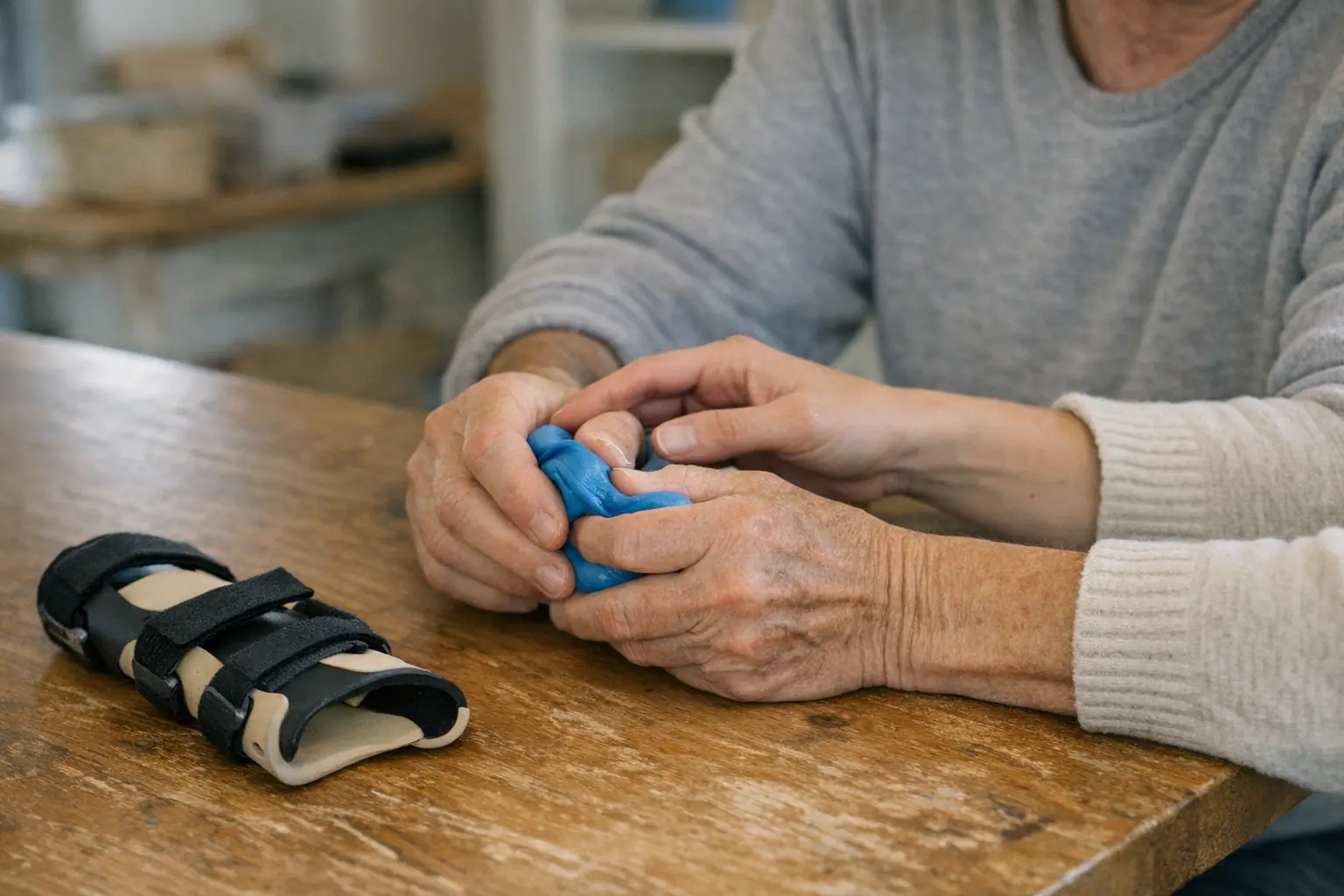
Occupational therapy helps you regain the ability to perform everyday activities independently — from getting dressed and writing to returning to work. It is used when illness, accident or surgery limit your functional ability, particularly often with problems affecting the hand and arm or following neurological conditions. Training is not abstract but focuses on what matters for your daily life.
Typical Areas of Use
- Hand and arm injuries, e.g. after surgery
- Consequences of stroke or neurological conditions
- Rheumatic complaints affecting hands and joints
- Concentration and memory problems
- Adaptations to daily life and workplace
How It Works
- 1At the beginning, the occupational therapist clarifies which everyday activities are difficult for you and what you would like to be able to do again — from this, concrete, everyday goals are developed.
- 2In the sessions, you practise specifically: with functional training for hand and arm, dexterity and perception exercises, or training of concrete everyday activities.
- 3If needed, aids or splints are fitted and their use is practised; advice on home or workplace adaptations is also part of the service.
- 4Progress is reviewed regularly and the home exercises are adjusted accordingly.
How to Prepare
- Bring the medical prescription and relevant reports.
- Wear comfortable clothing; for hand therapy, remove jewellery from the affected hand.
- Think in advance about which everyday situations cause you the most difficulty — this helps with goal-setting.
Side Effects & Risks
- Temporary fatigue or mild irritation of the structures worked on, especially after hand therapy.
- Splints can initially cause pressure points — they are then adjusted.
- Frustration with slow progress is normal; speak openly about it so that goals can be adjusted.
- Serious complications are very rare.
After the sessions, the hand or area you have worked on may feel somewhat tired; continue the exercises and everyday strategies discussed at home, as that is where success is determined. Wear splints as agreed. Contact your therapist or doctor if pain increases significantly, a splint presses or rubs, swelling or sensory disturbances occur newly, or your functional ability suddenly deteriorates.

Cost & Insurance
Occupational therapy is covered by basic health insurance when it is prescribed by a doctor and performed by recognised occupational therapists; the deductible and co-payment apply as usual. After accidents, accident insurance is often responsible, and for congenital defects, disability insurance. Billing usually goes directly through the insurance — if in doubt, ask your insurer.
Frequently Asked Questions
- What is the difference between occupational therapy and physiotherapy?
- Physiotherapy primarily aims at mobility, strength and pain relief. Occupational therapy starts one level higher: with the concrete activities of daily life — such as dressing, cooking, writing or working — and trains exactly these.
- Who is occupational therapy suitable for?
- For people of all ages whose functional ability in daily life is limited — for example after hand injuries, with rheumatic conditions, after a stroke, or with developmental difficulties in children.
- Do I need a medical prescription?
- Yes, for coverage by basic health, accident or disability insurance, a medical prescription is required. Your GP or specialist will issue this.
- How long does occupational therapy last?
- This varies greatly: after a simple hand injury, a few weeks are sometimes sufficient, whereas for neurological conditions, support over several months may be beneficial. Goals are reviewed regularly together.
- Does the occupational therapist also come to my home?
- In justified cases, yes — for example when the journey to the practice is not possible or training in your own home is particularly beneficial. Whether home treatment is indicated is decided by the doctor with the prescription.