
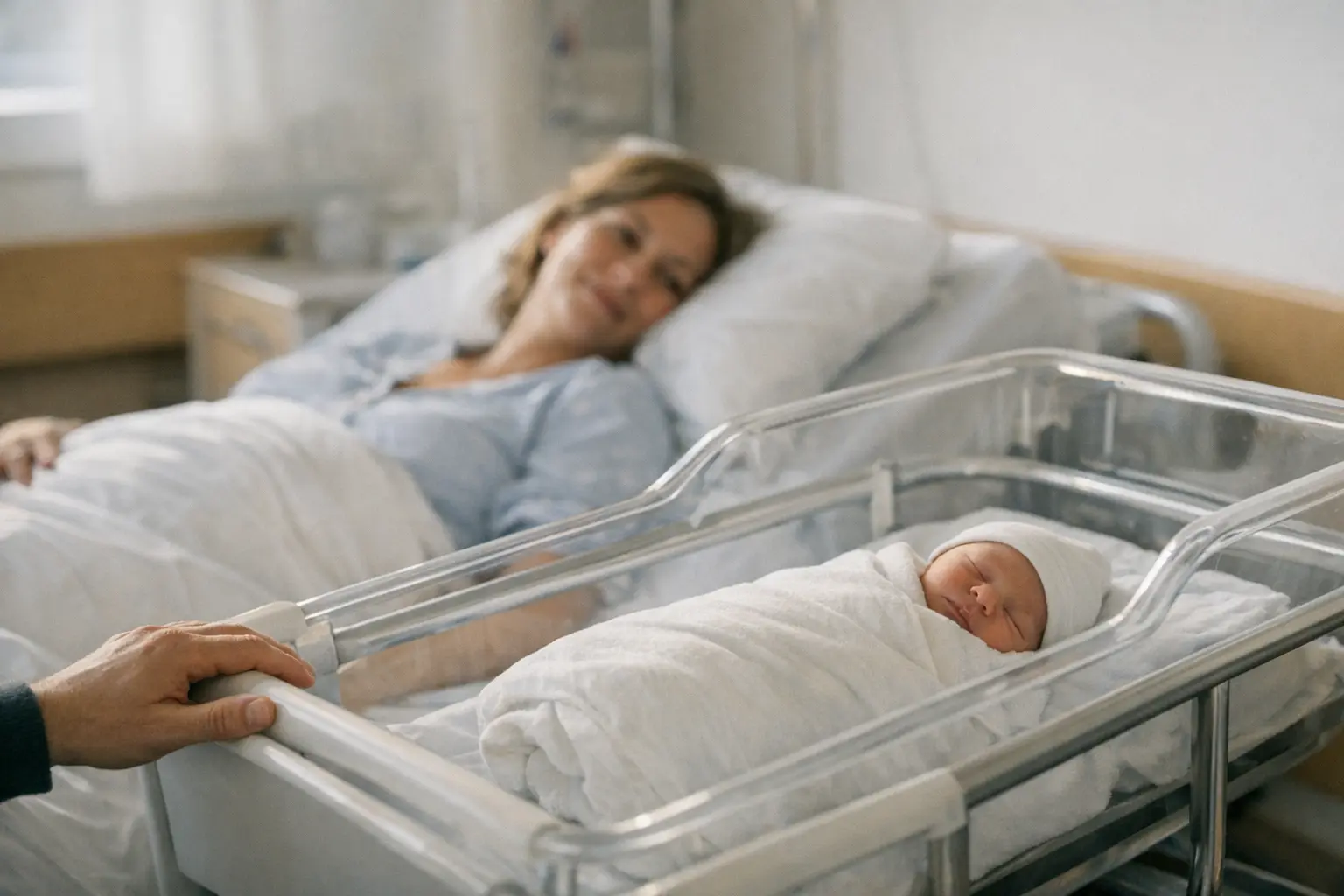
In a caesarean section, your baby is born through an incision in your lower abdomen — either planned, when medical reasons rule out a vaginal birth, or unplanned, when it becomes necessary during labour. In Switzerland, around one third of babies are born this way. Most of the time you are awake thanks to spinal anaesthesia and experience your baby's first moments directly.
Typical Areas of Use
- Unfavourable foetal position, such as breech presentation
- Placenta positioned in front of the cervix
- Multiple pregnancies in certain situations
- Labour arrest or foetal distress during labour
- Pre-existing conditions or previous surgery on the uterus
- By request after detailed counselling
How It Works
- 1For a planned caesarean section you discuss the date, type of anaesthesia and procedure in advance; usually spinal anaesthesia is chosen, where you remain awake and pain-free from the chest downwards.
- 2In the operating theatre an intravenous line, urinary catheter and anaesthesia are set up; your companion is usually allowed to be present and sits by your head.
- 3Through a transverse incision of around ten centimetres in your lower abdomen, the uterus is opened and your baby is delivered — from anaesthesia to birth often takes only a few minutes.
- 4Your baby is placed on your chest as soon as possible while the surgeon closes the uterus and abdominal wall carefully.
- 5After the monitoring period you go to the postnatal ward with your baby; the hospital stay usually lasts three to five days.
How to Prepare
- For a planned procedure you arrive fasting according to the hospital's instructions.
- Discuss your wishes in advance: birth partner, first breastfeeding, music — much is possible.
- Pack your hospital bag for yourself and your baby for a stay of several days.
- Arrange support for the first weeks at home, as you must not lift anything heavy at first.
Side Effects & Risks
- Wound pain and pulling at the scar in the first weeks — mobilisation still begins early.
- Blood loss, wound healing problems or infections, which are readily treatable.
- Thrombosis; as a preventive measure you receive injections and should get up early.
- Rarely, injury to neighbouring organs such as bladder or bowel.
- The scar on the uterus may play a role in later pregnancies — discuss any further family planning with your gynaecologist.
During the postpartum period, you get up early with support — this prevents thrombosis and helps recovery. The scar needs a few weeks: no heavy lifting (nothing heavier than your baby), abdominal muscle training and sport only after the follow-up check, driving only once you can move safely and with little pain. Lochia and afterpains are normal, as after any birth, as is breastfeeding — the midwife will support you with this. Please report promptly if the scar becomes red, weeps or is increasingly painful, in case of fever, foul-smelling or suddenly heavy lochia, swollen painful legs or shortness of breath — and likewise if your mood remains persistently low.

Cost & Insurance
Caesarean section is part of the maternity benefits covered by basic insurance: birth, hospital stay in the general ward, midwifery care and follow-up appointments are covered — and for maternity benefits the deductible and co-payment are waived. For a family room or semi-private/private ward you need supplementary insurance, which usually must have been taken out before pregnancy. It is best to clarify the details with your insurer early — without guarantee.
Frequently Asked Questions
- Will I be awake during the caesarean section?
- Usually yes: with spinal anaesthesia you are pain-free from the chest downwards, but fully conscious and experience your baby's birth. General anaesthesia is only necessary in certain situations, for example when things need to happen very quickly.
- Will I feel anything during the operation?
- Not pain — but sensations of pressure and pulling are normal, especially at the moment when your baby is delivered. The team will guide you through this and tell you what is happening at each stage.
- Can my partner be present?
- As a rule, yes: your companion sits by your head and experiences the birth with you. This is only not possible with general anaesthesia or in emergency situations.
- Can I breastfeed normally after a caesarean section?
- Yes. First skin-to-skin contact and first feeding are enabled as early as possible, often still in the operating theatre or recovery room. The midwives will support you in starting to breastfeed.
- How long does recovery take after a caesarean section?
- The hospital stay usually lasts three to five days; at home your body needs several weeks. Heavy lifting and exercise should be avoided until the follow-up check after around six weeks — allow yourself support in daily life.
- Is a normal birth possible later after a caesarean section?
- Often yes: many women can give birth vaginally with their next child after a caesarean section. Whether this is an option for you depends on the reason for the first caesarean and will be discussed with your gynaecologist.