
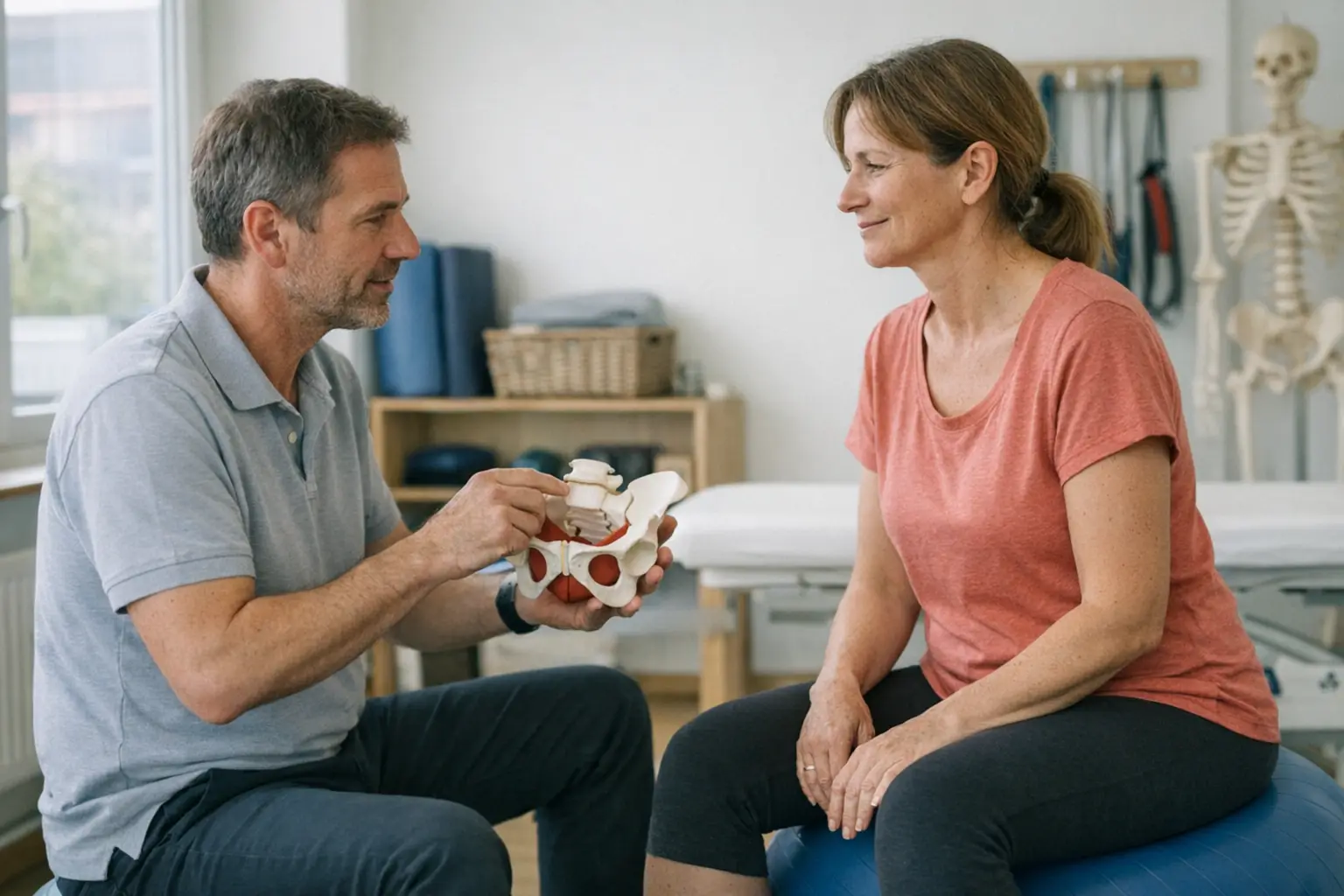
Pelvic floor therapy is a specialized form of physiotherapy for the muscles that support the bladder, bowel, and pelvic organs. It helps with bladder weakness, a feeling of prolapse, or pain in the pelvic area — in women as well as men, for example after childbirth or prostate surgery. With targeted training, this hidden musculature can often be strengthened considerably.
Typical Areas of Use
- Bladder weakness and involuntary urine loss
- Frequent or sudden urinary urgency
- Postnatal recovery after childbirth
- After prostate surgery
- Prolapse symptoms and pain in the pelvic area
How It Works
- 1In the initial consultation you describe your symptoms; the specialized therapist explains the anatomy and function of the pelvic floor — much of this is new to most people.
- 2You first learn to perceive the pelvic floor at all and to contract and relax it deliberately; the therapist checks the activation, if you wish and with your consent also through a gentle internal examination.
- 3Building on this, an individual exercise programme follows — partly supported by biofeedback devices that make muscle activity visible.
- 4The exercises are transferred to everyday situations, for example when lifting, coughing, or doing sport, and the programme is continuously progressed.
How to Prepare
- Bring your doctor's prescription and relevant reports.
- Wear comfortable clothing.
- Note in advance in which situations the symptoms occur — some practices provide a bladder diary for this purpose.
- It helps to come to the session without a completely full bladder.
Side Effects & Risks
- The therapy is very low-risk; initially the muscles may feel slightly fatigued after exercising.
- An internal examination may be perceived as uncomfortable — it only takes place with your consent, and there are alternatives.
- Excessive training can lead to pelvic floor tension; that is why relaxation is also part of the programme.
- Serious side effects are not to be expected.
The success of pelvic floor therapy comes primarily from regular practice at home — just a few minutes daily, consistently over weeks. A slight feeling of fatigue after training is normal. Consciously incorporate the contraction patterns you have learned into everyday situations, for example before coughing or lifting. Contact your therapist or doctor if pain in the pelvic area appears or increases, if bladder symptoms worsen despite training, or if burning during urination and fever develop.

Cost & Insurance
Pelvic floor therapy is covered by basic insurance as specialized physiotherapy when prescribed by a doctor — for example by your gynaecologist, urologist, or general practitioner; series of nine sessions are customary. The deductible and co-payment apply as usual. Preventive courses without a prescription (e.g. general postnatal classes) are sometimes covered by supplementary insurance — if in doubt, ask your insurer.
Frequently Asked Questions
- Is pelvic floor therapy only for women?
- No. Men also benefit, especially after prostate surgery with temporary bladder weakness. The exercise principles are similar; the programme is adapted individually.
- Do I have to undress for the therapy?
- Not necessarily. Much of the work is done clothed. An internal examination to assess muscle function can be useful, but only takes place with your consent — speak openly about what you are comfortable with.
- How quickly does pelvic floor training work?
- Muscle training takes time: initial improvements often appear after four to six weeks, significant progress usually after two to three months of regular practice.
- Does health insurance pay for pelvic floor therapy?
- With a doctor's prescription, yes — it counts as physiotherapy and is covered by basic insurance, minus the deductible and co-payment.
- Can I learn pelvic floor exercises on my own?
- Simple exercises can be found everywhere, but many people contract the wrong muscles without guidance. Professional supervision at the beginning ensures that you are training the correct musculature — after that you continue practicing independently.