
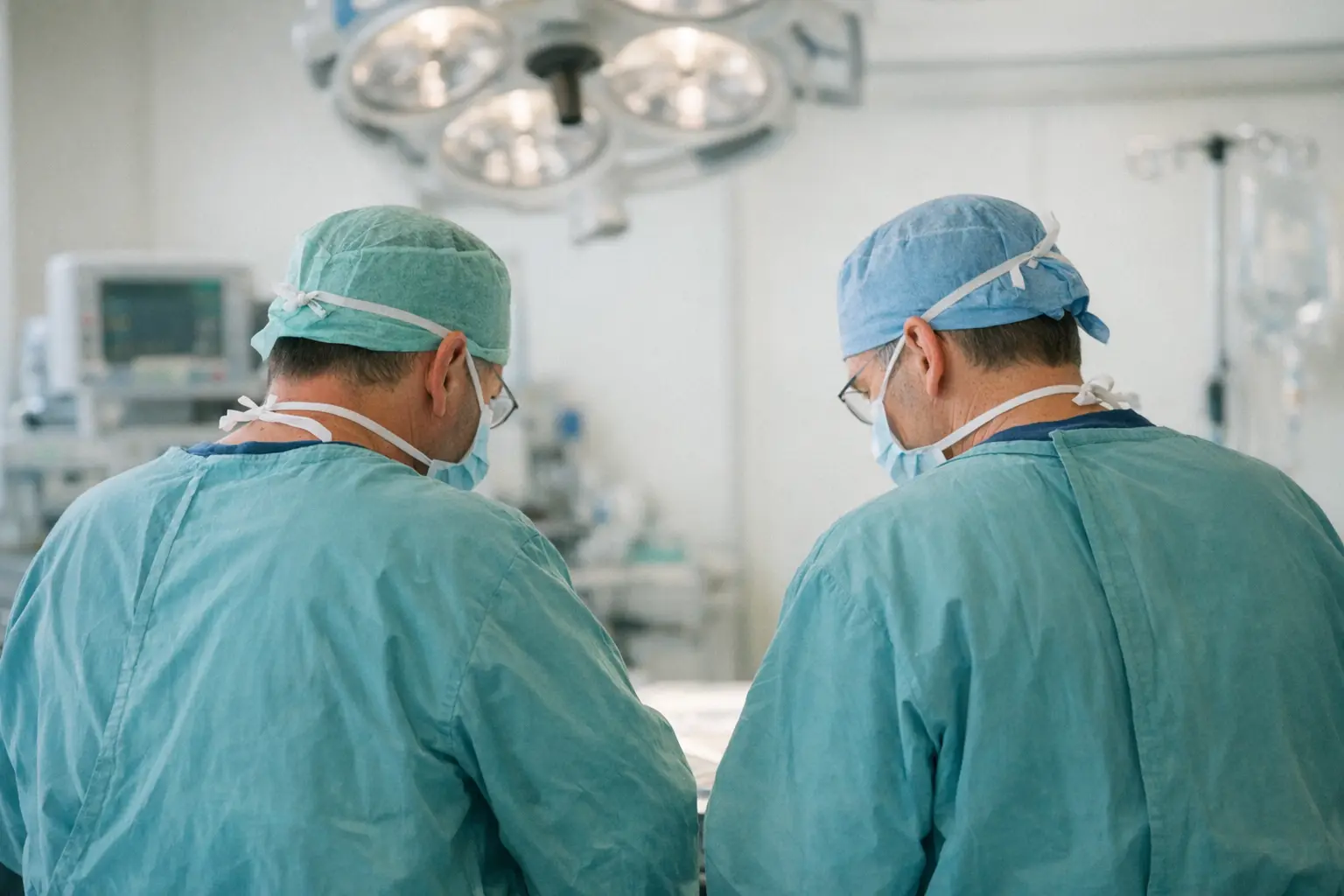
In an inguinal hernia, tissue protrudes through a weak point in the abdominal wall in the groin — often as a soft bulge that becomes more prominent when coughing or lifting. Since a hernia does not heal on its own, surgery is the only permanent treatment: the gap is closed and usually reinforced with a fine synthetic mesh.
Typical Areas of Use
- Palpable or visible bulge in the groin
- Pulling pain in the groin, especially during physical exertion
- Pressure sensation when coughing, straining or lifting
- Prevention of incarceration of the hernia contents
How It Works
- 1During the preliminary consultation, the findings and surgical method are discussed: minimally invasive through small incisions (keyhole technique) or open through a groin incision — what is suitable for you depends on the hernia and your situation.
- 2The procedure is usually performed on an outpatient basis and, depending on the method, under general anaesthesia or regional anaesthesia.
- 3The surgeon repositions the hernia contents back into the abdominal cavity and closes the hernia gap, usually reinforced with a fine mesh that permanently integrates into the tissue.
- 4The incisions are sutured or glued; after the recovery phase, you may usually go home the same day.
How to Prepare
- You must attend the procedure fasting; you will receive precise instructions from the anaesthesia team.
- Discuss blood-thinning medications with your doctor in advance — do not discontinue anything on your own.
- Arrange for someone to accompany you home and plan to take it easy for the first few days at home.
- If you have a severe cough or an infection before the appointment, notify your doctor — the procedure may be postponed.
Side Effects & Risks
- Bruising and swelling in the surgical area — common and usually harmless.
- Wound infections are rare and easily treatable.
- Temporary altered sensation or numbness in the groin; persistent groin pain is rare.
- A recurrent hernia (recurrence) is rare thanks to mesh technique, but not impossible.
- General anaesthetic risks, which the anaesthesia team will discuss with you in advance.
You may and should move around on the day of the procedure — walking is expressly encouraged. Heavy lifting and strenuous exercise should be avoided for two to four weeks depending on the method; follow your surgeon's instructions and listen to your body. A pulling sensation and bruising in the groin are normal. Contact your doctor promptly if the wound is severely reddened or weeping, if fever occurs, if the swelling increases significantly, or if sudden severe pain with nausea occurs — the latter must be assessed immediately.
Cost & Insurance
Inguinal hernia surgery is covered by basic health insurance; a medical referral to surgery is required. The deductible and co-payment apply as usual. Whether the procedure is performed on an outpatient or inpatient basis is determined by medical criteria — uncomplicated inguinal hernias are generally operated on an outpatient basis in Switzerland. If you have any questions, contact your insurance provider — no guarantee given.
Frequently Asked Questions
- Does every inguinal hernia need to be operated on?
- Not necessarily immediately: a small hernia without symptoms can initially be monitored under medical supervision. However, since it never heals on its own and symptoms usually increase, surgery is often recommended — your doctor will weigh this up with you.
- What happens if I don't have surgery?
- The hernia persists and may become larger. Rarely, tissue becomes incarcerated — this causes sudden severe pain and is an emergency that must be operated on immediately. It is precisely this risk that the planned procedure aims to avoid.
- How long will I be unable to work after the operation?
- For office work, usually a few days to a week; for physically demanding work, more like two to four weeks. Your surgeon will provide you with a certificate tailored to your occupation.
- Is the implanted mesh noticeable?
- Generally not: the fine synthetic mesh grows into the tissue and remains permanently in the body. It reinforces the abdominal wall and significantly reduces the risk of recurrent hernia.
- When can I drive again?
- As soon as you can sit without pain, move freely and brake firmly in an emergency — often after a few days. Driving is not permitted on the day of surgery due to the anaesthesia.