
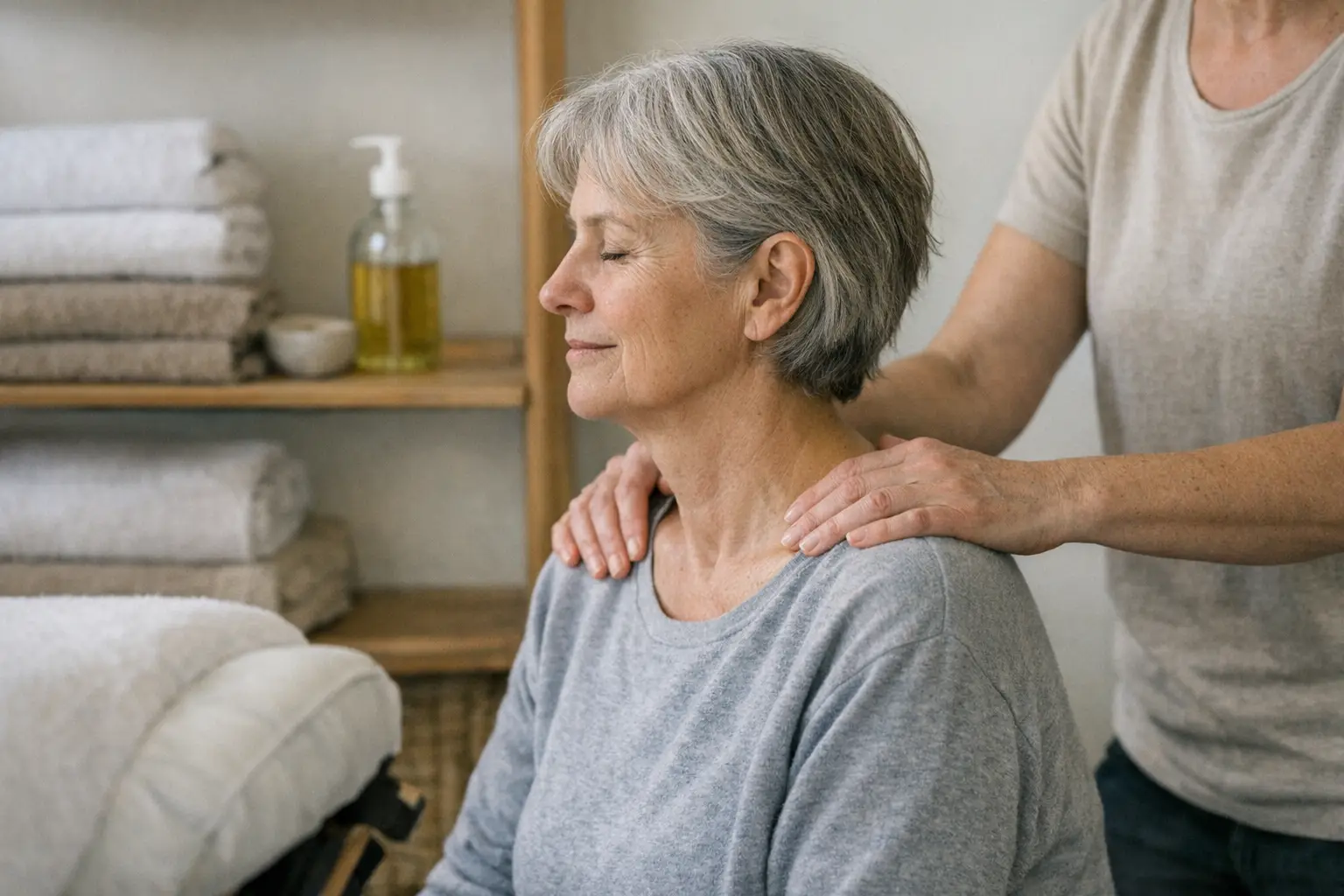
Medical massage treats muscles and connective tissue using targeted manual techniques — to release tension, promote circulation, and relieve pain. Unlike a wellness massage, it is based on a clinical assessment and is performed by trained medical massage therapists or physiotherapists.
Typical Areas of Use
- Muscle tension in the neck and back
- Tension headaches
- Muscular complaints after sport or one-sided strain
- Muscle hardening and trigger points
- Supportive treatment for stress-related complaints
How It Works
- 1At the beginning, the practitioner will ask about your complaints and palpate the affected muscles to localise tension and hardening.
- 2Treatment is usually carried out lying down; depending on the assessment, classical massage techniques, trigger point techniques, or connective tissue techniques are used.
- 3The intensity is continuously adjusted with you — a 'pleasant ache' is desirable, but severe pain is not.
- 4At the end, you will often receive advice on posture, movement, or stretching exercises to help the effect last.
How to Prepare
- No special preparation necessary; if possible, avoid scheduling intensive sport immediately afterwards.
- Inform the practitioner about pre-existing conditions, blood thinners, and skin problems.
- If available: bring a doctor's prescription or details of your supplementary insurance.
Side Effects & Risks
- Muscle-soreness-like complaints or tenderness to pressure for one to two days after treatment.
- Occasionally small bruises, especially with sensitive tissue or blood thinners.
- Temporary tiredness or circulatory reactions directly after the massage.
- In case of acute inflammation, fever, or certain medical conditions, massage will be avoided.
Allow yourself some rest after the massage and drink plenty of fluids; light movement such as a walk supports the effect. A feeling similar to muscle soreness the following day is normal and will resolve on its own. Contact the practitioner or your doctor if pain increases significantly after treatment, radiates to new areas, or if unusual swelling or extensive bruising occurs.

Cost & Insurance
Classic medical massage is not covered by mandatory basic insurance — unless it is provided as part of physiotherapy prescribed by a doctor. Many supplementary insurance policies, however, contribute to treatments by recognised medical massage therapists; what matters is that the practitioner is registered with your insurance provider. It is best to clarify coverage and recognition with your insurance provider before your first session — for guidance only, without guarantee.
Frequently Asked Questions
- What distinguishes medical massage from a wellness massage?
- Medical massage follows a clinical assessment: the practitioner examines the muscles, selects targeted techniques, and pursues a therapeutic goal. Wellness massage, on the other hand, focuses primarily on general relaxation.
- Does health insurance pay for the massage?
- The basic insurance generally does not — unless the massage is part of a prescribed physiotherapy treatment. Coverage through supplementary insurance is often possible, provided the practitioner is recognised by your insurer.
- Does a medical massage hurt?
- At hardened areas the pressure can be briefly intense, but this quickly subsides. The intensity is adjusted with you — severe pain is not a sign of effectiveness and should be reported.
- How often is massage advisable?
- For acute tension, one to a few sessions are often sufficient; for recurring complaints, a casual series may help. If complaints keep returning, a medical investigation of the cause is worthwhile.
- Am I fit to drive after the massage?
- Yes, as a rule you are. Some people feel a little tired or relaxed directly afterwards — if so, take a few minutes before getting behind the wheel.