
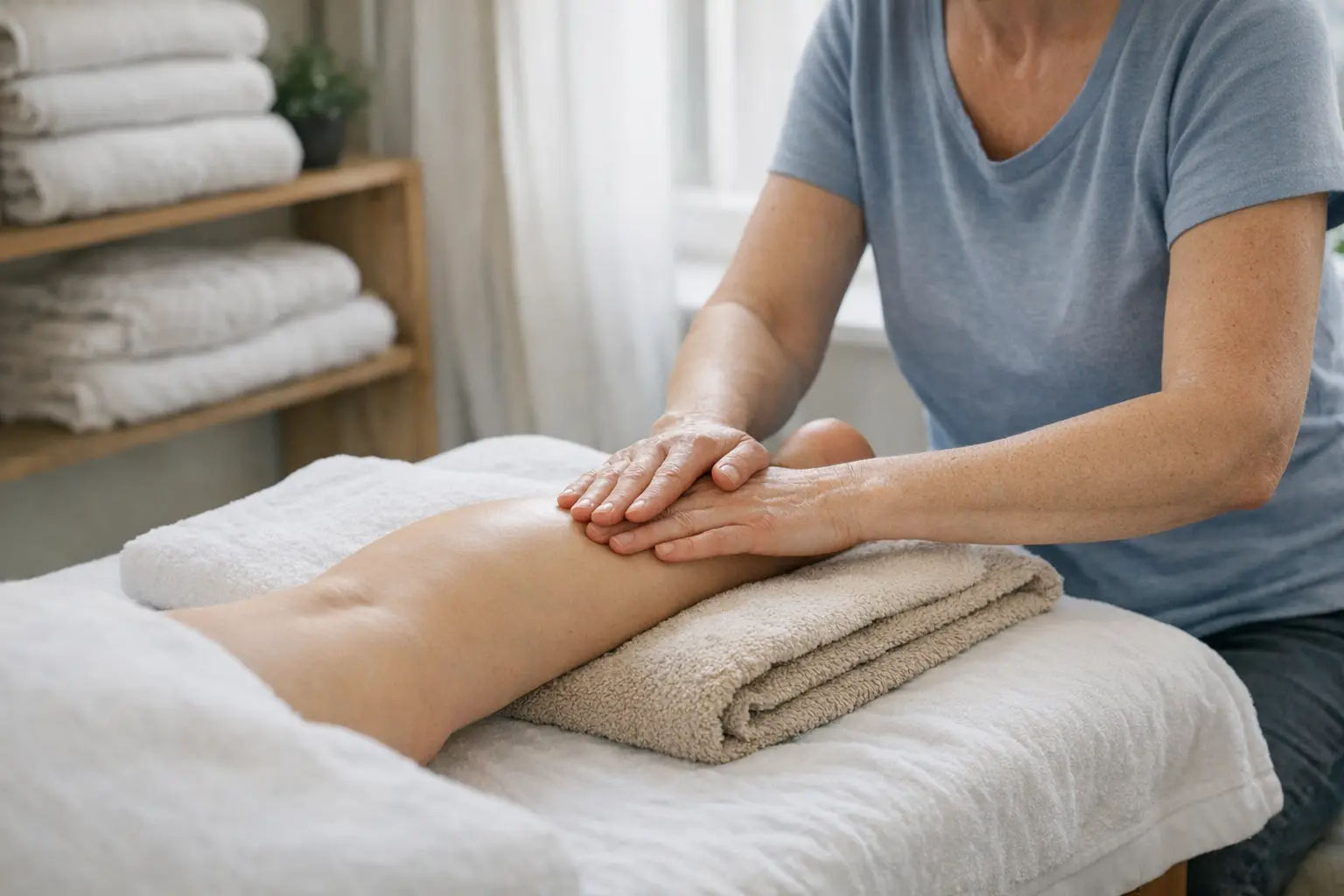
Manual lymphatic drainage is a very gentle treatment technique in which rhythmic, circular movements stimulate the drainage of tissue fluid. It helps to reduce swelling — for example in cases of lymphoedema, after surgery or following injuries. It is often combined with compression bandages or stockings to maintain the effect.
Typical Areas of Use
- Lymphoedema, e.g. after cancer treatment
- Swelling after surgery
- Swelling after injuries such as sprains
- Venous swelling of the legs
- Feelings of tension and heaviness in arms or legs
How It Works
- 1The therapist first assesses the swelling, its cause and the condition of the skin.
- 2Treatment is performed lying down with gentle, rhythmic movements — it often begins at the neck or trunk to open the drainage pathways, then works towards the swollen region.
- 3The movements are deliberately light and painless; many people find the treatment very relaxing.
- 4In cases of pronounced oedema, compression bandaging or putting on compression stockings follows directly afterwards to prevent the swelling from returning.
How to Prepare
- Wear comfortable, non-restrictive clothing.
- Bring your prescription and relevant reports; bring any existing compression stockings or bandages with you.
- Avoid applying cream to the skin of the affected region immediately beforehand if possible.
Side Effects & Risks
- The treatment is very gentle; occasionally temporary tiredness or increased urination may occur as fluid is mobilised.
- Slight redness of the skin on the treated areas is possible.
- In certain conditions (e.g. acute infections, severe heart failure, acute thrombosis) treatment is avoided — your doctor will clarify this beforehand.
- Serious side effects are very rare when treatment is correctly performed.
After treatment, fatigue and increased urination are normal — the body eliminates the mobilised fluid. Wear compression bandages or stockings consistently as discussed, as they secure the success of the treatment. Move regularly and care for the skin of the affected region carefully. Get in touch promptly if the swollen region suddenly becomes red, hot, or painful, if fever occurs, or if the swelling increases significantly despite treatment — these can be signs of an infection or thrombosis.

Cost & Insurance
Manual lymphatic drainage is covered by basic insurance when it is prescribed by a doctor and performed by recognised professionals (usually physiotherapists with appropriate training) — typically for lymphoedema or after surgery. The deductible and co-payment apply as usual. As a wellness treatment without a prescription, it is a private service — if in doubt, ask your insurer.
Frequently Asked Questions
- Does lymphatic drainage hurt?
- No — the movements are deliberately very gentle, much lighter than in a massage. Many patients find the treatment pleasant and relaxing.
- Why do I have to wear compression afterwards?
- Drainage moves fluid out of the tissue, but without counter-pressure the tissue quickly fills up again. Bandages or compression stockings maintain the effect and are therefore a central part of the therapy.
- How often is treatment needed?
- It depends on the cause: after surgery a few sessions are often sufficient; chronic lymphoedema usually requires several treatments per week initially and later ongoing maintenance therapy.
- Will my health insurance cover lymphatic drainage?
- With a doctor's prescription and treatment by recognised professionals, it is generally covered by basic insurance with deductible and co-payment. Purely cosmetic or wellness treatments are paid for privately.
- Can I do anything myself about the swelling?
- Yes: regular exercise, elevating the affected limb, careful skin care and consistently wearing compression all effectively support the treatment. Your therapist will show you suitable exercises.