
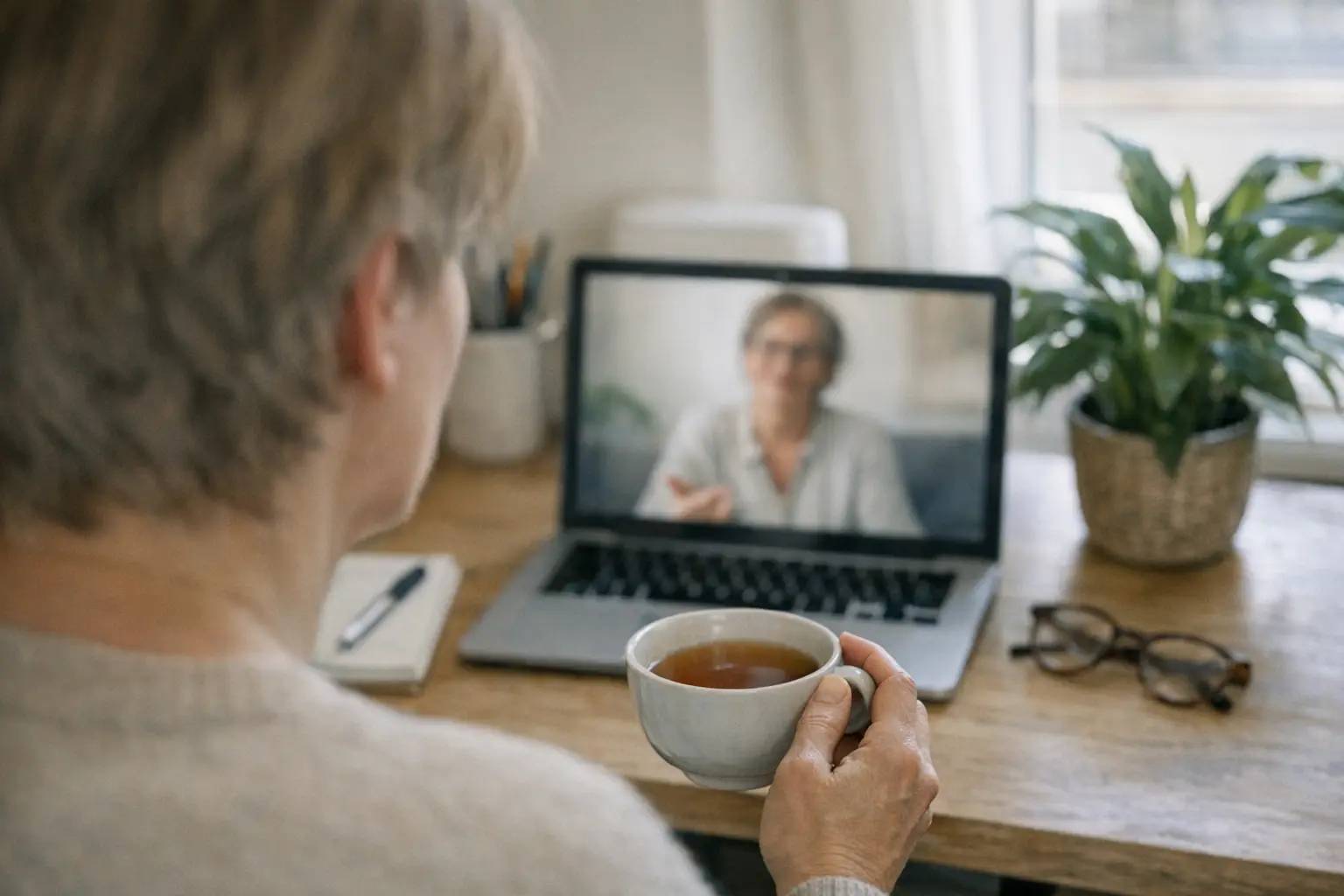
In online psychotherapy, sessions take place by video — with the same therapist, the same methods and the same confidentiality as in the practice, just from home. For many concerns it is similarly effective to in-person therapy and makes access easier, for example with long distances, limited mobility or a busy everyday life.
Typical Areas of Use
- Anxiety and panic
- Depressive moods
- Stress-related problems and exhaustion
- Sleep problems
- Continuation of therapy when moving or travelling
How It Works
- 1You make an appointment as usual; instead of coming to the practice, you receive a link to a secure video connection.
- 2At the agreed time, you log in from a quiet, undisturbed location — the session then proceeds like an ordinary therapy conversation.
- 3Methods such as conversational techniques, exercises or worksheets are adapted to the video format; documents are often shared digitally.
- 4Progress and goals are reviewed regularly — and where appropriate, video sessions can be combined with in-person appointments.
How to Prepare
- Make sure you have a quiet room where you can speak undisturbed and without anyone overhearing — headphones increase confidentiality.
- Check your internet connection, camera and microphone beforehand so that session time is not lost to technology.
- Keep the practice's telephone number at hand so you can switch to the telephone if connection problems occur.
- Plan a few minutes of transition after the session instead of jumping straight into your next appointment.
Side Effects & Risks
- Technical problems can disrupt sessions — an agreed alternative route, such as the telephone, addresses this.
- Confidentiality also depends on your environment: without an undisturbed space, speaking openly is difficult.
- Some people experience contact via screen as less close — in that case, switching to the practice or a mixed model may make sense.
- In acute crises or severe illnesses, the purely online format reaches its limits; your therapist will discuss with you which setting will support you safely.
After a video session, the natural transition of the journey home is missing — close your laptop consciously, air the room briefly or take a few steps before everyday life takes over again. Pensiveness or stirred emotions are normal, as after any therapy session. Contact your therapist if your symptoms deteriorate significantly or if the format does not work for you — and in acute crises always call the emergency number 144 or Die Dargebotene Hand (telephone 143), regardless of your next online appointment.

Cost & Insurance
The same rules apply for reimbursement as for in-person therapy: psychotherapy with psychological psychotherapists is covered by basic insurance with a medical referral, with psychiatrists directly — video sessions are generally recognised, provided the professional is licensed in Switzerland. The deductible and co-payment apply as usual. Pure self-pay apps and coaching services without a licensed therapist are not covered by insurance. This is for guidance without guarantee — if in doubt, ask your insurer.
Frequently Asked Questions
- Is online psychotherapy just as effective as in the practice?
- For many concerns, such as anxiety and depressive moods, studies show comparable effectiveness of video therapy and in-person therapy. What matters is a viable therapeutic relationship and an appropriate setting.
- How secure are the video conversations?
- Reputable providers use encrypted video solutions suitable for health data — ordinary consumer services are not ideal for this. Ask your therapist which solution they use, and ensure you have an undisturbed space yourself.
- What happens if the connection drops?
- Agree on an alternative route at the beginning, usually the telephone. If the connection drops, the session is continued by telephone or rescheduled promptly — lost time is not at your expense.
- Do I still need a medical referral for insurance coverage?
- Yes, the same rules apply as in person: for psychotherapy with a psychological psychotherapist you need a medical referral, with a psychiatrist you do not. The format — video or practice — does not change this.
- Can I mix online and in-person appointments?
- Yes, many practices offer mixed models: for example, regular in-person appointments and video sessions in between or during absences. Discuss with your therapist which combination makes sense for your concern.