
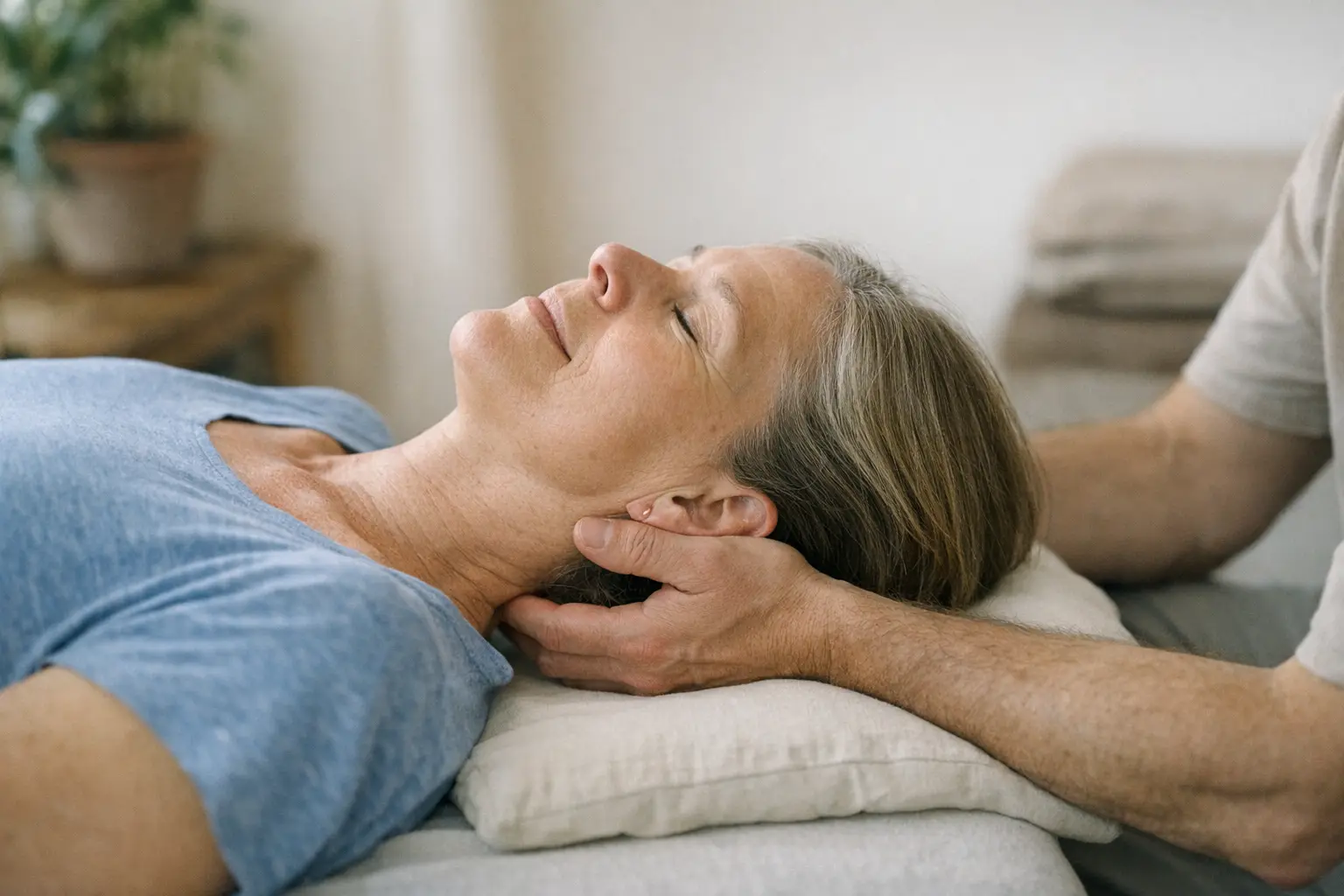
Osteopathy is a manual form of treatment: the hands are used to detect and treat tension, restricted movement and functional disorders of the musculoskeletal system. In Switzerland, the profession is legally regulated — osteopaths with a federally recognised qualification work independently. The evidence is best established for back pain; for many other areas of application, the body of research is thin.
Typical Areas of Use
- Back and lower back pain
- Neck tension
- Tension headaches
- Functional disorders of the musculoskeletal system
- Complaints following incorrect strain or sprain
How It Works
- 1It begins with a detailed discussion about your complaints, your medical history and any previous examinations — bring any existing reports or images with you.
- 2This is followed by a physical examination: the osteopath assesses your posture and mobility and systematically palpates muscles, joints and tissues.
- 3The treatment itself consists of targeted manual techniques — gentle mobilisations, stretches and pressure techniques; forceful, jerking manipulations are not the rule and are announced beforehand.
- 4At the end, the osteopath discusses with you how your body has responded, what you can do yourself and whether further sessions are advisable. If there are indications of an illness that requires medical investigation, they will refer you to your GP.
How to Prepare
- Wear comfortable, stretchy clothing; for some examinations the osteopath will treat you in your underwear.
- Bring relevant medical reports, X-ray or MRI findings and your medication list with you.
- Report any pregnancy, osteoporosis or blood-thinning medication before treatment.
Side Effects & Risks
- After treatment, muscle-soreness-like symptoms or tiredness for one to two days are common and harmless.
- Temporarily, the symptoms may initially worsen slightly.
- With forceful manipulations, particularly on the cervical spine, injuries are very rarely possible — mention it if you do not wish such techniques to be used.
- In cases of osteoporosis, recent injuries, tumour diseases or acute inflammation, certain techniques are unsuitable; careful assessment beforehand is therefore important.
Give your body a quiet day after the session without intensive exercise and drink plenty of fluids. A pulling sensation in the treated areas, slight tiredness or a temporary fluctuation in symptoms in the first one to two days is normal. Contact your osteopath or your GP if severe or radiating pain occurs for the first time, if numbness, signs of paralysis, dizziness or visual disturbances develop, or if your symptoms worsen significantly over several days.

Cost & Insurance
Osteopathy is not covered by basic insurance. The costs are usually covered in full or in part through supplementary insurance for complementary medicine — provided that the osteopath is recognised by your insurer (usually with a federal diploma or equivalent recognition and registration with the relevant registers). A medical prescription is not required, but may be requested depending on the insurer. It is best to clarify coverage, the list of recognised therapists and cost sharing with your insurer before the first session.
Frequently Asked Questions
- What is the difference between osteopathy, chiropractic and physiotherapy?
- All three work on the musculoskeletal system, but with different approaches: chiropractic is a university-level medical profession focusing on the spine and targeted manipulations, physiotherapy works extensively with active exercises on medical prescription, osteopathy treats primarily with gentle manual techniques and views the body as a whole. What suits you depends on your complaints — your GP can help with the assessment.
- Does the treatment hurt?
- Usually not. Most techniques are gentle; at tense areas the pressure may be briefly uncomfortable. Say something if anything hurts — the treatment will then be adjusted.
- How many sessions are usual?
- Often it becomes clear after just two to four sessions whether the treatment is working. If the symptoms do not improve, medical investigation is more sensible than a long series of treatments.
- What does an osteopathy session cost?
- Depending on the region and duration, costs usually range between around 120 and 200 francs per session. You pay the bill yourself initially and submit it to your supplementary insurance, provided you have one with complementary medicine cover.
- Is the effectiveness of osteopathy proven?
- For back and lower back pain, there are studies showing relief, comparable to other manual procedures. For many other areas of application — such as internal organs or complaints in infants — the scientific evidence is weak or lacking. Reputable osteopaths state this openly and do not replace necessary medical investigation.
- Am I fit to drive afterwards?
- Usually yes. If you exceptionally feel dazed or very tired after treatment, wait briefly before driving.