
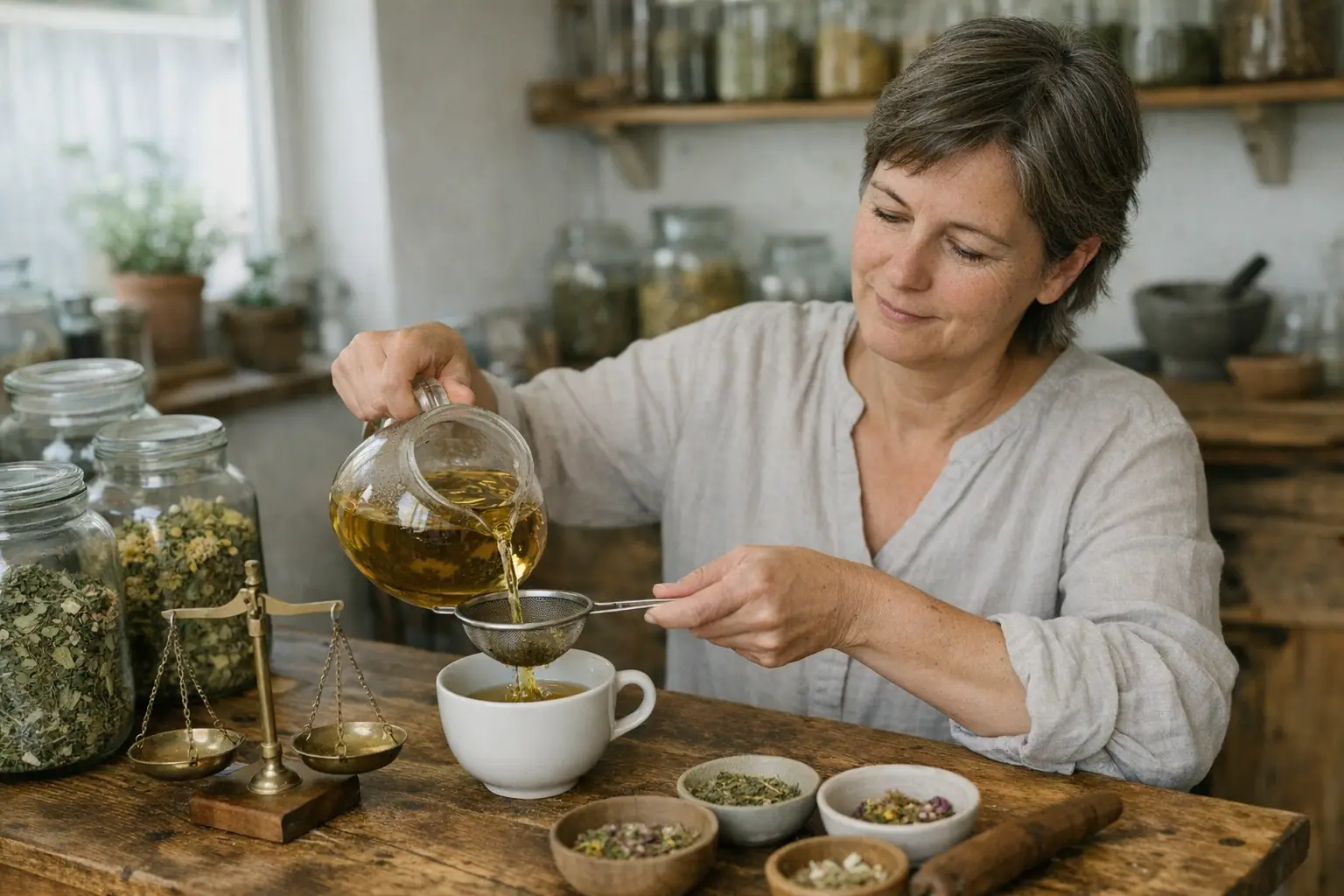
Phytotherapy treats complaints with plant-based medicines — for example as tea, tincture, tablet or ointment. It is one of the best-researched branches of complementary medicine: good studies exist for some medicinal plants, while for many others the efficacy has not been proven. Plant-based does not automatically mean harmless — herbal preparations also have side effects and may or may not interact with other medicines.
Typical Areas of Use
- Cold symptoms and cough
- Mild sleep disorders and inner restlessness
- Digestive complaints such as bloating or irritable bowel
- Mild depressive moods
- Menopausal complaints
- Supportive treatment for bladder complaints
How It Works
- 1During the consultation, the doctor or practitioner clarifies your complaints, your medical history and especially your current medication list — interactions are the most important consideration with herbal preparations.
- 2Based on this, a suitable herbal preparation and appropriate form is selected, such as tea, drops, capsules or an ointment; the doctor explains what effect can realistically be expected and from when.
- 3You use the preparation over an agreed period — many herbal remedies require several weeks before an effect can be assessed.
- 4In a follow-up appointment, you discuss whether the complaints have improved and whether treatment should be continued, adjusted or discontinued.
How to Prepare
- Bring a complete list of all medications and dietary supplements you are taking — including over-the-counter ones.
- Mention allergies, chronic conditions, pregnancy or breastfeeding.
- Note which herbal remedies you have already tried and with what effect.
Side Effects & Risks
- Herbal remedies can also have side effects, such as gastrointestinal complaints, headaches or allergic reactions.
- Interactions with other medications are possible — it is known, for example, that certain herbal preparations can influence the effect of blood thinners, hormonal contraceptives or antidepressants.
- Some medicinal plants increase the skin's sensitivity to light.
- With products from uncertain sources, such as from the internet, quality and purity are not guaranteed — preparations authorised in Switzerland from pharmacies or drugstores are the safer choice.
During use, observe how your symptoms develop, and always inform new practitioners and pharmacies which herbal preparations you are taking. A noticeable effect with many remedies only appears after two to four weeks — this is normal. Contact your doctor if rash, itching, shortness of breath or severe gastrointestinal complaints occur, if your symptoms worsen despite treatment, or if you start new medications that need to be compatible with the preparation.
Cost & Insurance
Medical phytotherapy is one of the complementary medicine methods covered by basic insurance, provided treatment is given by a doctor with appropriate additional training; the deductible and co-payment apply as usual. Plant-based medicines prescribed by a doctor that are on the specialist list are also paid for by basic insurance — over-the-counter preparations from pharmacies or drugstores, however, are not. Treatments by non-medical naturopaths are covered by supplementary insurance, provided the practitioner is recognised. If in doubt, ask your insurer.
Frequently Asked Questions
- Are herbal remedies safer than 'chemicals'?
- Not necessarily. Plant-based active ingredients are real active ingredients — with possible side effects and interactions. The advantage of many proven herbal preparations lies more in the fact that they are often well tolerated for milder complaints. It is important that your doctor or pharmacist knows all your medications.
- How quickly does phytotherapy work?
- This varies greatly. Some remedies, such as for cold symptoms, work within days; others, for example for low mood or sleep problems, require two to four weeks of regular use before the effect can be assessed.
- Is the efficacy scientifically proven?
- For some medicinal plants and areas of application, yes — there are well-researched preparations, for example for mild low mood, colds or digestive complaints. For many other plants and indications, meaningful studies are lacking. Reputable advice openly distinguishes between proven and unproven applications.
- What does treatment cost, and who pays?
- If a doctor with appropriate additional training provides treatment, they bill through basic insurance; prescribed preparations on the specialist list are also covered by the insurer. Self-purchased teas, drops or capsules you pay for yourself — depending on the preparation, usually a single- to double-digit franc amount.
- Can I simply take herbal remedies in addition to my medications?
- Please not without consultation. Some herbal preparations alter the effect of other medications, such as blood thinners or the contraceptive pill. Always clarify combinations with your doctor or at the pharmacy.