
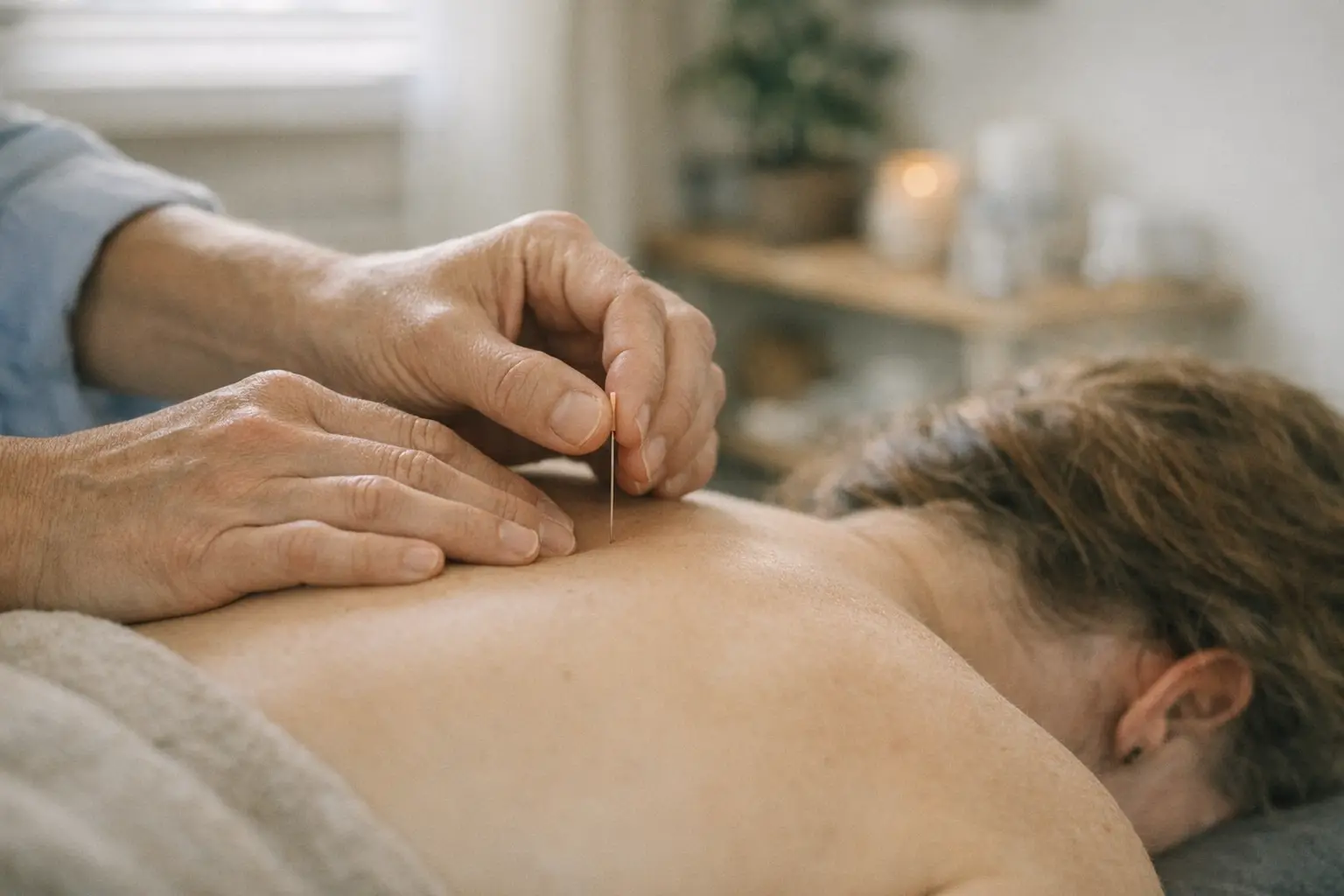
In acupuncture, very fine needles are inserted at specific points on the body to relieve symptoms — especially pain. The procedure originates from Chinese medicine and is frequently used in Switzerland as a complement to conventional medical treatment. For some applications, such as chronic back pain and headaches, there is evidence of effectiveness; for many others, the research findings are inconsistent.
Typical Areas of Use
- Chronic back pain
- Migraine and tension headaches
- Neck and shoulder tension
- Joint pain
- Nausea, for example after procedures
- As an accompaniment to stress and sleep problems
How It Works
- 1The session begins with a detailed consultation: the practitioner asks about your symptoms, your medical history, and your expectations, and together with you establishes a treatment goal.
- 2You lie or sit comfortably, usually with your arms, legs, or back exposed. The points are palpated and the skin is disinfected if necessary.
- 3Very thin, sterile, single-use needles are inserted at selected points — usually only a brief prick is felt, sometimes a dull sensation of pressure or warmth.
- 4The needles typically remain in place for 20 to 30 minutes while you lie still and relax. They are then removed; the tiny insertion sites require no special care.
- 5At the end, there is a brief discussion of how you responded to the treatment and at what interval the next session would be appropriate.
How to Prepare
- Eat a light meal beforehand — treatment is more uncomfortable on an empty stomach or with a very full stomach.
- Wear comfortable clothing that can be easily rolled up on your arms and legs.
- Inform the practitioner about blood-thinning medication, pregnancy, or a pacemaker.
- Do not schedule a full diary after the session — many people feel pleasantly tired afterwards.
Side Effects & Risks
- Small bruises or a brief burning sensation at the insertion sites are common and harmless.
- Temporary tiredness, dizziness, or circulatory reactions during or after the session may occur.
- Rarely, symptoms may initially worsen briefly before improvement occurs.
- Serious complications such as infections or injury to deeper structures are very rare when the procedure is performed correctly with sterile single-use needles.
After the session, you may go about your normal daily routine; however, do try to allow yourself some rest and drink plenty of fluids. Mild fatigue, a feeling of warmth, or small bruises at the insertion sites are normal and will disappear on their own. Contact your practitioner or your family doctor if an insertion site becomes red, swollen, or painful, if fever develops, or if dizziness and discomfort do not subside within a few hours.

Cost & Insurance
If acupuncture is performed by a physician with corresponding further training, the mandatory basic insurance covers the costs — acupuncture is one of the complementary medicine methods that are covered by basic insurance under this condition; Franchise and cost-sharing apply as usual. Treatments by non-medical therapists, on the other hand, are only reimbursed through supplementary insurance for complementary medicine, provided the therapist is recognized by your insurer. If in doubt, clarify cost coverage directly with your insurer before starting treatment.
Frequently Asked Questions
- Does acupuncture hurt?
- Usually not. The needles are much finer than injection needles; typically only a brief prick is felt during insertion, followed at most by a dull sensation of pressure or warmth. If a needle is noticeably painful, do say so — it will then be repositioned or removed.
- How many sessions will I need?
- This depends on your symptoms. A series of about 6 to 12 sessions, usually once a week, is typical. After this series at the latest, you and your practitioner will assess together whether the treatment is helping you and whether continuing makes sense.
- Is the effectiveness scientifically proven?
- Partly. For chronic pain, such as back pain or migraine, studies show relief in some of those treated; how much of this is attributable to the needling itself is scientifically debated. For many other applications, effectiveness has not been proven. Acupuncture does not replace necessary conventional medical investigation.
- What does an acupuncture session cost?
- When performed by a doctor, the practice bills through the basic insurance, with the deductible and co-payment applying as usual. With non-medical therapists, you pay for the session yourself initially — depending on the region and duration, usually a two-digit to low three-digit amount — and submit the invoice to your supplementary insurance, if you have one.
- Am I fit to drive after treatment?
- As a rule, yes. However, some people feel tired or slightly light-headed after their first session. In this case, wait until you feel clear again before getting behind the wheel.
- For whom is acupuncture not suitable?
- With strong blood-thinning medication, certain skin conditions in the treatment area, or pronounced needle phobia, an individual assessment is made. During pregnancy, certain points are avoided. Discuss your situation in advance — your doctor will decide with you whether the treatment is suitable for you.