
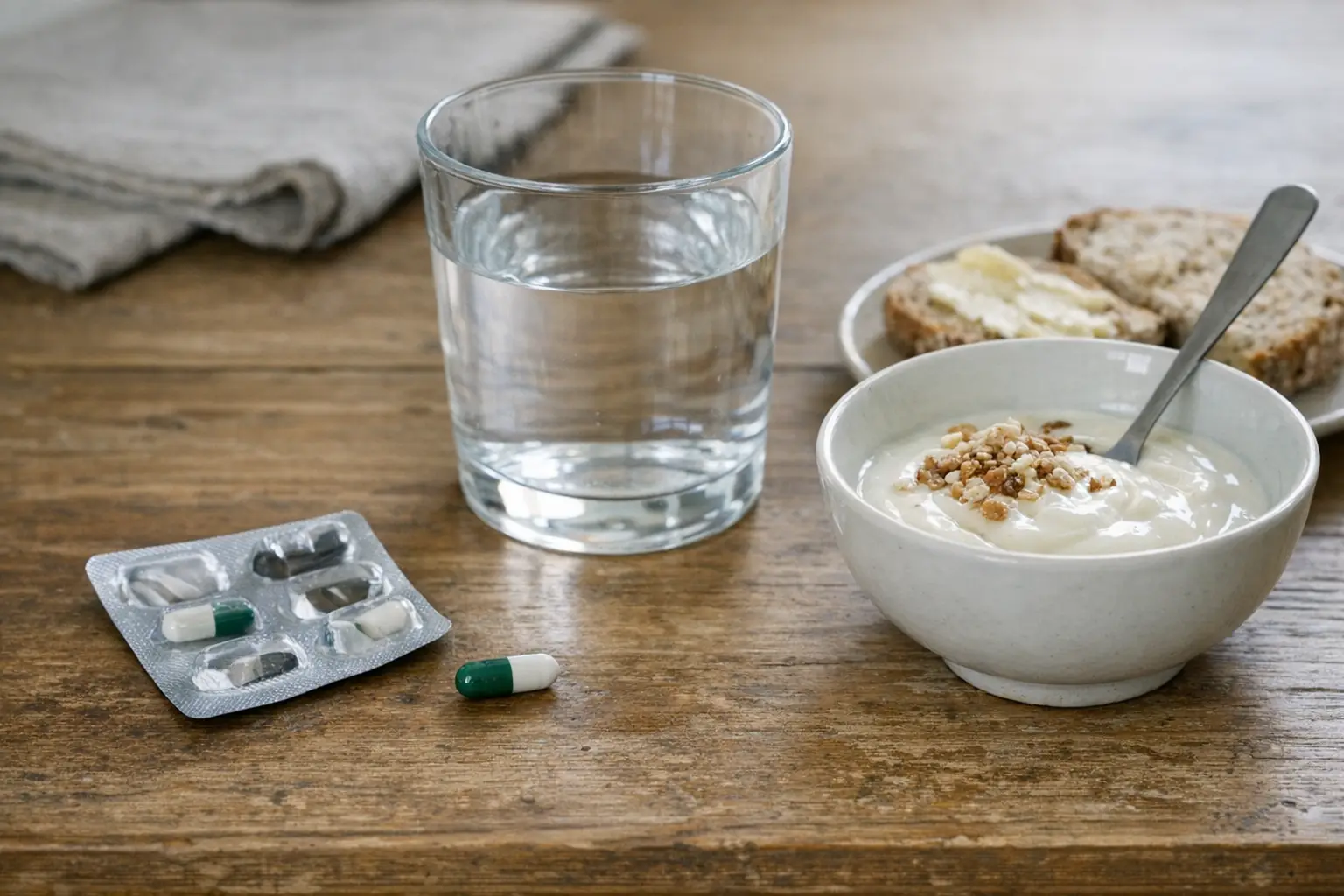
Acid suppressants of the proton pump inhibitor type reduce acid production in the stomach at its source. They relieve heartburn, allow inflammation of the oesophagus and gastric ulcers to heal, and protect the gastric lining when irritating medications are necessary. They work reliably — but like any medication, they should only be used for as long as there is good reason to do so.
Typical Areas of Use
- Heartburn and reflux disease
- Inflammation of the oesophagus
- Gastric and duodenal ulcers
- Gastric protection with certain painkillers
- Supportive treatment of the gastric bacterium Helicobacter
How It Works
- 1Your doctor will discuss how the symptoms present themselves and check whether there are warning signs that require a gastroscopy first.
- 2If the symptom pattern fits, a proton pump inhibitor is prescribed for a limited period of time. If the symptoms improve, this supports the suspicion of a reflux disease — however, it does not prove it, because many people respond to this treatment even without any demonstrable reflux.
- 3After a few weeks, the course is assessed: if the symptoms have gone, the medication is usually gradually reduced or stopped.
- 4If the symptoms return or persist, further investigation follows, usually with a gastroscopy.
How to Prepare
- Note when the symptoms occur and what triggers or relieves them.
- Mention warning signs such as difficulty swallowing, unintentional weight loss or black stools.
- Bring your medication list — painkillers and blood thinners are particularly relevant.
Side Effects & Risks
- In the short term, the medications are usually well tolerated; headaches, diarrhoea, constipation or flatulence are possible.
- With years of use, associations with nutrient deficiencies (such as vitamin B12, magnesium), increased risk of bone fractures and certain intestinal infections are being discussed.
- After abrupt discontinuation, acid production can temporarily overshoot, which appears like a relapse — gradual reduction prevents this.
- The reliable effect can tempt one to mask serious causes — which is why persistent symptoms need to be investigated.
Pay attention to whether the symptoms stay away after discontinuation. Contact the practice if the heartburn persists despite treatment or returns quickly — and without delay if warning signs such as difficulty swallowing, unintentional weight loss, vomiting blood or black stools occur. Smaller meals in the evening, weight loss if overweight, and restraint with alcohol and nicotine often also have a beneficial effect.

Cost & Insurance
Proton pump inhibitors prescribed by a doctor are usually covered by basic insurance, minus the deductible and co-payment; for smaller over-the-counter packs from the pharmacy, you usually pay yourself. Any necessary gastroscopy is also covered by basic insurance. This is for guidance only without guarantee; your health insurance company can provide information.
Frequently Asked Questions
- How quickly do acid suppressants work?
- Many people notice an initial improvement after one to three days; the full effect builds up over several days. With an inflamed oesophagus, healing takes several weeks — even if the symptoms disappear earlier.
- May I take the medication permanently?
- Only if there is a clear medical reason for it, such as severe reflux disease. Without such a reason, the rule is: as short as possible. Long-term use should be reviewed regularly.
- Why does the heartburn return after discontinuation?
- After prolonged use, the stomach can temporarily produce more acid than before — a known effect that subsides after a few weeks. Gradual reduction rather than abrupt discontinuation makes the transition gentler.
- When is a gastroscopy needed?
- With warning signs such as difficulty swallowing, weight loss, signs of bleeding or anaemia, with initial symptoms at an older age, and when symptoms persist despite treatment or keep recurring.
- Do lifestyle changes also help against heartburn?
- Yes, often significantly: smaller and earlier evening meals, weight loss if overweight, less alcohol and nicotine, and a slightly elevated head of the bed can noticeably reduce symptoms — sometimes to the extent that fewer medications are needed.