
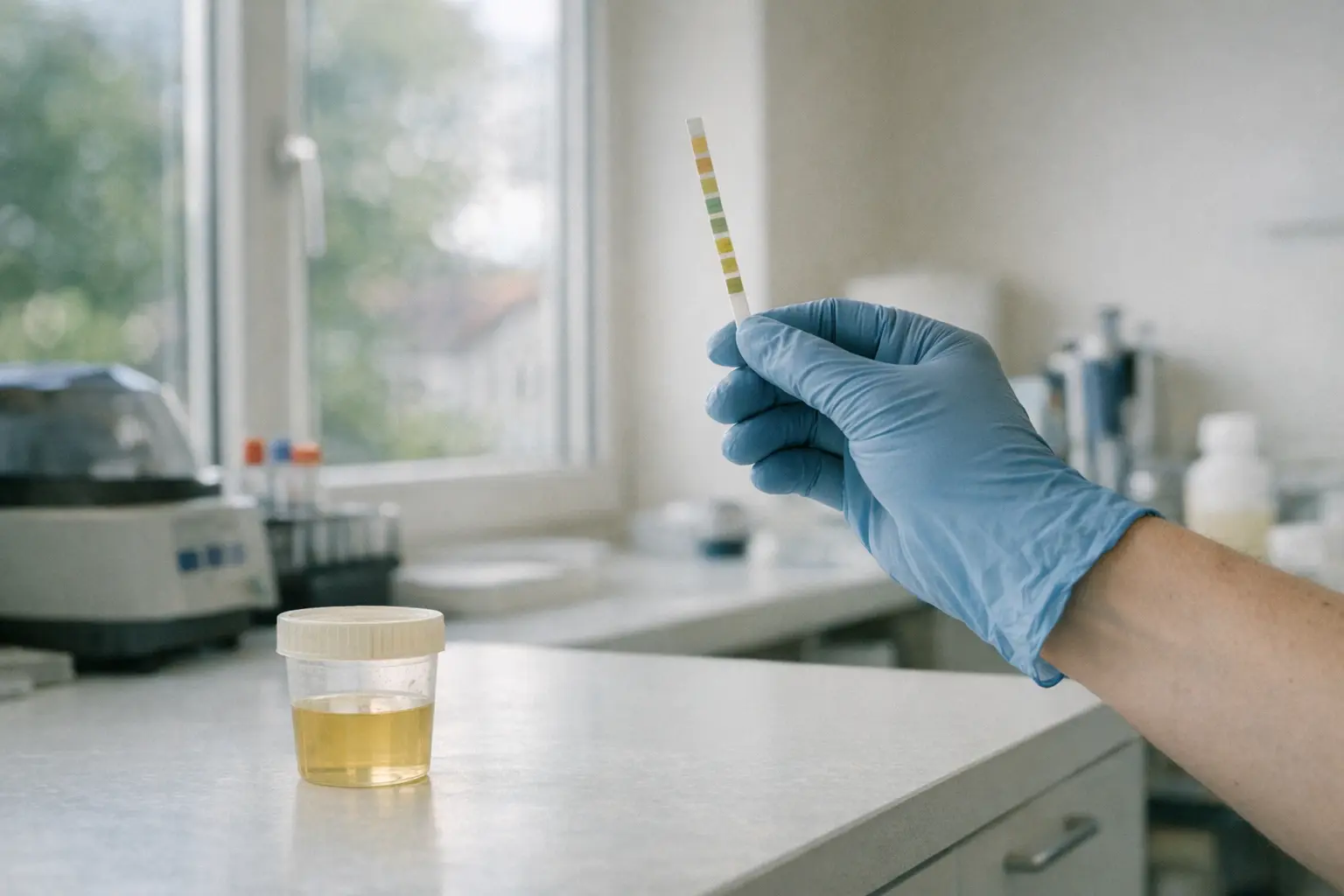
The urine test is a simple, completely painless examination with great diagnostic value: it provides information about urinary tract infections, kidney diseases, blood in the urine or sugar. Often a test strip delivers initial answers within minutes.
Typical Areas of Use
- Investigation of burning sensation when urinating and suspected bladder infection
- Investigation of visible or hidden blood in the urine
- Assessment of kidney function
- Monitoring for diabetes and high blood pressure
- Routine checks during pregnancy and health check-ups
How It Works
- 1You will receive a clean container and brief instructions: the so-called midstream urine is ideal — let the first portion go into the toilet, then fill the container.
- 2A test strip delivers initial results within minutes, for example regarding signs of inflammation, blood or sugar in the urine.
- 3Depending on the question at hand, the sample will additionally be examined under the microscope or sent to the laboratory for a bacterial culture.
- 4Your doctor will discuss the results with you; the culture result follows after one to three days.
How to Prepare
- Briefly clean the genital area with water before providing the sample and collect the midstream — this keeps the sample as uncontaminated as possible.
- For some questions, the first morning urine is ideal; the practice will tell you if this is necessary.
- Report any ongoing menstruation, as it can falsify the result.
Side Effects & Risks
- The examination itself is completely risk-free and painless.
- A contaminated sample can falsify the result — in that case the examination may need to be repeated.
- The test strip is a screening test: abnormal results often require more detailed investigation before conclusions can be drawn.
After a urine test there is nothing you need to be aware of. What matters is looking ahead: if, for example, a urinary tract infection is confirmed, your doctor will discuss the next steps with you. Contact your doctor promptly if you develop fever, chills or flank pain — these can be signs that an infection is spreading towards the kidneys.

Cost & Insurance
Urine tests ordered by a physician are generally covered by mandatory basic insurance; Franchise and cost-sharing apply as usual. During pregnancy, urine checks are part of the regular prenatal care benefits. If in doubt, please check with your health insurer; this information is a general guide provided without guarantee.
Frequently Asked Questions
- What is midstream urine and why is it important?
- You let the first portion of urine go into the toilet and only then collect the sample. This way fewer germs and cells from the skin get into the container, and the result becomes more reliable.
- How quickly will I have the result?
- The test strip shows initial results within minutes, often still during the consultation. A bacterial culture, which determines the exact pathogen, takes one to three days.
- Can I collect the sample at home and bring it in?
- In principle yes, if the practice provides you with a suitable container. However, the sample should be as fresh as possible and transported cool — ask the practice about the best approach.
- What does blood in the urine mean?
- The causes range from harmless irritation to a urinary tract infection through to kidney or bladder diseases that should be investigated. Menstruation can also falsify a result. Visible blood in the urine should always be medically investigated.
- Does menstruation falsify the result?
- Yes, that is possible — blood contamination from menstruation can simulate an abnormal finding. Report any ongoing period; sometimes the examination is then simply postponed by a few days.