
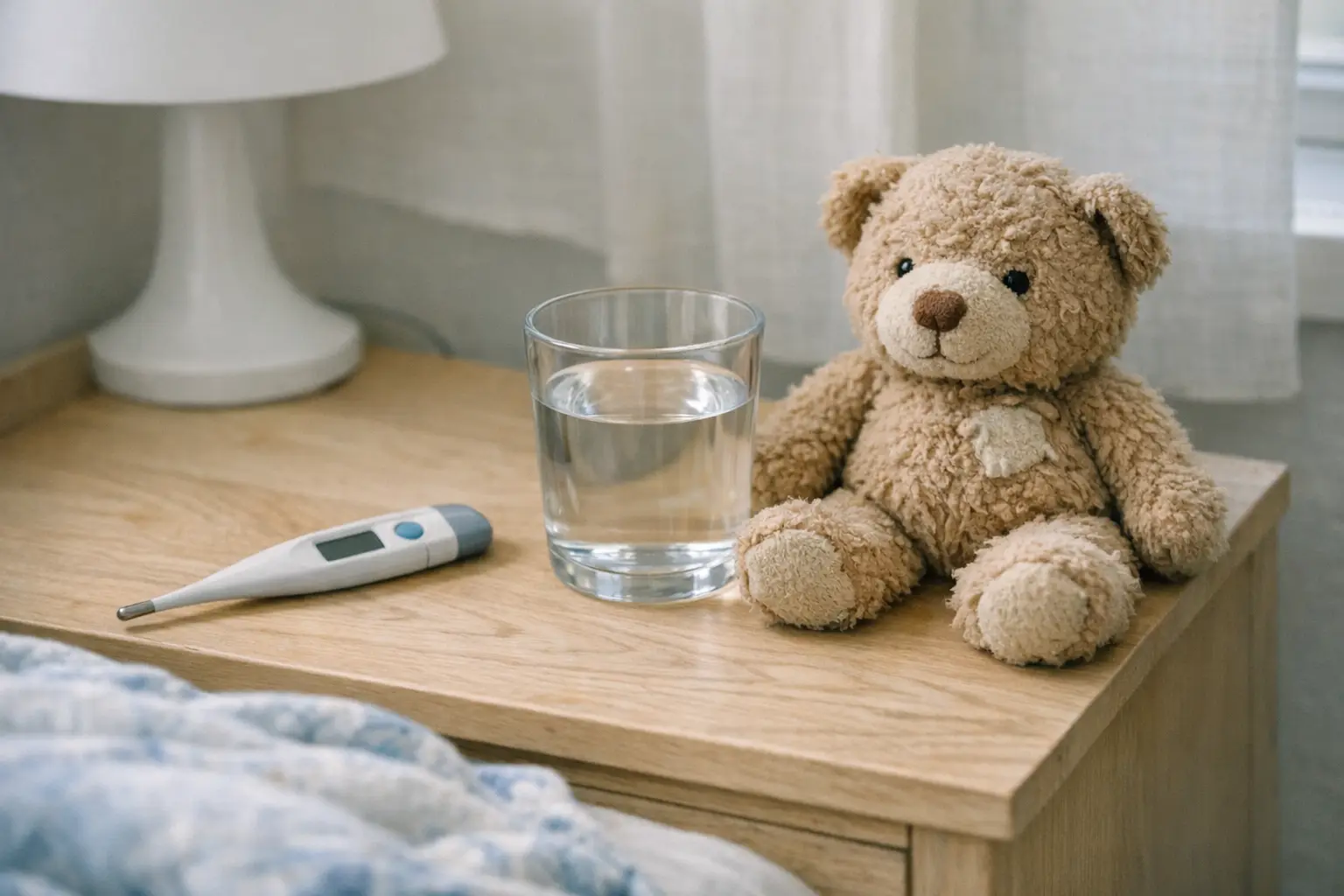
Fever is a completely normal and important reaction of the body to an infection in children. Usually it is caused by a harmless virus, and many children recover within a few days. What matters is less the exact temperature than your child's behaviour: Is your child drinking, playing and responding normally? An exception applies to infants under three months of age — for them, a rectal temperature of 38.0 degrees or higher already counts as fever and must be assessed by a doctor immediately, because severe infections present atypically at this age.
Possible causes
Viral Infections
Cold and flu viruses are the most common cause. The fever is often accompanied by coughing, runny nose, or an emerging rash.
Bacterial Infections
Less commonly, bacterial infections such as a middle ear infection or a bladder infection are behind it. Bacterial does not automatically mean antibiotics are needed: an uncomplicated middle ear infection often heals on its own in older children, whereas very young children or severe cases are treated. Whether antibiotics are needed is decided by the doctor based on the diagnosis, age and course of the illness.
Vaccination Reaction or Teething
Mild fever can occur after vaccinations and is generally harmless. Teething can slightly raise the temperature but rarely causes high fever.

Typical steps at the doctor's office
- 1The pediatrician asks about the course of the fever, fluid intake, behavior, accompanying symptoms, and vaccination status, and examines the child completely — ears, throat, lungs, abdomen, skin, and neck mobility.
- 2Depending on age and findings, a urine test, a rapid throat test or a blood test may be added; in infants under three months, a more comprehensive assessment is always carried out.
- 3Usually, fluids, rest, and, in case of noticeable discomfort, a fever-reducing medication in an age-appropriate dose are sufficient; an antibiotic is only given if a bacterial cause has been confirmed.
What you can do yourself
- Dress your child lightly and don't cover them too warmly, so the heat can escape.
- Provide quiet, closeness, and a cool, well-ventilated room.
- Offer fluids regularly: for infants, breast milk or infant formula more frequently in small amounts; for older children, depending on age, water or other suitable beverages.
- Do not use cold calf compresses on a shivering child, and never give children Aspirin (acetylsalicylic acid) for fever; stay nearby so that you can notice changes early.
Infants under three months of age with a rectal temperature of 38.0 degrees or more should be taken immediately to a paediatric emergency department. Call 144 immediately also in the case of a febrile seizure, stiff neck, red spots that do not fade under pressure, difficulty breathing, or if the child is barely arousable. A noticeably listless child or marked difficulty feeding should be assessed by a doctor on the same day. If the fever persists for more than three days, arrange an appointment at the paediatric practice within one to two days.

Frequently asked questions
- Do I absolutely have to reduce the fever?
- What matters is not the number on the thermometer, but how your child is doing. If your child feels reasonably well despite the fever, well-being takes priority; if there is significant discomfort, discuss the approach with the pediatrician.
- At what point do we speak of fever?
- The threshold depends on age. In infants under three months, a rectally measured temperature of 38.0 degrees or above already counts as fever — at this age the child must be assessed by a doctor without delay. In older children, fever is defined as a temperature of around 38.5 degrees or above. More important than the exact figure is the overall impression: a poor general condition, reluctance to drink or unusual skin colour are reasons to seek medical advice even without fever.
- My child doesn't want to eat — is that bad?
- Loss of appetite is normal with fever and usually harmless. As long as your child is drinking enough, eating is of secondary importance for a few days.
Not sure whether you should go or whom to see? Describe your symptoms — we'll find the right practice in your area.