
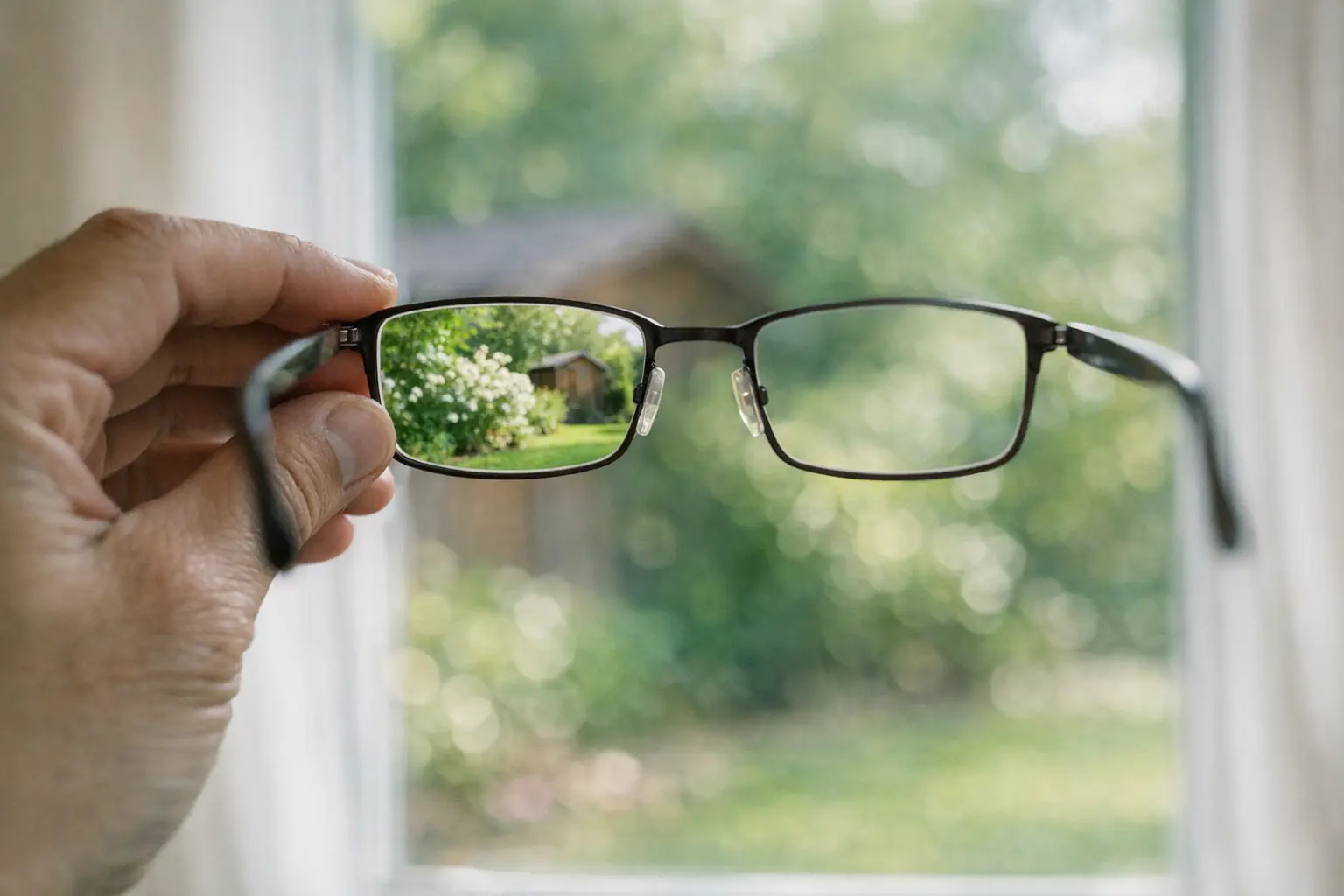
Blurred vision means that outlines appear unclear or that you have difficulty clearly recognising letters and faces. This is often caused by a simple refractive error or dry eyes, but sometimes also by a disease of the lens or retina. It is important whether the blurriness increases slowly or occurs suddenly, and whether only one eye or both are affected.
Possible causes
Refractive Error
Nearsightedness, farsightedness, or presbyopia lead to blurred vision and can usually be corrected with glasses or contact lenses.
Dry Eyes
An unstable tear film causes the image to blur, often fluctuating throughout the day and more pronounced with screen work.
Lens Clouding (Cataract)
With age, the eye's lens can become cloudy, leading to gradually increasing blurriness and light sensitivity.
Retinal or Nerve Changes
Diseases of the retina or optic nerve can impair sharpness and should be evaluated by an ophthalmologist.

Typical steps at the doctor's office
- 1The ophthalmologist asks since when the blurriness has been present, whether it appeared suddenly or gradually, and whether one or both eyes are affected, and checks the visual acuity with and without correction.
- 2With the slit lamp, she assesses the cornea, lens, and tear film; depending on the suspected condition, a measurement of intraocular pressure and an examination of the fundus with a dilated pupil may be added.
- 3Treatment depends on the cause — ranging from new glasses to tear substitutes to the treatment of a lens or retinal disease.
What you can do yourself
- Give your eyes regular breaks when working at a screen and look into the distance from time to time.
- Ensure good lighting and sufficient distance from the screen.
- Have existing glasses or contact lenses checked to ensure they are up to date.
- Drink enough fluids and keep the air in the room from becoming too dry.
Sudden loss of vision in one eye, a shadow or curtain in the field of vision, sudden double vision, or deep eye pain with nausea and coloured rings around lights all require immediate attention at an eye emergency department; together with signs of speech disturbance or paralysis, call 144 immediately. If blurriness persists for days, slowly increases, or affects your daily life, an ophthalmological examination is advisable. If glasses no longer fit properly, a current vision test can help.

Frequently asked questions
- Can prolonged work at a screen worsen vision?
- Screen work fatigues the eyes and can temporarily lead to blurriness and dryness, but does not usually cause permanent damage. Regular breaks and conscious blinking help.
- Is blurred vision always a sign that glasses are needed?
- Not necessarily. Often a refractive error is behind it, but dry eyes or other causes are also possible. An ophthalmological evaluation will provide clarity.
- Why is my vision sharper in the morning than in the evening?
- Throughout the day, the eyes become tired and the tear film becomes less stable, which can cause the image to blur. Breaks and eye care help counteract this.
Not sure whether you should go or whom to see? Describe your symptoms — we'll find the right practice in your area.