
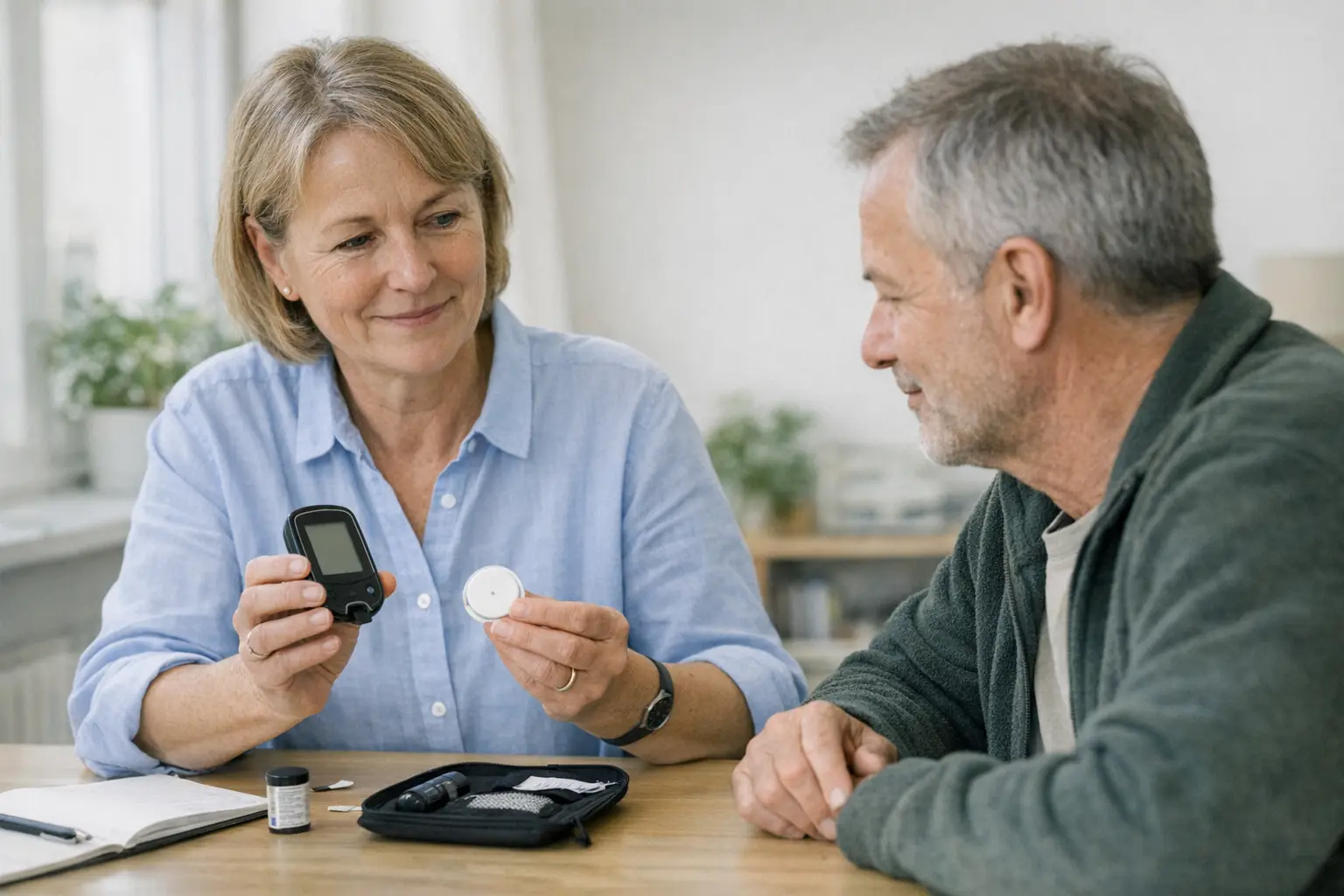
Diabetes counseling supports you in living well and safely with diabetes. Specially trained diabetes educators show you step by step how to measure blood sugar, interpret values, and organize your daily life — from eating and exercise to travel — with the condition. The counseling complements medical treatment and makes you the expert on your own diabetes.
Typical Areas of Use
- Newly diagnosed type 1 or type 2 diabetes
- Safe handling of blood sugar measurement and sensors
- Training when starting insulin therapy
- Avoiding and recognizing hypoglycemia
- Foot check and prevention of long-term damage
- Diabetes in special situations such as travel, sports, or illness
How It Works
- 1In the initial consultation, the counselor establishes what you already know about your diabetes, what your treatment looks like, and where the biggest questions lie in daily life.
- 2This is followed by practical training in individual appointments or small groups: measuring and interpreting values, handling meters or sensors, and if needed the safe use of insulin pens.
- 3You learn how diet, exercise, stress, and illness affect blood sugar and how to recognize hypoglycemia and respond correctly.
- 4Topics such as foot care, travel, or work are covered in depth as needed; the counselor works closely with your doctor and often with nutritional counseling.
- 5In follow-up appointments your values and experiences are discussed and recommendations are adjusted to your progress.
How to Prepare
- Bring your measuring devices, blood sugar diary or tracking app, and your medication list.
- Bring the doctor's prescription and current laboratory values such as your long-term blood sugar level.
- Note down situations from daily life that are difficult for you — these will become concrete practice topics.
Side Effects & Risks
- The counseling itself carries no risks; on the contrary, it reduces the risk of emergencies such as severe hypoglycemia.
- The abundance of information can be overwhelming at first — good counseling therefore spreads the topics over several appointments.
- Changes to measurement routines or behavior should be coordinated with your doctor so that medication therapy matches.
Between appointments you apply what you have learned and record values and observations — they form the basis for the next appointment. Individual unexplained values are normal and no cause for concern. Contact your counselor or doctor sooner if your values deteriorate persistently, hypoglycemia becomes more frequent or you notice it late, or if you have poorly healing wounds on your feet, vision problems, or tingling in your feet and hands.
Cost & Insurance
Counseling by recognised diabetes counsellors is, upon medical prescription, generally covered by basic insurance; a limited number of sessions per prescription is covered, and if needed, the physician can issue a follow-up prescription. Franchise and co-payment apply as usual. Physician-prescribed nutritional counselling for diabetes is also covered by basic insurance; special reimbursement rules apply for consumables such as test strips or sensors. If in doubt, ask your insurer — this information is for guidance only, without guarantee.
Frequently Asked Questions
- Do I need counseling even if I don't inject insulin?
- Yes, especially with type 2 diabetes without insulin, a great deal can be achieved through knowledge about nutrition, exercise, and self-monitoring. The counseling is tailored to your form of treatment.
- Where can I find diabetes counseling?
- Diabetes educators work at hospitals, in diabetes centers, at regional diabetes associations, and sometimes in medical practices. Your general practitioner or diabetologist issues the prescription and can tell you about services in your area.
- How often do I need to attend counseling?
- Initially several appointments at shorter intervals are typical, until the basics are established. After that, refreshers at longer intervals or when therapy and life situation change are usually sufficient.
- What does diabetes counseling cost?
- With a doctor's prescription, basic insurance generally covers a certain number of sessions; you pay your Franchise and co-payment. If in doubt, your insurer can give you precise information.
- Will I also learn what to do in case of hypoglycemia?
- Yes, that is a core topic: you learn to recognize warning signs early, respond correctly and prevent them — and how those around you can help in an emergency. This gives many patients and relatives a noticeable sense of security.