
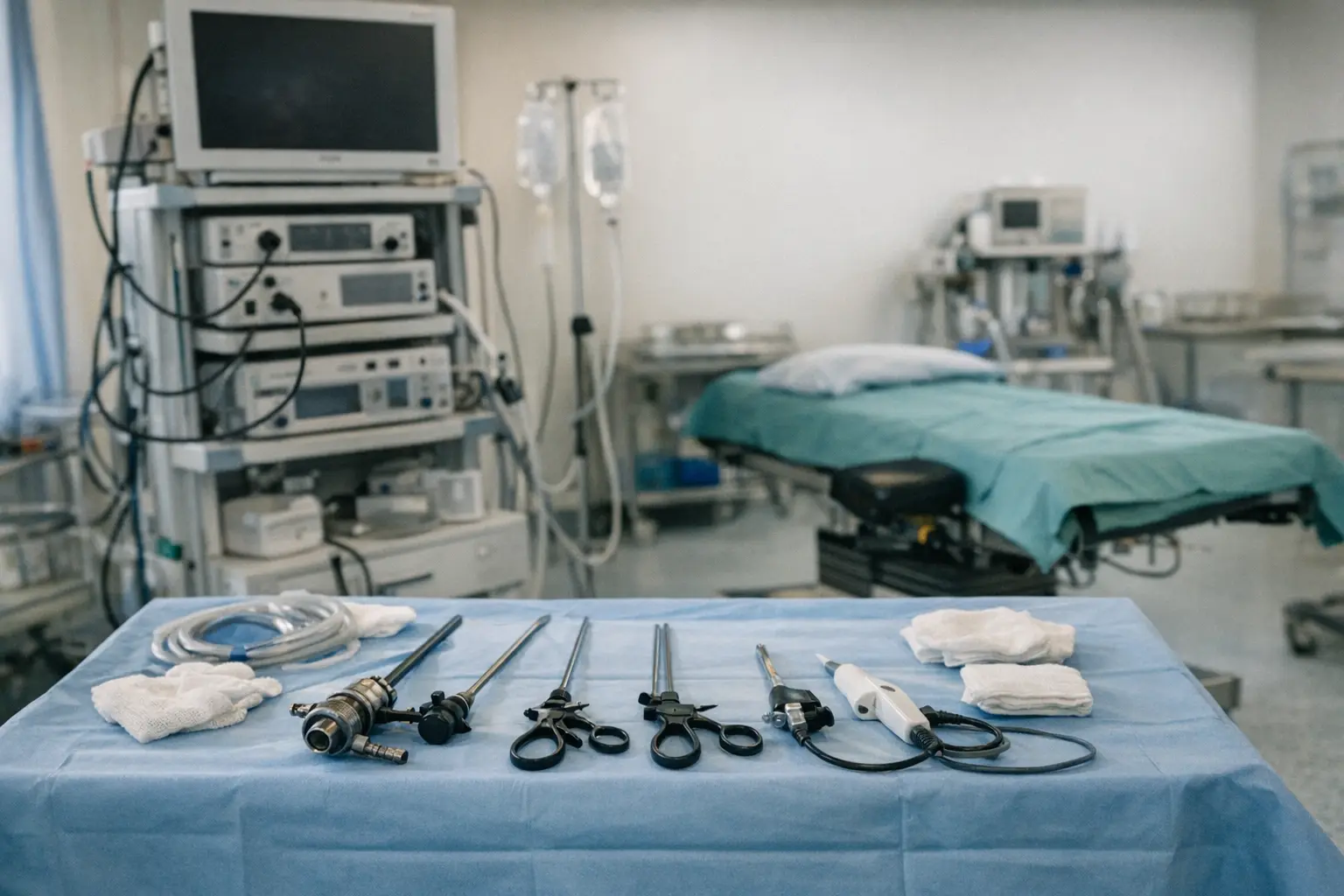
When gallstones repeatedly trigger painful colic or inflammation of the gallbladder, removing the gallbladder is the proven way to resolve the symptoms permanently. Today, the procedure is almost always performed minimally invasively through a few small incisions — and the body manages well without a gallbladder: the bile then flows directly from the liver into the intestine.
Typical Areas of Use
- Recurrent gallbladder colic caused by gallstones
- Inflammation of the gallbladder
- Cramping upper abdominal pain after fatty meals
- Complications from stones, for example in the bile duct
- Gallbladder polyps above a certain size
How It Works
- 1Following ultrasound, blood tests and an anaesthesia consultation, the procedure is planned; in cases of acute inflammation it may also be performed at short notice.
- 2Under general anaesthesia, a camera and fine instruments are inserted into the abdominal cavity through three to four small incisions; some gas lifts the abdominal wall and creates visibility.
- 3The gallbladder, including the stones, is detached from the liver, the feeding vessels and cystic duct are securely closed, and the gallbladder is removed through one of the small incisions.
- 4Only rarely does a larger abdominal incision become necessary during the procedure, for example in cases of severe adhesions.
- 5After waking up, you usually remain in hospital for one to two nights; in some cases the procedure can also be performed on an outpatient basis.
How to Prepare
- You attend the operation fasting; you will receive precise instructions from the anaesthesia team.
- Discuss blood thinners and other medications with your doctor in advance.
- Pack for one to two overnight stays in hospital and arrange transport home.
- Bring any existing reports such as ultrasound results with you.
Side Effects & Risks
- Shoulder pain and bloating in the first few days from the surgical gas — uncomfortable but harmless.
- Wound infections or bruising at the small incisions.
- Rarely post-operative bleeding or bile leakage, which may require further treatment.
- Very rarely an injury to the main bile duct — a serious but treatable complication.
- Some people tolerate very fatty meals less well initially; this usually settles within weeks.
On the day of the surgery or the following day, you will already get up and may eat lightly; at home, gradually increase your activity and diet. Heavy lifting and abdominal muscle training should be avoided for about two to four weeks, whereas walking is encouraged. In the long term, no special diet is needed — but rich, fatty meals are often tolerated less well at first. Get in touch promptly if you have fever, increasing abdominal pain, yellowing of the skin or eyes, persistent nausea, or if a wound is red or oozing.
Cost & Insurance
Gallbladder removal for symptomatic gallstones or inflammation is covered by basic insurance, including hospital stay in the general ward; the deductible and co-payment apply as usual. Referral is made through your GP or gastroenterologist, or in emergencies directly through the emergency department. Semi-private or private ward accommodation requires supplementary insurance. If in doubt, check with your insurance company — no guarantee provided.
Frequently Asked Questions
- Can you live a normal life without a gallbladder?
- Yes. The gallbladder is only a storage organ — bile continues to be produced in the liver and flows directly into the intestine. The vast majority of people live without restriction and without a special diet.
- Why remove the entire gallbladder and not just the stones?
- If only the stones were removed, new ones would very likely form in the diseased gallbladder. Removing the organ solves the problem permanently.
- How long does recovery take?
- After the minimally invasive procedure, many people are able to return to work after one to two weeks; with physically demanding work it takes somewhat longer. You should avoid heavy lifting for two to four weeks.
- Do I need to follow a diet after the operation?
- No, a permanent diet is not necessary. It makes sense to avoid very fatty and rich meals in the first few weeks and then gradually return to your usual diet.
- What causes the shoulder pain after the procedure?
- The gas used to lift the abdominal cavity during surgery temporarily irritates the diaphragm — this irritation radiates to the shoulder. The discomfort disappears on its own after a few days; movement helps.
- What happens if I have acute gallbladder colic before the scheduled operation?
- Report severe, persistent pain, fever or yellowing immediately — the procedure may then be brought forward. If you have severe symptoms, go directly to the emergency department.