
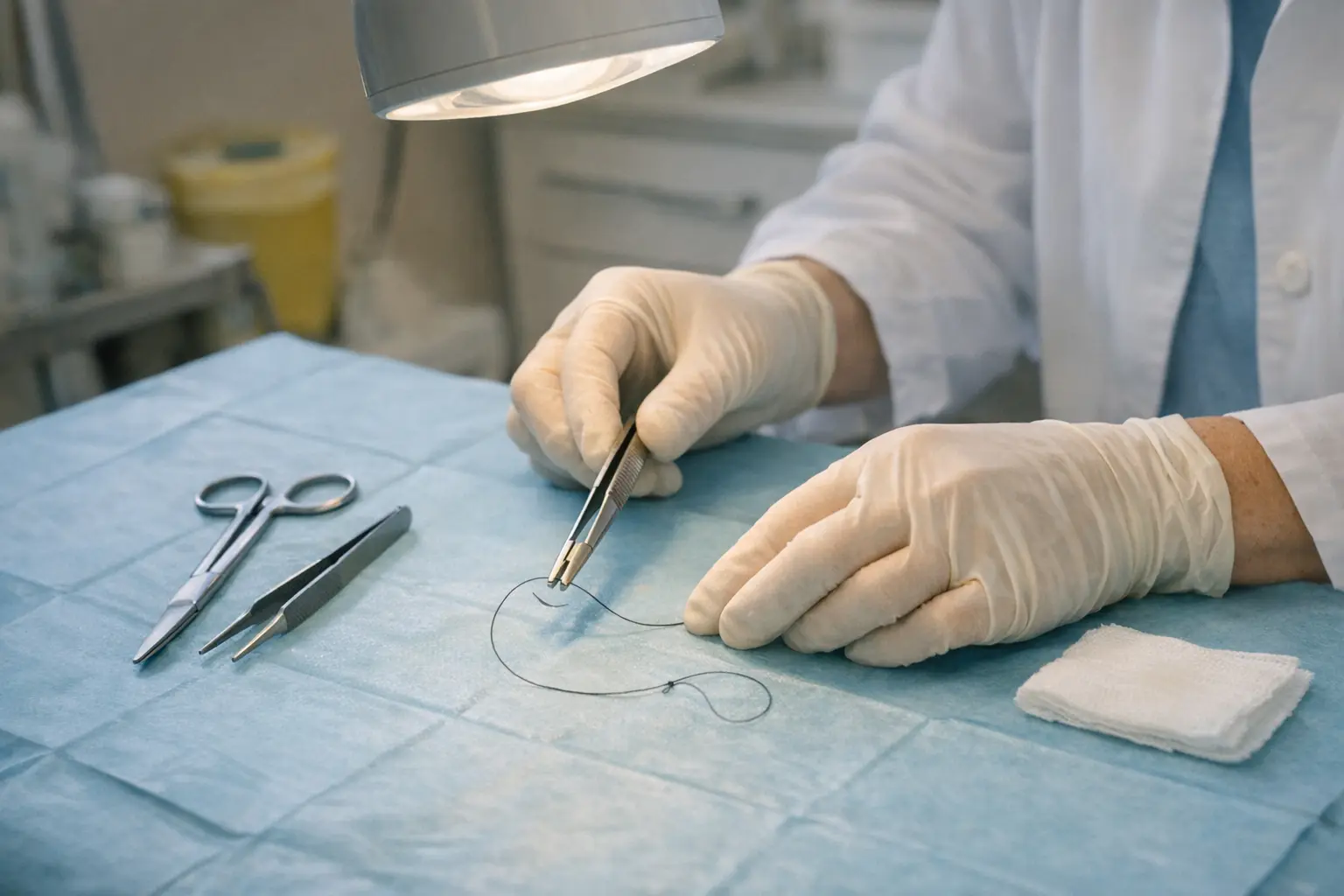
Cuts and lacerations that are deep or gaping heal better and with a more cosmetically pleasing scar when they are properly closed — with sutures, tissue adhesive or special adhesive strips. Wound care at your GP practice or in the emergency department includes cleaning and assessing the wound, closing it under local anaesthesia and checking your tetanus vaccination status.
Typical Areas of Use
- Cuts at home or at work
- Lacerations from falls or impact
- Lacerations and Bite Wounds (bite wounds are usually treated as open wounds)
- Gaping wounds that would heal poorly on their own
How It Works
- 1The doctor examines the wound: How deep is it, are tendons, nerves or blood vessels affected, is it contaminated? This determines the further course of action.
- 2The surrounding area is numbed with local anaesthetic, then the wound is thoroughly irrigated, cleaned and if necessary debrided of damaged tissue.
- 3Depending on size and location, the wound is sutured, glued or closed with adhesive strips and then covered with a sterile dressing.
- 4Finally, your tetanus vaccination status is checked and if necessary updated on the spot; you receive instructions for wound care and an appointment for suture removal.
How to Prepare
- Cover the fresh wound with the cleanest possible dressing and apply gentle pressure if it is bleeding.
- Come to the practice promptly — ideally within a few hours, as fresh wounds close best.
- If possible, bring your vaccination record and mention any blood thinners and allergies.
Side Effects & Risks
- Wound infection with redness, swelling and throbbing pain
- Secondary bleeding or bruising in the wound area
- Visible scarring, depending on location, type of wound and individual tendency
- Temporary numbness around the wound
Keep the wound clean and dry for the first few days; brief showering is often permitted after 24 to 48 hours depending on the dressing, but bathing and swimming only after suture removal. Slight tension and mild redness along the suture line are normal. Contact us promptly if the wound becomes increasingly painful, swells significantly, oozes or discharges pus, if the redness spreads or if you develop a fever — these are possible signs of infection. Also protect the fresh scar from direct sunlight for several months so that it heals inconspicuously.
Cost & Insurance
If the wound was caused by an accident, treatment for employees is generally handled through the employer's accident insurance — in that case without franchise and co-payment; report the accident there. Without accident coverage through the employer, your health insurance covers the treatment through the included accident coverage or the basic insurance, with franchise and co-payment as usual. A prescription is not needed — for a wound requiring treatment, go directly to the practice or to the emergency department.
Frequently Asked Questions
- Does suturing hurt?
- The local anaesthetic itself stings briefly, after which the wound area is numb and suturing is painless. You may at most feel pressure or pulling. After the anaesthetic wears off, a simple painkiller recommended by your doctor will help if needed.
- How quickly does a wound need to be sutured?
- There is no fixed six-hour limit. What matters is the location, the degree of contamination, the mechanism of injury, the blood supply, and your personal risk of infection — clean, non-infected wounds can, depending on the situation, still be closed primarily even later on, and in well-perfused regions such as the face, the margin is especially wide. If you wait too long, a wound is sometimes deliberately left open for treatment because of the risk of infection — so it is better to come in early.
- When do the stitches come out?
- Depending on the location on the body, after approximately 5 to 14 days: earlier on the face, later on the back, joints or soles of the feet. Absorbable sutures and tissue adhesive do not need to be removed. You will be given the exact appointment during treatment.
- Do I need a tetanus vaccination?
- This depends on your vaccination status: if your last booster was a long time ago or is unclear, it will be given during wound care. Therefore bring your vaccination record if possible.
- Will a scar remain?
- Every deeper wound leaves a scar — but proper treatment ensures it is as fine and inconspicuous as possible. How visible it remains depends on the type of wound, location on the body and your individual tendency; sun protection in the first year helps additionally.
- What is different about bite wounds?
- Bite wounds from animals or humans carry a high bacterial load. They are thoroughly rinsed, often not sutured but treated openly, and frequently accompanied by an antibiotic. After animal bites abroad or contact with bats, rabies vaccination is additionally checked, and tetanus protection is always checked as well.