
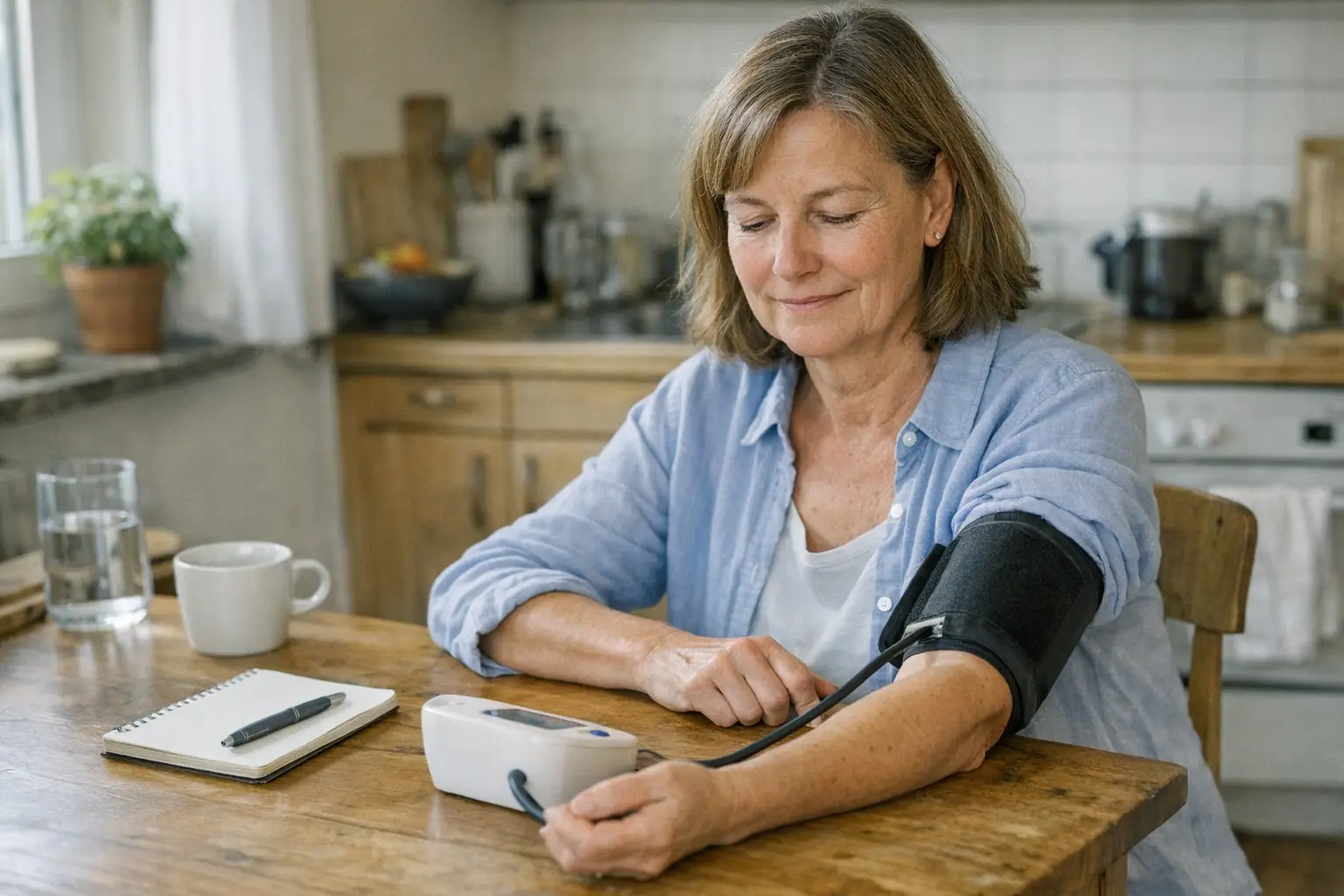
High blood pressure is widespread and often goes unnoticed for a long time because it usually doesn't cause any noticeable symptoms. That's precisely what makes it insidious: persistently elevated values gradually put strain on the heart, blood vessels, kidneys and eyes. The good news is that blood pressure can be easily measured, monitored and influenced. Regular checks are therefore the most important step.
Possible causes
Primary high blood pressure
In most people, no single cause can be identified. Hereditary factors, age, excess weight, lack of exercise, high-salt diet and stress work together and cause blood pressure to rise over the years.
Lifestyle factors
Lack of exercise, high salt and alcohol consumption, smoking and persistent stress additionally increase blood pressure. They can be influenced and are therefore important starting points.
Secondary causes
More rarely, another condition is behind it, such as kidney disease or hormonal disorders. Such causes are investigated when blood pressure occurs very early, is very high or is difficult to control.

Typical steps at the doctor's office
- 1The basis is repeated blood pressure measurement. Because individual values fluctuate, blood pressure is measured on several days — often supplemented by measurements at home or a 24-hour measurement, which provides a reliable picture throughout the day.
- 2Your doctor will assess other risk factors and look for consequences of elevated values. This includes an ECG, a blood test (including kidney function and blood sugar, among others) and, if necessary, an examination of the back of the eye.
- 3A plan is agreed together: lifestyle measures come first; if these are not sufficient, treatment is adjusted by your doctor. Regular follow-up appointments monitor progress.
What you can do yourself
- Regular exercise: even brisk walking, cycling or swimming on several days a week noticeably lowers blood pressure.
- Eat a low-salt, balanced diet — with plenty of vegetables, fruit and whole grains; reduce highly processed, high-salt products as much as possible.
- Pay attention to stopping smoking and only consume alcohol in moderation; both relieve the strain on the heart and blood vessels.
- Measure your blood pressure regularly at home and record the values — this provides an overview and supports medical care.
Values over 180/120 together with headache, visual disturbances, chest pain, shortness of breath, or confusion are an emergency: call 144 immediately. Have elevated or unclear blood pressure readings assessed by your GP or in cardiology, especially if repeated measurements are above the norm. Since high blood pressure usually causes no symptoms, regular check-ups are worthwhile even without symptoms — especially with increasing age or a family predisposition.

Frequently asked questions
- Why don't I notice my high blood pressure?
- Elevated blood pressure usually doesn't cause any symptoms for a long time — that's exactly why it often goes unnoticed. It often only becomes noticeable through consequences on the heart, blood vessels or kidneys. Regular measurements are therefore the most reliable way to detect it early.
- How often should I check my blood pressure?
- That depends on your values and risk factors and is determined individually. Many people measure regularly at home and have their values checked by their doctor at agreed intervals.
- Can I make a difference myself through lifestyle changes?
- Yes. Exercise, a low-salt diet, healthy weight, stopping smoking and moderate alcohol consumption can significantly influence blood pressure and are a central part of any treatment.
Not sure whether you should go or whom to see? Describe your symptoms — we'll find the right practice in your area.