
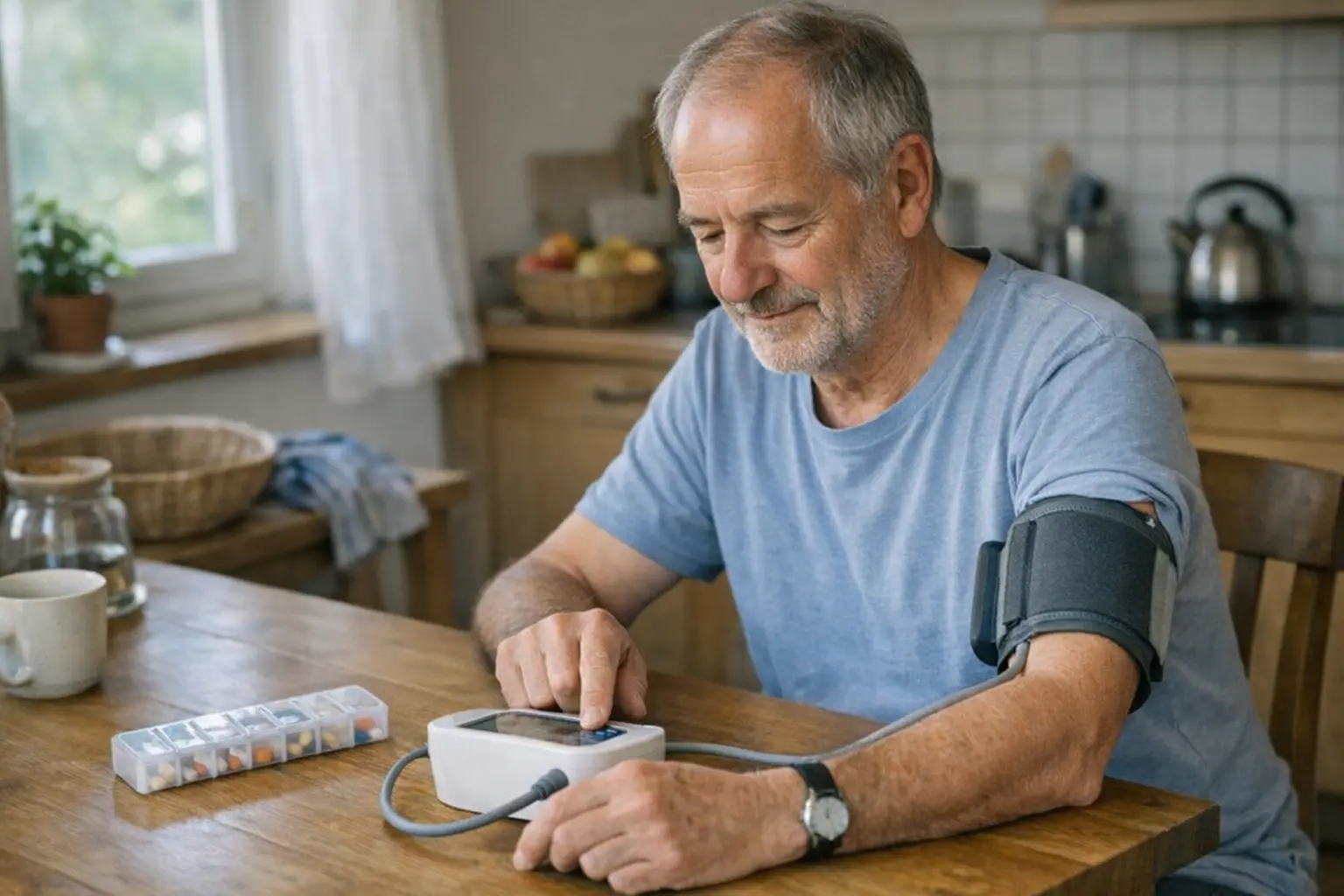
Blood pressure medications are drugs that bring persistently elevated blood pressure down to a healthy level. In doing so, they protect your heart, brain, kidneys and blood vessels in the long term — even though you often don't feel anything from the high blood pressure itself. There are several classes of active substances with different mechanisms of action; which one is right for you will be decided by your doctor based on your overall situation.
Typical Areas of Use
- High blood pressure (hypertension)
- Protection of heart and blood vessels
- Relief of the heart in cases of heart failure
- Protection of the kidneys, for example in diabetes
- Prevention of stroke and heart attack
How It Works
- 1First, the high blood pressure is confirmed — usually with several measurements at the practice, at home or via 24-hour monitoring — and a search is made for causes and accompanying risk factors.
- 2Your doctor will also initially discuss with you what lifestyle adjustments such as exercise, salt reduction and weight loss can contribute.
- 3If that is not enough, she will select an active substance or combination that suits your age, comorbidities and tolerability — often one starts low and adjusts gradually.
- 4In the first few weeks, the effect is monitored with blood pressure measurements and sometimes blood tests until the dosage is right; regular follow-up checks then follow.
How to Prepare
- If possible, measure your blood pressure at home for a few days and bring the readings with you.
- Prepare a list of all medications, including over-the-counter remedies such as painkillers.
- Mention kidney or heart disease as well as pregnancy or plans to have children.
Side Effects & Risks
- At the beginning, fatigue, dizziness or circulatory sensations are possible until the body gets used to the lower pressure.
- Depending on the class of active substance, dry cough, swollen ankles, more frequent urination or changes in blood salts may occur.
- Allergic reactions are rare, such as swelling in the face and neck area, which must be assessed by a doctor quickly.
- If the medication is stopped on your own initiative, blood pressure can rise rapidly again — changes belong in medical hands.
A slight feeling of weakness in the first few days is common and usually subsides. Measure your blood pressure as agreed with your doctor and bring the readings to your check-ups. Contact the practice if you experience persistent severe dizziness, fainting episodes, pronounced fluid retention or persistent dry cough — often a switch to a different class of medication can provide a better-tolerated solution. Swelling of the lips or tongue is an emergency.

Cost & Insurance
Medically prescribed blood pressure medications are usually covered by basic insurance, as are the associated check-ups — the deductible and co-payment apply as usual. You usually pay for your own blood pressure monitor yourself. This is for guidance only without guarantee; if in doubt, ask your health insurer.
Frequently Asked Questions
- Do I have to take blood pressure medication for life?
- Often yes, because high blood pressure is usually a permanent predisposition. However, those who lose weight, exercise more and eat less salt can sometimes reduce the need — whether a reduction is possible will be decided by your doctor based on the follow-up readings.
- I don't feel my high blood pressure at all — why treat it?
- That's exactly what makes high blood pressure insidious: it damages blood vessels, heart, brain and kidneys over years without being noticed. Treatment works like insurance against heart attack, stroke and kidney damage — its benefit is very well documented.
- What happens if I forget to take a dose?
- A single forgotten dose is usually not problematic — do not take double the amount on your own initiative. How to proceed in individual cases is best discussed once in principle with your doctor or pharmacy.
- Do blood pressure medications make you tired?
- In the initial phase, circulation may feel sluggish because the body was used to higher values. This usually subsides within weeks. If fatigue persists, there is almost always a better-tolerated alternative.
- Am I allowed to exercise while taking blood pressure medication?
- Yes — regular exercise is actually part of the treatment and additionally lowers blood pressure. With certain active substances, the pulse rises less sharply under exertion; what this means for your training can be explained by your doctor.