
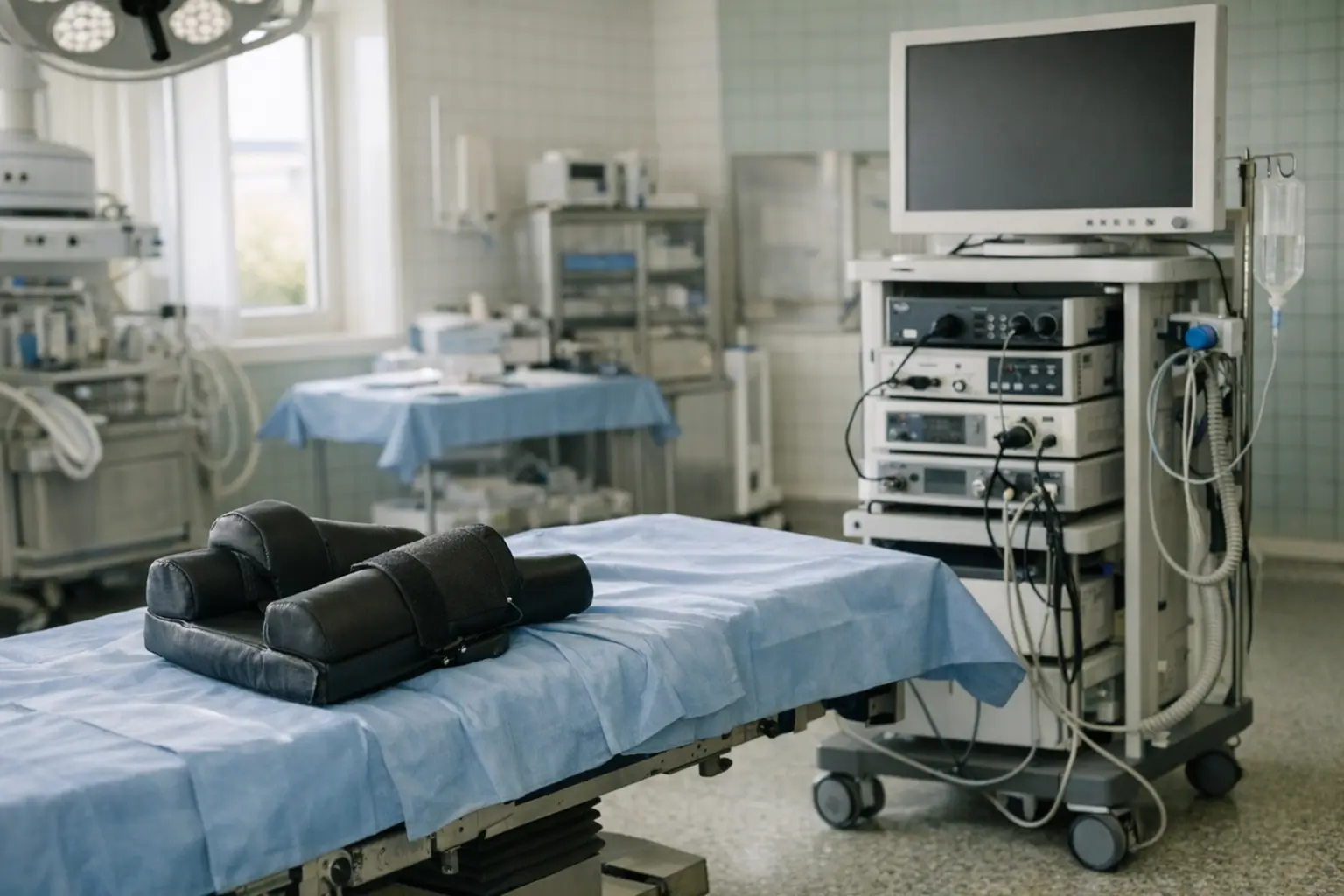
Arthroscopy is a joint endoscopy: through small skin incisions, the surgeon inserts a tiny camera and fine instruments into the joint. This allows damage to the meniscus, cartilage, ligaments, or tendons to be directly examined and often treated in the same procedure. This is particularly useful for clear structural problems — for example, after an acute injury, in the case of loose joint bodies, or repairable meniscus, ligament, and shoulder injuries. However, for wear-related knee osteoarthritis and degenerative meniscus tears, arthroscopy is generally not recommended for pain treatment or for diagnostic purposes alone.
Typical Areas of Use
- Meniscus tear following an acute injury
- Loose bodies (detached cartilage or bone fragments)
- Cruciate ligament injury
- Tendon and bursa problems in the shoulder
- Repairable Ligament and Meniscus Injuries
How It Works
- 1The procedure is usually performed on an outpatient basis under regional or general anaesthesia; the anaesthesia team will discuss with you in advance which option is suitable for you.
- 2The camera and instruments are inserted through two to three small incisions of just a few millimetres; the joint is irrigated and distended with sterile fluid so that the surgeon has a clear view.
- 3Any damage found is treated immediately if possible — for example, a torn meniscus is smoothed or sutured, loose bodies are removed.
- 4The small incisions are closed with a few stitches or adhesive strips, and the joint is dressed.
- 5After a monitoring period in the recovery room, you are usually allowed to go home the same day — depending on the procedure, with crutches.
How to Prepare
- You will normally attend the procedure fasting; you will receive exact instructions from the anaesthesia team.
- Blood-thinning medications will be discussed with your doctor in advance — do not discontinue anything on your own initiative.
- Arrange for someone to accompany you home, as you are not permitted to drive yourself after anaesthesia.
- Bring any existing images (MRI, X-ray) and your medication list with you.
Side Effects & Risks
- Swelling and wound pain in the first few days — both are normal and usually subside quickly.
- Rarely, joint infections, secondary bleeding or haematomas.
- Very rarely, thrombosis, especially after procedures on the leg — depending on the situation, you may receive preventive injections or tablets.
- Injury to nerves or blood vessels is very rare.
- Not every complaint disappears completely — particularly in cases of advanced cartilage degeneration, the possibilities are limited.
For the first few days: elevate the joint, apply ice and only bear weight as instructed by your surgeon — often with crutches and accompanying physiotherapy. Mild swelling, a feeling of tension and bruising are normal. Contact your doctor promptly if the joint swells significantly, becomes hot or red, if you develop a fever, if pain increases despite rest, or if your calf becomes painful and swollen — these could be signs of infection or thrombosis.
Cost & Insurance
A medically justified arthroscopy is usually covered by basic health insurance; a medical referral to the orthopaedic surgeon or clinic is required. The deductible and co-payment apply as usual. If physiotherapy is subsequently prescribed, this is also covered by basic insurance. If you have questions about coverage, it is best to enquire with your insurance company in advance — without guarantee.
Frequently Asked Questions
- Does arthroscopy hurt?
- During the procedure you will feel nothing thanks to anaesthesia. Afterwards, wound pain and a feeling of tension are normal for a few days and can be well managed — your doctor will discuss with you what is suitable for you.
- How long will I be unable to work after arthroscopy?
- This depends greatly on the procedure and your occupation: for office work it is often a few days to two weeks, for physical work or after more extensive repairs considerably longer. Your surgeon will give you a realistic assessment.
- When may I drive again?
- Only when you can fully bear weight on your leg again and brake safely in an emergency — usually after one to two weeks, longer after more extensive procedures. On the day of surgery itself you must not drive under any circumstances due to the anaesthesia.
- Do I have to stay in hospital overnight?
- Most arthroscopies today are performed on an outpatient basis: you arrive in the morning and go home again the same day. An overnight stay is only planned for more extensive procedures or special risks.
- When can I do sports again?
- Light exercise such as cycling on a stationary bike is often possible after just a few weeks, strenuous sports only after weeks to months depending on the procedure. Follow the progressive plan of your physiotherapy.