
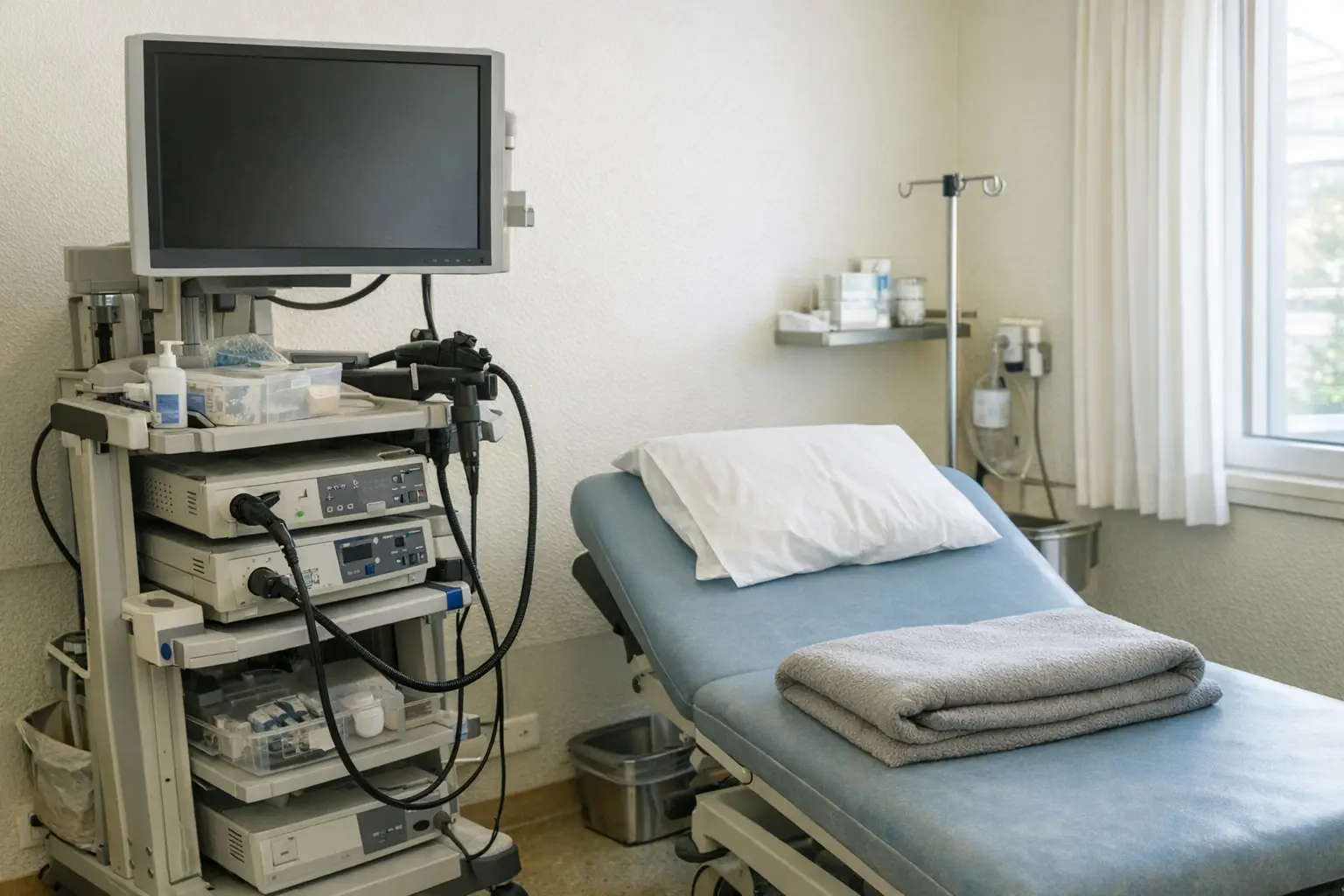
Colonoscopy is the most thorough examination of the colon — and at the same time the most effective way to prevent colorectal cancer: polyps that could later develop into cancer are removed directly during the examination. Thanks to sedation, most people sleep through the entire procedure.
Typical Areas of Use
- Colorectal cancer screening from age 50
- Investigation of blood in stool
- Persistent changes in bowel habits (diarrhoea, constipation)
- Unexplained abdominal pain
- Investigation of suspected inflammatory bowel disease
How It Works
- 1In the days before the examination, you adjust your diet and drink a laxative solution the evening before and on the day of the examination until your bowel is completely clean — the most important prerequisite for an informative examination.
- 2At the practice or hospital, most people receive a short-acting sedative through a vein.
- 3The doctor inserts the flexible endoscope through the anus and examines the entire colon; some gas is introduced for better visibility.
- 4If she finds polyps, they are usually removed directly and painlessly and sent to the laboratory for examination.
- 5After a short recovery period, the doctor discusses the initial findings with you; laboratory results follow after a few days.
How to Prepare
- Follow the bowel preparation instructions exactly — drink the laxative solution completely; an unclean bowel can make the examination impossible.
- Avoid foods containing seeds and high-fibre foods several days beforehand according to the practice's information sheet.
- Discuss blood thinners, iron supplements and diabetes medications with your doctor in advance — she will decide on any necessary adjustments.
- Arrange for someone to accompany you: after the sedative, you are generally not allowed to drive yourself for 24 hours — the information provided by the centre is authoritative.
Side Effects & Risks
- Bloating and a feeling of pressure in the abdomen from the introduced gas are normal after the examination and disappear within hours.
- After polyp removal, bleeding may occur, which usually stops on its own or can be controlled endoscopically.
- Very rarely, injury to the bowel wall (perforation) occurs, which may require intervention.
- Sedation can affect circulation and breathing — you will be monitored during and after the examination.
For 24 hours after the sleep medication: no driving, no operating machinery, no important decisions — arrange for someone to pick you up. You may usually eat and drink normally again soon; bloating on the same day is harmless, movement helps. Get in touch immediately if you experience severe or increasing abdominal pain, fever, or larger amounts of blood from the bowel — especially in the days following a polyp removal.
Cost & Insurance
As a preventive screening measure, mandatory basic insurance covers colonoscopy for people between 50 and 74 years of age, generally every ten years — alternatively, the test for blood in the stool (FIT) every two years; the deductible and the retention fee apply as usual. Cantonal early-detection programmes currently, in some cases, only actively invite people aged 50 to 69, but cost coverage applies independently of this up to age 74. In cantons with an organised screening programme, the deductible does not apply to examinations carried out within the programme. If you have symptoms or abnormal findings, colonoscopy is covered by mandatory basic insurance regardless of age. If in doubt, please check with your health insurer; this information is provided for general guidance only and without guarantee.
Frequently Asked Questions
- Does a colonoscopy hurt?
- With sedation, most people are not aware of the examination and wake up without pain. Polyp removal is also painless, as the intestinal lining there has no pain receptors.
- Is the laxative solution really that bad?
- It is the most unpopular part — the quantity and taste take some getting used to. Modern preparations have become much more tolerable, however, and chilling it and drinking it in stages help. Thorough preparation is worth it: it determines the quality of the examination.
- How long does the whole thing take?
- The examination itself takes 20 to 45 minutes. Including arrival, preparation and recovery time, you should keep half a day free — and plan for a quiet evening beforehand due to the bowel preparation.
- Am I fit to drive afterwards?
- No — after sedation, you are prohibited from driving for 24 hours. Arrange to be picked up or use public transport accompanied by someone.
- What does colorectal cancer screening cost?
- Basic insurance covers colorectal cancer screening for people aged 50 to 74: a fecal occult blood test (FIT), generally every two years, or a colonoscopy, generally every ten years. The deductible and retention fee apply; in cantonal screening programs, the deductible does not apply. Ask your health insurance company which rule applies to you.
- What happens if polyps are found?
- They are usually removed directly during the examination and examined in the laboratory. Depending on the number, size and tissue type, your doctor will recommend scheduling the next check-up sooner than in ten years.