
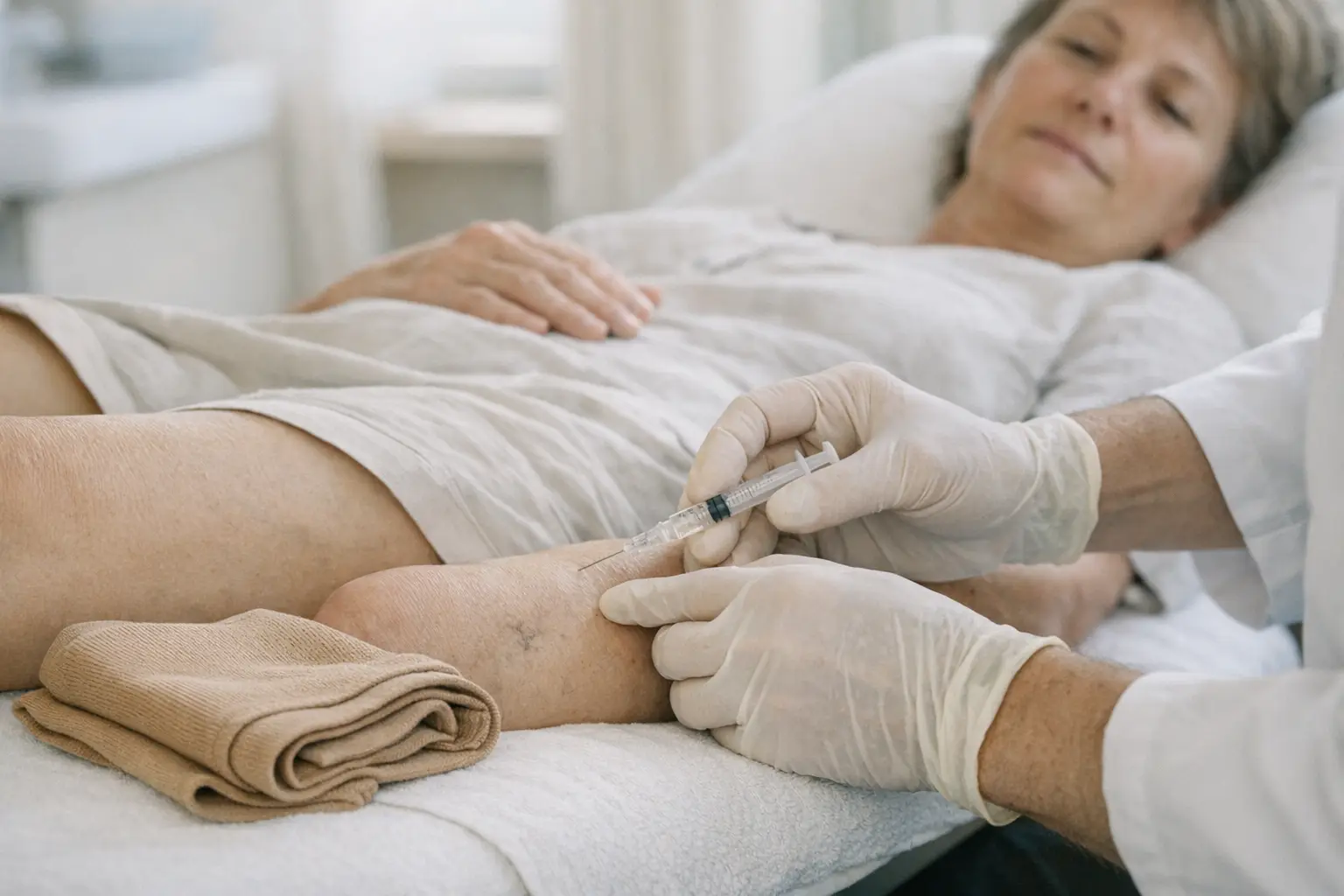
During sclerotherapy, an agent is injected into small varicose veins or spider veins that deliberately irritates the vessel wall: the treated vein closes, is broken down by the body, and disappears over several weeks. The procedure requires no incision and no anaesthetic and is particularly suitable for smaller veins — for larger varicose veins, other methods take priority.
Typical Areas of Use
- Spider veins and small superficial veins
- Smaller varicose veins (side-branch varices)
- Residual veins after varicose vein surgery
- Symptoms such as heavy, tired legs caused by small varices
How It Works
- 1First, your doctor will assess your veins, often with ultrasound — this clarifies whether sclerotherapy is sufficient or whether a deeper varicose vein must first be treated differently.
- 2The veins to be treated are marked while you are standing; you then lie comfortably on the couch for the injections.
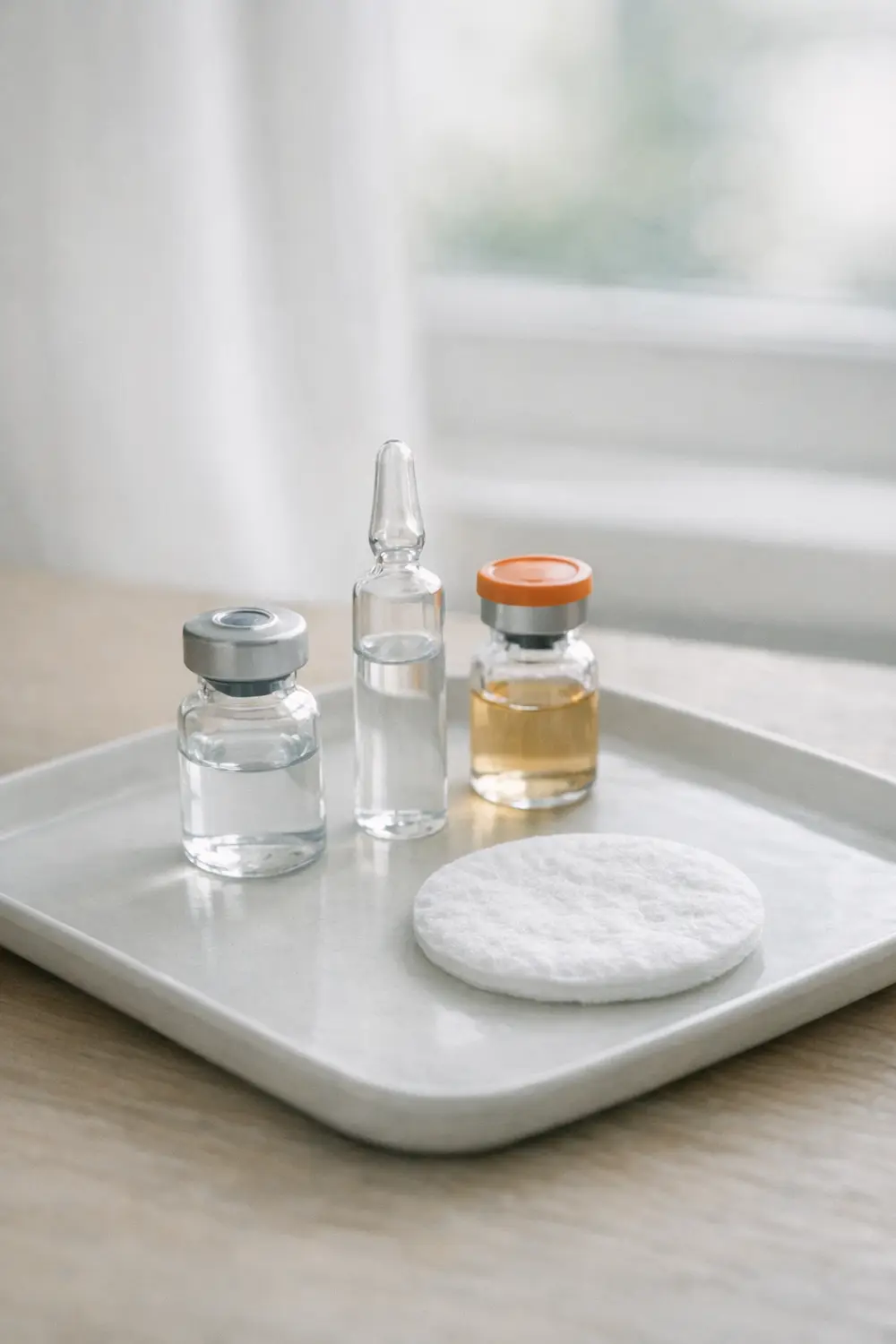
- 3Using a very fine needle, the sclerosing agent — either liquid or foam — is injected into the veins; several sites are treated per session.
- 4Afterwards your leg is fitted with a compression stocking or bandage, and you should walk around for a few minutes straight away.
How to Prepare
- On the day of treatment, avoid applying creams or oil to your legs.
- Inform your doctor about blood thinners, allergies, pregnancy, or previous thromboses.
- If you have them, bring your compression stockings with you and plan to be walking afterwards.
Side Effects & Risks
- Temporary redness, welts, or burning at the injection sites
- Bruising and palpable hardening along the treated vein
- Brownish discolouration of the skin, which usually fades but may rarely remain visible for longer
- Formation of tiny new veins in the treated area (matting)
- Rarely allergic reactions or superficial vein inflammation; thromboses are very rare
After treatment, walking and normal everyday movement are explicitly encouraged; you should avoid prolonged standing and sitting, hot baths, sauna and intensive sports in the first few days. Wear the compression stocking for as long as the doctor recommends — usually a few days to a few weeks. Hardening and discolouration along the treated veins are normal and will gradually resolve. Get in touch if a leg swells severely, becomes increasingly painful, or if pronounced redness or shortness of breath occurs — such signs need to be clarified immediately.
Cost & Insurance
Whether your basic insurance covers the cost depends on the reason for treatment: for medically indicated varicose vein conditions — for instance with symptoms or proven venous insufficiency — it will usually cover the treatment, with deductible and co-payment as usual. Purely cosmetic spider-vein treatments, on the other hand, are considered self-pay procedures. Your doctor will make this distinction after the venous assessment; if in doubt, clarify the cost question in advance with the practice and your insurer.
Frequently Asked Questions
- Does sclerotherapy hurt?
- The injections with the fine needle are barely noticeable; there may be brief burning or pressure during the injection itself. Most people find the treatment quite tolerable; anaesthesia is not necessary.
- When will I see the result?
- The treated veins do not disappear immediately: the body breaks them down over several weeks to a few months. In the meantime, the areas may even appear darker — the final result can only be assessed at the earliest after four to six weeks.
- What does spider-vein treatment cost?
- For purely cosmetic reasons, you pay for the treatment yourself; the cost depends on the extent and number of sessions and will be disclosed to you by the practice in advance. Medically indicated sclerotherapy, on the other hand, is usually covered by basic insurance.
- Will the veins come back?
- The treated veins themselves disappear permanently. However, the predisposition to varicose veins remains, so new veins can form over the years — follow-up appointments and compression help to keep this under review.
- Can I drive and work afterwards?
- Yes, you can drive immediately after treatment and can usually return to work straight away. Only intensive sport, sauna, and prolonged standing without moving should be avoided for a few days.